
Red Cards & Red Lines: Palestinian Footballer’s Detention Jolts Geopolitical Sideline
POLICY WIRE — Ramallah, Palestinian Territories — Football, they say, is the beautiful game. But in the fractious, unforgiving landscape of the Middle East, even the gentle artistry of the sport...

POLICY WIRE — Ramallah, Palestinian Territories — Football, they say, is the beautiful game. But in the fractious, unforgiving landscape of the Middle East, even the gentle artistry of the sport can’t escape the raw, grinding mechanics of geopolitics. It’s a bitter truth, and one recently underlined by the arbitrary interruption of a rising athletic star’s life—a star whose pitch is now less green field and more cold, hard cell.
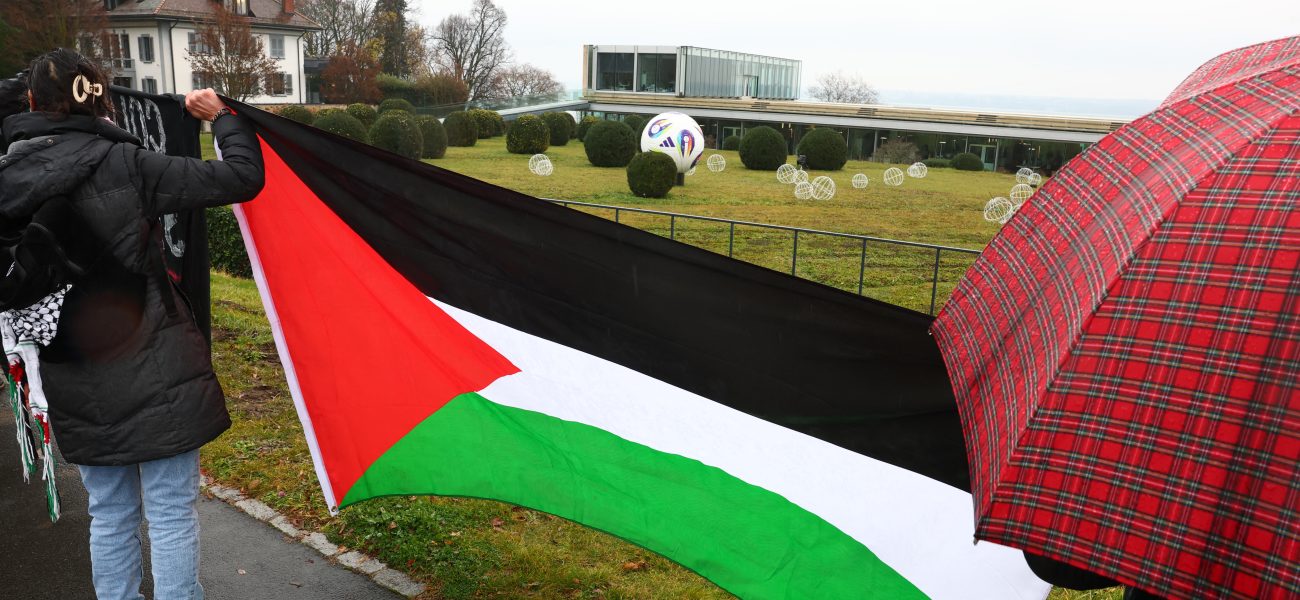
It wasn’t a disputed penalty call that stopped Haneen Qadoura. It wasn’t an injury or a coaching decision. It was the blunt reality of military detention. The prominent Palestinian women’s national team player, a figure representing grace and determination on the field, found herself pulled from the flow of everyday life by Israeli forces, held without immediate charge, casting a long shadow over the supposedly apolitical realm of international sports.
Her arrest, according to reports from the Palestinian Football Association (PFA), occurred as she attempted to cross through an Israeli checkpoint. The precise details of the allegations against Qadoura remain cloaked in military secrecy, a common, if frustrating, feature of such detentions. This isn’t just a player being held; it’s a symbolic strike. And it’s a tactic that consistently draws international condemnation, but rarely prompts real change.
“We can’t simply wave a hand — and dismiss genuine security concerns,” stated Lt. Col. Elara Ben-David, a spokesperson for the Israeli Defense Ministry, during a brief, pointed exchange. “Every individual processed, every detention made, stems from actionable intelligence intended to protect lives—Israeli and Palestinian alike. This isn’t about punishing athletes; it’s about enforcing laws and preventing hostile activity.” It’s a well-worn refrain, heard many times before.
But that explanation rings hollow for many. “This isn’t security; it’s an act of collective humiliation,” retorted Jibril Rajoub, President of the Palestinian Football Association, his voice thick with frustration. “They’re trying to suffocate our identity, our aspirations, even on the football pitch. When an athlete can’t travel, can’t play, can’t live freely, what message does that send the world? It’s an unacceptable form of pressure.”
And these sorts of incidents resonate far beyond the West Bank. Across the broader Muslim world, from Cairo to Kuala Lumpur, similar detentions are often viewed not as isolated security actions but as calculated provocations, feeding into a deeper narrative of systemic oppression. In Pakistan, for example, social media often flares with outrage, and governmental bodies issue statements condemning actions perceived as affronts to Palestinian dignity—further evidence that sports and geopolitics are irrevocably intertwined. It stirs up old anxieties, keeping tensions high, creating ripple effects in diplomatic circles already stretched thin.
This particular episode isn’t unique. Consider this stark fact: human rights organizations document thousands of administrative detentions—where individuals are held without charge or trial—by Israeli forces annually. For example, by the end of 2023, around 2,070 Palestinians were held in administrative detention, a number which represents a significant surge, as reported by B’Tselem. And these aren’t just figures; they’re lives, futures, and, sometimes, dreams of sporting glory put on hold.
The arrest also shines an uncomfortable light on the various international sports bodies. They preach inclusivity, global camaraderie, and respect for athletes, yet often find themselves impotent—or unwilling—to act decisively when politics spills violently onto their fields of play. Because what exactly can FIFA do against state power?
What This Means
The detention of Haneen Qadoura isn’t just a blot on a sports career; it’s a sharp, political jab with wider implications. Firstly, it amplifies the narrative of Israeli restrictions on Palestinian movement and fundamental rights, especially for those in the public eye. When an internationally recognized athlete becomes a symbol of constraint, it draws a different kind of media attention—one that’s harder to dismiss as niche political squabbling.
Secondly, it fuels the cycle of outrage — and counter-outrage, hardening positions on both sides. For Palestinians, it’s further proof of ongoing subjugation. For Israel, it reinforces the perceived necessity of robust security measures against all potential threats, regardless of public perception. This incident, while local in its execution, effectively acts as diplomatic fodder on the global stage, allowing various actors to draw lines, express solidarity, or double down on their existing stances. The international community watches, often condemns, but concrete action remains elusive. It’s an agonizing, repeating loop. For athletes like Qadoura, whose lives are, in effect, an enduring commodity of talent and public representation, this sudden stop is more than an inconvenience; it’s an arbitrary curtailment of their very existence.
Ultimately, it’s a stark reminder that in some parts of the world, even the supposedly universal language of sport is translated through the harsh lexicon of conflict and control. You can’t escape it. Not really.