


Drones Over Neva: Putin’s Economic Charm Offensive Marred by Sky-Borne Snipers
POLICY WIRE — St. Petersburg, Russia — The Neva River usually maintains a stoic presence, mirroring the grandeur of imperial architecture, but on a recent predawn it bore witness to something less...

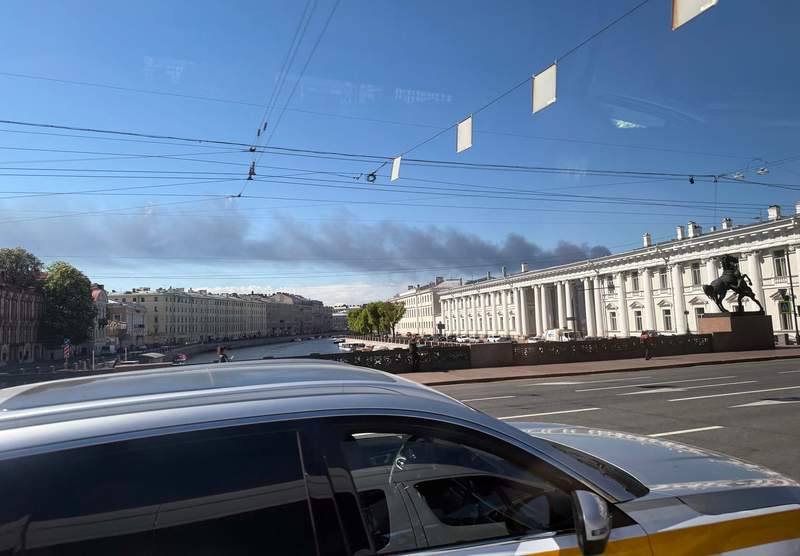
POLICY WIRE — St. Petersburg, Russia — The Neva River usually maintains a stoic presence, mirroring the grandeur of imperial architecture, but on a recent predawn it bore witness to something less majestic, decidedly more modern. We’re talking about the distinct, almost insect-like buzz of unmanned aerial vehicles—drones, for the uninitiated—loitering over Russia’s former imperial capital. Not exactly the auspicious curtain-raiser President Vladimir Putin’s team probably had in mind for the flagship St. Petersburg International Economic Forum (SPIEF), is it?
It’s an inconvenient truth, this sky-borne theater, unfolding precisely as Moscow prepares to roll out the red carpet—or at least, the slightly less crimson one for its non-Western friends—for a gathering meant to project stability, opportunity, and an unbowed defiance against global sanctions. And Ukraine, it seems, has developed a knack for knowing just when to disrupt the narrative, delivering not diplomatic pleasantries, but rather a sharp, unexpected slap in the face with airborne explosives. Pretty brazen, some would say. But then, war ain’t always polite.
Ukrainian Defense Minister Rustem Umerov didn’t pull any punches, commenting on the expanding reach of Kyiv’s strategic strikes. “We’re demonstrating that no place in Russia, no matter how distant or symbolic, is immune to the consequences of this conflict,” Umerov asserted, speaking from a secure location. “The Kremlin’s economic showcases will only serve to highlight its vulnerabilities, not its strength.” But the messaging from Moscow? It’s classic dismissal. Dmitriy Peskov, the long-suffering Kremlin spokesperson, offered his standard shrug-and-deny, framing the incidents as “acts of desperation by a failing regime, desperate to distract from its inevitable collapse.”
This isn’t about massive physical destruction, not primarily. Oh, no. It’s about optics. It’s about signaling. The sheer psychological weight of a distant enemy striking at the very heart of what was once considered unassailable Russian territory. St. Petersburg isn’t just any city; it’s Putin’s hometown, his political cradle. It’s also the site chosen to tell the world, particularly the non-aligned nations – your Indias, your Pakistans, your Chinas, even – that Russia is still open for business, still a global player. That narrative? It gets kinda messy when drones start raining down around your biggest PR event of the year.
Because, lemme tell ya, for all the bravado, such incidents erode investor confidence. Who wants to park their money in a nation that can’t even secure its premiere economic gathering from hobbyist-level air threats? It plants a seed of doubt, which, in high finance, germinates faster than you’d believe. Indeed, foreign direct investment into Russia slumped by nearly 40% in 2023, according to figures released by the Central Bank of Russia, following the imposition of Western sanctions and the continuing conflict. That’s a nasty downturn for any economy.
But there’s also a grim determination in Kyiv’s strategy. They’re telling Moscow, loud — and clear, that its war won’t remain neatly confined to Ukrainian soil. It’s a message that resonates far beyond Europe’s borders. Countries like Pakistan, which is navigating its own intricate balance between old alliances and new economic realities – and wrestling with global doubt about its economic resurgence – can’t help but watch these unfolding events with a degree of apprehension. Every nation is assessing the evolving doctrine of long-range, asymmetric warfare. They’re considering how quickly a perceived local conflict can become, well, everyone’s problem.
The choice of target—St. Petersburg—is also fascinating. It isn’t Moscow, the traditional seat of power, which has already seen its share of aerial annoyances. But St. Petersburg for SPIEF? It’s designed to be a symbol of renewed economic outreach, especially to nations looking for alternatives to Western hegemony. Think of it as a meticulously staged sales pitch, complete with elaborate presentations and carefully curated foreign guests. The drones? They’re the rude salespeople from the competition, pointing out the cracks in the showroom floor. Just like that.
And Russia’s strategic pivot East, which includes courting economic partnerships with states across Asia, becomes harder to sell when the domestic security situation looks compromised. It’s a nuanced dance, convincing nations that are already wary of Western pressure to engage deeply with a country that can’t guarantee its own skies, let alone long-term market stability. This isn’t a small concern; it speaks to the perceived reliability of Russia as a trading partner and, ultimately, a global power.
What This Means
The drone incursions aren’t about delivering a knockout blow, not in a military sense anyway. Instead, they serve as a potent psychological weapon, designed to sow doubt and embarrass Russia on a global stage it painstakingly tries to control. For President Putin, SPIEF isn’t just an economic event; it’s a diplomatic effort to demonstrate resilience against Western sanctions and forge new economic ties—a re-framing of his country’s position in a multipolar world. An attack of this nature undermines the carefully crafted image of invulnerability — and competency.
Economically, it makes potential investors think twice. The security risk, however minor in terms of physical damage, amplifies the existing risks from sanctions and geopolitical instability. For many countries in South Asia and the Muslim world, navigating relations with both Russia and the West is already a tightrope walk. These incidents add another layer of complexity, raising questions about Russia’s capacity to protect its economic interests and, by extension, those of its partners. They demonstrate a shift in the conflict’s geography, turning previously safe rear areas into zones of potential confrontation. But most importantly, perhaps, they remind everyone that in modern warfare, the front lines ain’t just at the borders anymore; they can be anywhere, anytime. And they often show up when you least expect them, — and at the most inopportune moments.