


The £35 Million Question: Man United’s Ederson Bet Highlights Global Football’s Fiscal Fault Lines
POLICY WIRE — London, UK — Forget the whispers of a routine transfer. When Manchester United dipped into their sizable coffers for Atalanta’s Ederson, shelling out a cool £35 million for a midfielder...

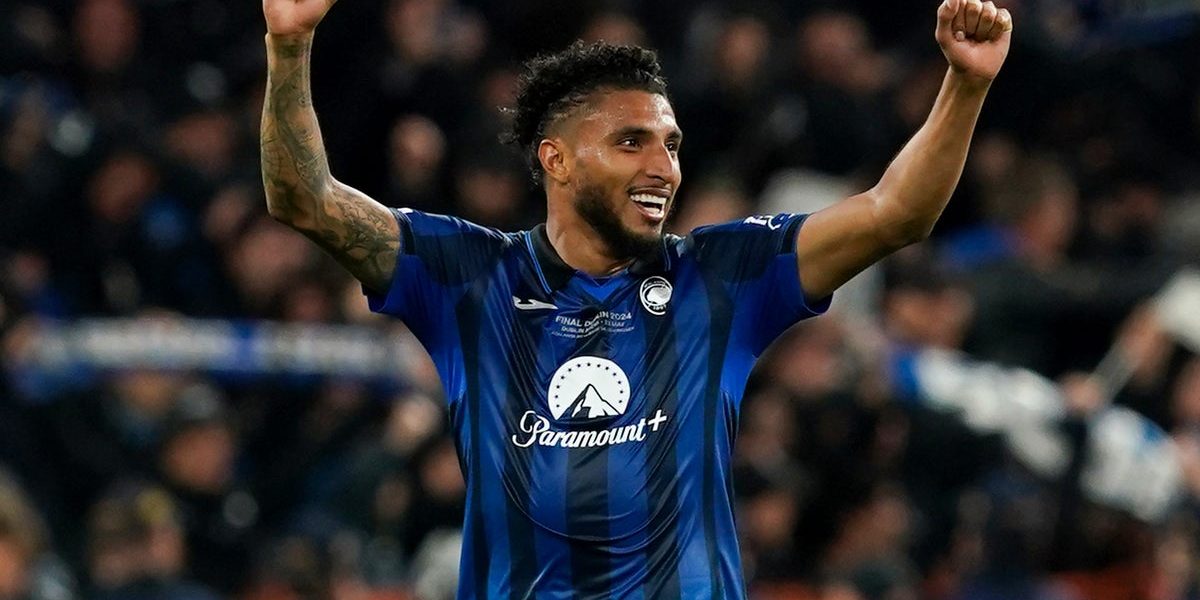
POLICY WIRE — London, UK — Forget the whispers of a routine transfer. When Manchester United dipped into their sizable coffers for Atalanta’s Ederson, shelling out a cool £35 million for a midfielder with just a year left on his contract, it wasn’t just a recruitment drive. It was, rather, a stark, unapologetic affirmation of modern football’s dizzying economics—a marketplace where aspiration routinely dwarfs rational fiscal planning, even for clubs as storied as United.
Because, let’s be honest, for all the talk of ‘rebuilding’ under Michael Carrick, this deal screams less about meticulous tactical planning and more about keeping pace. The global treadmill of professional football just keeps speeding up, you know? Clubs like United, forever chasing the ghosts of past glories, they’re caught between an insatiable fan base and the cold, hard realities of Financial Fair Play—a set of rules that often feels more like a suggestion than a regulation when the really big money talks. Ederson, a 26-year-old Brazilian with a decent, but not earth-shattering, Serie A record and three international caps, is now the price tag attached to renewed hope at Old Trafford. You’d think they’d learn, wouldn’t you? This isn’t their first ‘rebuild’ in a decade, but it certainly won’t be their last.
“We’re not just buying a player; we’re investing in market share,” an unnamed senior club executive confided off-record, their voice tinged with the perpetual exasperation that comes with managing expectations at a club of United’s magnitude. “The global reach of a marquee name, even one at this price point, far outweighs the immediate accounting entries. It’s about perception, about brand value in Lahore — and London alike. You don’t get that staying still.” And he’s not wrong. For every pundit scoffing at the fee, there are millions more across continents—especially in burgeoning football markets like Pakistan and other parts of South Asia—who view Manchester United not just as a team, but as an integral part of their week-to-week cultural fabric. These fans, disconnected from the daily drizzle of Manchester, yet glued to illegal streams and licensed broadcasts, represent the financial lifeline keeping these inflated economies afloat.
The deal, expected to tie Ederson down for four years at Old Trafford (and possibly costing an additional £4 million in add-ons), represents what’s openly touted as the ‘first piece’ of a midfield overhaul. While veterans like Casemiro depart on free transfers, and the futures of others like Manuel Ugarte remain cloudy, the pressure for instant impact is palpable. They’re also reportedly eyeing Real Madrid’s Aurelien Tchouameni, alongside Nottingham Forest’s Elliot Anderson, the latter of whom looks increasingly likely to join arch-rivals Manchester City—because of course, that rivalry never truly sleeps, does it?
But what does a transfer of this magnitude genuinely signify for the wider game? “This isn’t football anymore, not purely,” observed Dr. Ayesha Rahman, a prominent sports economics lecturer at SOAS. “It’s a highly sophisticated hedge fund. Every transfer is a multi-million-dollar bet on future performance, fan engagement, and — let’s not forget — potential resale value. It’s high finance wearing shorts, — and clubs are either big enough to play the game or they slowly fade away. There’s no middle ground.” And for many, that grim assessment resonates. The top-tier of European football has become a closed shop, entry costs rising astronomically each season.
The club’s scramble isn’t happening in a vacuum. A 2023 report by Deloitte Football Money League found that the cumulative revenue of the top 20 football clubs globally rose by 14% to a staggering €10.5 billion. But with that comes increased scrutiny, immense debt, and the relentless pressure to perform on the pitch to justify these wild expenditures. They’ve to keep attracting global sponsorships and, critically, those billions of eyes from distant lands. So yes, Ederson is merely one player, but his transfer fee speaks volumes about the commercial tightrope European football’s giants now walk. It’s precarious, thrilling, — and almost absurd.
What This Means
This Ederson deal is less about individual player metrics and more about the escalating arms race at the apex of global football. Politically, the implications are subtle but profound. As English clubs continue to outspend competitors across Europe, it fuels debates around competitive balance within leagues and internationally. It concentrates power, influence, — and media attention, leaving smaller, less wealthy leagues struggling for relevance. Economically, these mega-deals are both a driver of substantial revenues for clubs and a potential ticking time bomb of financial instability. Debt levels are often sky-high, forcing clubs into a cycle of constant revenue generation through global branding exercises, pre-season tours (often in Asia or the Middle East), and commercial partnerships that stretch the ethical boundaries of sport. the massive viewership from regions like the Middle East and South Asia translates into significant geopolitical soft power. When governments or state-backed entities invest in or own these clubs, they leverage a ready-made cultural phenomenon to project influence, distracting from domestic issues and presenting a favorable image on a global stage. The Ederson transfer, in its extravagance, simply reinforces that elite football isn’t just sport anymore; it’s a hyper-capitalized, geo-strategically significant industry, playing a game where the stakes just keep getting higher, and the rules are constantly bent for those who can afford to play.