

Digital Erasure: Mamdani-Backed Candidate’s Vanishing Ideals Stir Congress Race
POLICY WIRE — Washington, D.C. — In an election cycle increasingly defined by candidates racing against their own digital pasts, the virtual broom has made another sweep, leaving a familiar political...

POLICY WIRE — Washington, D.C. — In an election cycle increasingly defined by candidates racing against their own digital pasts, the virtual broom has made another sweep, leaving a familiar political question in its wake: what exactly do we do with a past that disappears?
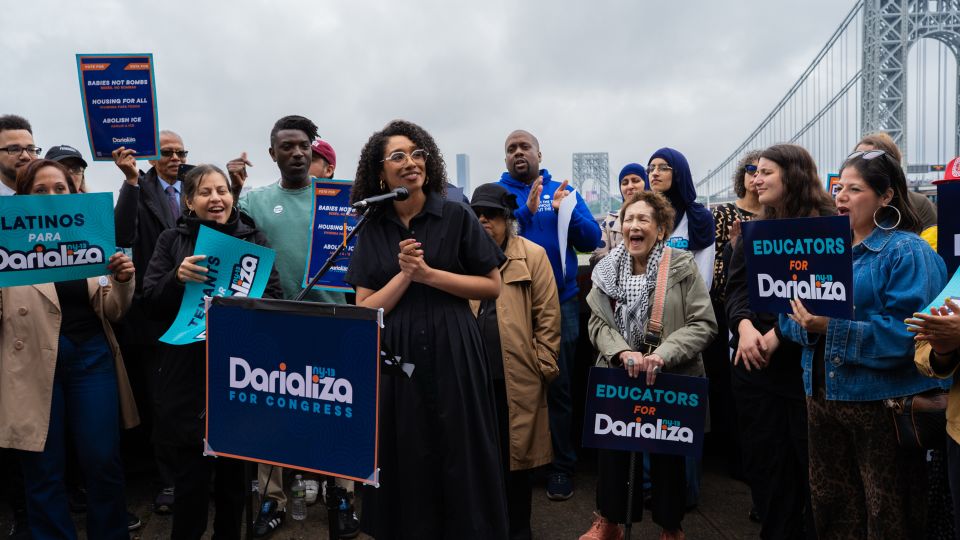
This time, it’s a Mamdani-backed congressional candidate
under the digital microscope, their once-bold pronouncements quietly edited out of the public record. We’re talking about posts advocating some pretty hefty ideas: seize private property
, for instance. And don’t forget the call to abolish police
, borders
, and prisons
– concepts that usually spark a bit more than a shrug. [QUOTE_PLACEHOLDER]
It seems that in the heat of a primary, once-fashionable revolutionary chic can feel awfully chilly when exposed to mainstream scrutiny. This individual, aligning with the intellectual currents often associated with political theorist Mahmood Mamdani, evidently felt the sudden urge to tidy up. Or, you know, just make a clean break from yesterday’s declarations.
But history—especially the online variety—has a stubborn way of lingering. Deleted posts, screengrabs, the internet never forgets everything. Even if the candidate wishes we would. It’s a game of hide-and-seek, — and the seekers usually have an advantage in modern political campaigns.
Such ideological gymnastics aren’t new in the rough-and-tumble of political advancement. What once garnered applause in certain academic or activist circles becomes a liability on the campaign trail, particularly in district races where practical concerns often trump theoretical purity. It’s a tightrope walk—trying to keep your base engaged while not alienating the broad swathe of voters who still think private property is a pretty decent idea and the police perform some necessary functions, even if flawed.
This particular episode carries a ripple beyond the usual American political spat. The academic influence of figures like Mamdani, whose work often critically examines Western political structures and post-colonial states, resonates differently across the globe. For many in Pakistan or broader South Asia, discussions around property rights or state institutions carry layers of historical struggle and evolving governance, where the very definitions of nationhood and social contracts are often fiercely contested. There, calls to abolish borders
, for example, might conjure up memories of painful partitions or ongoing regional disputes, rather than an abstract utopian vision. These aren’t just academic musings, they’re often existential debates. And politicians, whether in Karachi or Sacramento, can’t afford to forget that.
The speed at which online content gets wiped — or unearthed — highlights the hyper-vigilance of modern political operatives. According to a 2022 survey by the Pew Research Center, roughly seven-in-ten U.S. adults (71%) say they’ve little to no confidence that social media companies will protect their personal information, implying a broader mistrust of digital platforms, which, ironically, store these campaign trail tripwires. Candidates, in their rush for office, are frequently finding their digital footprints tracked back to their youthful (or not-so-youthful) radicalism.
But is it genuine evolution, or merely political opportunism? When a candidate scrubs their record of wanting to seize private property
, is it because they’ve reconsidered the complexities of eminent domain, or because they’ve polled poorly among homeowners?
What This Means
This isn’t just about one Mamdani-backed congressional candidate
and their social media blunders; it’s a revealing look into the pressures molding contemporary progressive politics. The strategic deletion of posts advocating for truly radical overhauls—like the dissolution of key societal structures—indicates a calculated shift toward electability. It suggests a movement grappling with its own internal contradictions: the purity of academic theory versus the gritty pragmatism required for electoral success. It’s a recognition, perhaps belatedly, that phrases like abolish police
aren’t just rallying cries for some; for others, they evoke real fears of chaos.
Economically, rhetoric around the intent to seize private property
, even if later walked back or removed, sends jitters through financial markets and investor confidence, particularly in districts where economic stability is a paramount concern. Capital, after all, is notoriously skittish. Its implications aren’t confined to a theoretical debate in a university seminar. On the ground, such stances can undermine trust in established institutions and deter investment, impacting job creation and local economies. It raises questions about the very framework of a market-based society. See, these ideas aren’t just academic exercises; they carry weight, real economic heft, even in their whispered form. It isn’t just about political grandstanding; it’s about the bottom line.
For more on political strategy and electoral dynamics, explore Head-First Blunder: Adell’s Uncanny Echo in Baseball’s Theatre of the Absurd, which touches on public perception and strategic moves. Or delve into other global political currents like Pacific Overtures: US-China Military Talks Seek Calibration Amidst Geopolitical Friction, for a broader perspective on geopolitical maneuverings that often underpin domestic narratives. The candidate’s rapid ideological course correction offers a sharp lesson in the unforgiving landscape of digital politics, where yesteryear’s radical can quickly become today’s political pragmatist—at least online.