

Desert Reckoning: Haaland, Hull Set for Epic New Mexico Governorship Clash
POLICY WIRE Santa Fe, USA — The land of enchantment, as they call it, isn’t short on political theater. But few could’ve predicted the spectacle now unfolding: Secretary Deb Haaland, Democrat,...

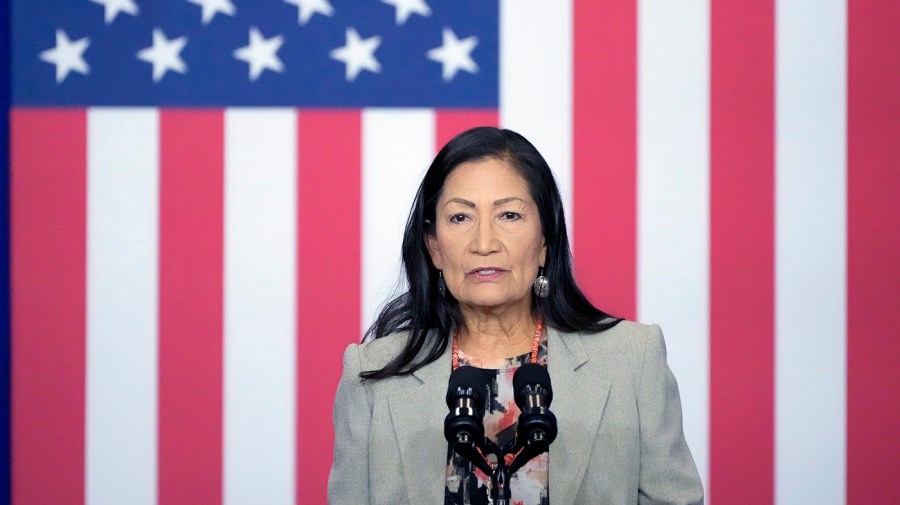
POLICY WIRE Santa Fe, USA — The land of enchantment, as they call it, isn’t short on political theater. But few could’ve predicted the spectacle now unfolding: Secretary Deb Haaland, Democrat, a figure known nationally for her environmental stewardship and Indigenous advocacy, squaring off against Republican challenger Gregg Hull, a mayor with deep community roots and a formidable conservative ground game. It’s not merely a gubernatorial race; it’s a fight for the very soul of New Mexico, played out on a high desert stage that sometimes feels like the American West’s last stand.
It’s official: primary season’s dust has settled, revealing the unlikely, yet deeply compelling, general election contenders. Haaland didn’t just win her primary; she dominated, garnering nearly 80 percent of the Democratic vote. That’s a stark figure—a resounding endorsement of her brand of progressive politics and a clear message from the party’s base. Hull, a two-term mayor from Rio Rancho, clinched his nomination with a more modest but equally decisive 55 percent, solidifying the Republican party’s unified front against what they frame as federal overreach and economic stagnation under the current administration. And here we’re, already deep into autumn, facing a general election battle royale. What a time to be alive, huh? [QUOTE_PLACEHOLDER]
Haaland’s transition from the D.C. spotlight back to state politics is a calculated risk, but one that electrifies the Democratic base. Her supporters see her as a visionary, capable of steering New Mexico toward a greener, more equitable future, leveraging her federal experience and national profile. They argue her background as a 35th generation New Mexican—a Pueblo Laguna woman—resonates profoundly in a state where Indigenous heritage isn’t just history; it’s present-day identity and political power. Because, let’s face it, tribal votes here aren’t an afterthought; they’re often the decider.
On the other side of the aisle, Hull embodies a more traditional, small-government philosophy. He’s been a vocal critic of what he calls the Biden-Haaland administration’s ‘war on energy,’ particularly the federal drilling freezes that directly impact New Mexico’s oil and gas-rich Permian Basin. For Hull, it’s about local control, fostering business, — and cutting regulations. He’s betting big on voter frustration with economic headwinds and the perennial balancing act between environmental protection and job creation. His campaign’s primary messaging focused on making New Mexico a ‘haven for enterprise,’ and his win suggests that sentiment holds considerable sway, especially outside Albuquerque and Santa Fe.
But the race isn’t just about fracking or solar panels. It’s about how a deeply multicultural state manages its future. The narratives playing out in New Mexico’s political landscape have unexpected echoes far beyond its borders. Just as Haaland advocates for a vision of self-determination and sustainable resource management for Indigenous communities—themes often found in post-colonial dialogues—one can’t help but draw parallels to nation-states navigating their own sovereign control over natural wealth. Take, for instance, Pakistan. Like New Mexico, it’s a nation grappling with vast resource potential—from Balochistan’s mineral wealth to its strategic location for energy transit—while simultaneously battling internal regional disparities, environmental degradation, and the quest for inclusive economic development. The global conversation around resource management, equitable distribution, and the push for greener energy sources isn’t just an American dilemma; it’s a human one, a critical concern from the Rockies to the Hindu Kush. And how New Mexico handles this balancing act could offer an interesting blueprint, or at least a cautionary tale, for places far away.
Both candidates face uphill battles. Haaland must convince skeptical swing voters that her national-level progressive policies can translate into tangible local economic benefits without alienating a working-class demographic heavily reliant on the energy sector. Hull, meanwhile, must broaden his appeal beyond the Republican base, tackling a reputation that, fair or not, tags him as a candidate primarily for the business elite, failing to address the complexities of New Mexico’s diverse needs. You can’t just ignore the state’s poverty rates—still among the highest in the nation—and expect to win hearts and minds.
It’s worth noting the voter enthusiasm, or lack thereof. While turnout in both primaries was decent, it didn’t set any records. According to data compiled by the New Mexico Secretary of State’s office, the statewide primary turnout was just over 32 percent of registered voters, reflecting a persistent struggle to engage a larger portion of the electorate outside of presidential cycles. This suggests that while core partisans are energized, the broader public might be viewing this showdown with a mix of anticipation and weary resignation.
The coming months will test both candidates’ mettle, their campaign machinery, and their ability to connect with a diverse electorate eager for real solutions, not just partisan talking points. Expect sharp debates, significant outside spending, — and a battle for the moderate, independent voter. This isn’t just an election; it’s a crucible for New Mexico’s identity, and frankly, a fascinating barometer for the nation’s political temperature. The Land of Enchantment just might be the land of intense political revelation.
What This Means
This race isn’t just a local skirmish; it’s a proxy war for larger national narratives, holding substantial political and economic implications. If Haaland wins, it cements the trend of progressive, environmentally-focused leadership ascending in states with significant natural resources, potentially inspiring similar movements in states like Colorado or even Montana. Her victory would be a shot in the arm for the Democratic Party’s ability to retain, and even expand, its influence in diverse Western states, especially those with powerful Indigenous constituencies. Economically, it would signal an accelerating pivot away from fossil fuel dependency, pushing further investments into renewable energy infrastructure, which while popular with many, could cause short-term economic turbulence in communities tied to the oil and gas industry.
Conversely, a Hull victory would be a strong affirmation of conservative principles at the state level—namely, less government intervention, lower taxes, and a renewed focus on traditional industries like oil and gas. This would energize Republican efforts to reclaim gubernatorial seats in what are increasingly purple states, showcasing a pathway to victory by mobilizing rural voters and those concerned with energy prices and business regulations. Economically, his administration would likely seek to stabilize the existing energy sector while cautiously exploring other economic drivers, creating a more incremental shift rather than an abrupt transition. the outcome will provide crucial insights into whether a high-profile federal figure, even one with deep local ties, can successfully parlay that influence into state-level executive power. It’s a chess match with national consequences, and whoever takes the governorship here might just rewrite a few playbooks for the 2026 and 2028 election cycles.