



Lacrosse Titans Clash Again: A Study in Sporting Hegemony
POLICY WIRE — Columbus, USA — Call it déjà vu. Or perhaps, just the relentless march of competitive cycles. While much of the sporting world revels in the novelty of fresh matchups, Ohio’s girls’...

POLICY WIRE — Columbus, USA — Call it déjà vu. Or perhaps, just the relentless march of competitive cycles. While much of the sporting world revels in the novelty of fresh matchups, Ohio’s girls’ lacrosse scene appears firmly entrenched in a familiar narrative: Olentangy Liberty versus Upper Arlington. It isn’t just a rivalry; it’s practically a pre-ordained destiny, now set for a fourth straight championship face-off.
One might wonder if the scriptwriters—whoever they’re for high school athletics—have simply run out of ideas. But the reality is far grittier. These aren’t pre-fab contenders. They’re seasoned powerhouses, forging their path through a gauntlet of opponents who, year after year, just aren’t quite enough. We’re talking about dynasties here, ones that make you consider whether dominance, in sport or politics, becomes almost self-perpetuating once momentum builds.
Consider the recent semi-final performances. Upper Arlington, a formidable entity with a commanding season record of 22-1 (according to the original reporting by The Columbus Dispatch), utterly routed Springboro 18-5. It wasn’t just a win; it was a statement. The Golden Bears have this way of dissecting opponents, — and they’ve done it consistently. Their defense, per their coach Megan Sengelmann Strapp, has been averaging under five goals a game this season. And with seven different goal scorers often lighting up the board, you see why they’re so tough to stop. Ella Smith, Ruma, Claire Aimes, Rylan Clark—they all got their chances, they all delivered.
But then, there’s Liberty. Ah, Liberty. If UA is the stoic, unstoppable force, Liberty is the phoenix, constantly rising from its own ashes, often dramatically. Their 9-8 overtime triumph against Hudson was the stuff of legends—or, at least, future campfire stories. Down by four goals heading into the fourth quarter, after an eighteen-minute scoring drought, they just wouldn’t fold. The game-tying shot came with eighteen seconds left in regulation from Aubrey Bartosik. Megan Benton, a senior midfielder and Ohio State signee, then notched her fifth goal of the game with 2:13 remaining in overtime for the win. That’s a come-from-behind victory that demands attention, embodying a trait Benton herself summarized with one terse word: ‘Grittiness’.
It’s this kind of intense, relentless fight that separates contenders from champions. But it also creates a feedback loop: the tougher the competition, the tougher the winners become. It’s a cyclical process, much like how gritty streaks echo global ambitions in other arenas.
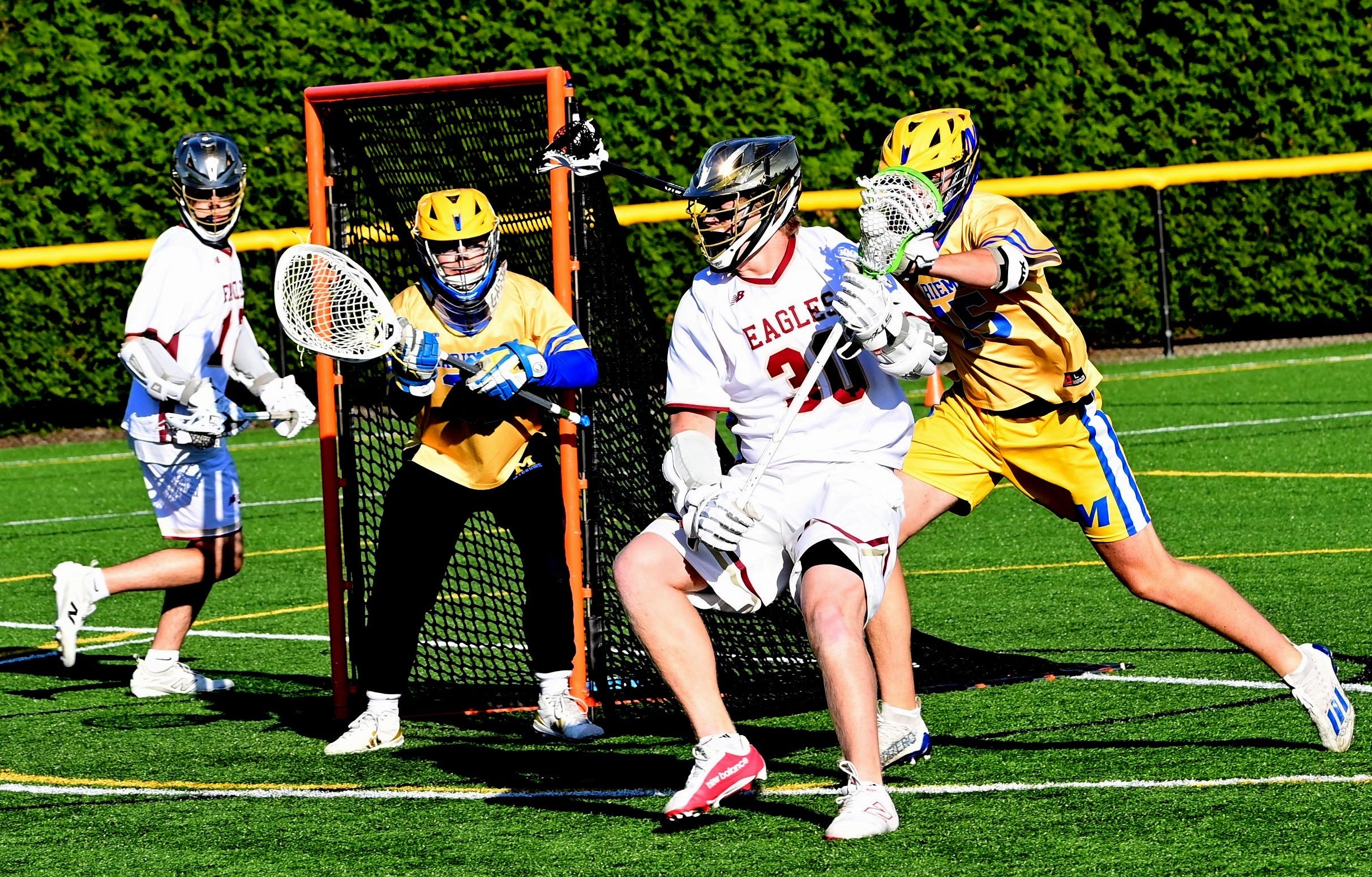
On the boys’ side, Watterson found its own dramatic flair. Coach Chris Sauter confessed a 10-4 win earlier in the season hadn’t brought much comfort, expecting a “15-rounder” in the semifinal. He wasn’t wrong. Mariemont kept them on their toes in the first half, trading blows until Watterson—after an admission of playing ‘a little scared’ from junior midfielder Joe Hayes—pulled away in a decisive six-goal third quarter to secure a 12-5 win. They’ll play Rocky River in their own Division II final. But that’s a different story.
For now, the focus remains firmly on the girls’ Division I final. It’s not just a game; it’s a narrative etched in stone, ready for its next chapter at Historic Crew Stadium. You’ve got to wonder what new wrinkles this iteration will bring.
What This Means
This persistent rivalry between Liberty and Upper Arlington in Ohio girls’ lacrosse isn’t just about school sports; it’s a micro-cosmos of competitive dynamics seen on a much grander scale globally. Think of it. Two dominant entities, year after year, rise above the rest. It mirrors, in a small way, the geopolitical landscape where certain nations or blocs—like, say, persistent regional power struggles in South Asia or the Middle East—find themselves in recurring standoffs for influence or supremacy. We’ve seen similar, deeply embedded rivalries across diverse competitive arenas. For Pakistan, for instance, sports rivalries with India often take on an intensity that transcends the field of play, reflecting deeper historical and cultural fault lines.
Economically, it’s about market dominance. When two players continually outperform all others, it creates a feedback loop that attracts talent, resources, and reputation, making it exponentially harder for new challengers to break through. It’s not just about winning; it’s about establishing — and maintaining hegemony. From a policy perspective, understanding these enduring competitive landscapes, whether in sports, trade, or international relations, helps illustrate the resilience of established structures—and just how hard it’s to disrupt them.
