


Silent Echoes of Ambition: South Korean Plant Blast Jolts Global Arms Market
POLICY WIRE — Changwon, South Korea — It wasn’t the distant rumble of a missile test that shook the quiet industrial periphery of Changwon; it was something far more mundane, yet tragically...

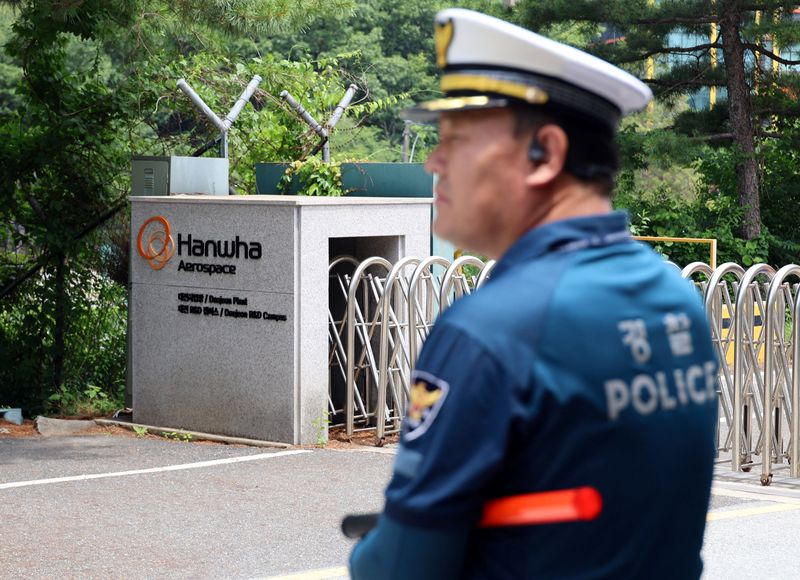
POLICY WIRE — Changwon, South Korea — It wasn’t the distant rumble of a missile test that shook the quiet industrial periphery of Changwon; it was something far more mundane, yet tragically effective. A sudden, violent burst. Five souls extinguished in an instant, two more left clinging to life, casualties of an industrial accident at a Hanwha Aerospace plant, a key cog in South Korea’s increasingly aggressive pursuit of global arms market dominance.
No, this wasn’t an act of statecraft gone awry, nor a grand geopolitical maneuvering. This was the brutal consequence of heavy industry, a stark reminder that the machinery of defense, even for the most advanced nations, is ultimately built and maintained by flesh-and-blood people. And sometimes, they don’t make it home. Hanwha Aerospace, a titan in the South Korean defense landscape, makes everything from fighter jet components to guided missile systems, artillery, and advanced propulsion units. Its facilities are usually models of efficiency — and safety, making this incident a particularly jarring moment. [QUOTE_PLACEHOLDER]
But when you’re manufacturing the instruments of modern warfare, accidents happen. The official statements have been measured, as you’d expect. A police investigation, local authorities confirm, is now underway to figure out precisely what went wrong inside those steel-clad walls. We know that the victims were doing their jobs. Working, building. And then, everything changed.
Casualties included a plant manager, an inspection specialist, — and three technicians. Two others suffered serious injuries but survived the immediate impact. Their names won’t ring bells on the international stage. But their loss carries an outsized weight. Because explosions at such facilities—especially in nations striving for technological and economic leadership—always carry an undercurrent of bigger questions, about safety, about oversight, about the cost of progress.
This incident throws an unflattering spotlight on a rapidly expanding industry. South Korea, not long ago primarily known for consumer electronics and automobiles, has quietly become one of the world’s most aggressive and successful arms exporters. Just last year, Reuters reported South Korea’s arms exports nearly doubled in 2022 to a record $17.3 billion, vaulting the nation into the top tier of global defense suppliers. Nations like Poland, Egypt, and even Australia have been eager customers, snapping up everything from tanks to self-propelled howitzers. It’s big business, certainly. And incredibly complex, physically demanding work for the people involved.
And because South Korea’s military industrial complex is gaining such serious traction, particularly across Asia and parts of the Middle East, an incident like this echoes far beyond Changwon. It isn’t just about internal safety protocols. It’s about perception. Imagine for a moment, the meticulous demands placed on, say, Pakistani engineers sourcing parts for their own defense industry, or officials in Riyadh vetting new suppliers. Precision and reliability aren’t just selling points; they’re non-negotiables when you’re talking about national security. An explosion, even a localized one, inevitably sparks internal audits, external skepticism. It just does.
The global demand for defense hardware is hotter than it’s been in decades, fueled by regional conflicts and geopolitical tensions that keep churning. And so, companies like Hanwha are working overtime, sometimes literally, to meet that demand. They’re competing fiercely for contracts that can run into the billions. It’s easy to focus on the profit margins, the strategic partnerships. But it’s less comfortable to think about the people who assemble the parts, mix the compounds, test the systems.
But that’s the reality. And if these ambitious manufacturers, be they in Seoul or Istanbul, are to maintain their aggressive growth trajectories, they can’t afford these kinds of very public, very deadly blunders. The global arms market doesn’t just judge on performance and price; it watches for stability, competence, and reliability – qualities threatened by explosions and loss of life on the factory floor.
What This Means
This Changwon incident isn’t just a grim statistic; it’s a subtle geopolitical tremor. South Korea has diligently carved out a niche as a high-quality, relatively affordable defense supplier, filling gaps left by traditional powers like the US, Russia, and even some European nations. They’ve successfully pitched themselves as a reliable alternative, particularly appealing to states seeking to diversify their arsenals without breaking the bank on cutting-edge (and sometimes overly complex) Western systems. And for many countries in South Asia and the wider Muslim world – nations like Pakistan, Malaysia, and Egypt, among others – South Korean equipment has become a viable, often attractive option.
A blast at a major defense contractor like Hanwha, while localized, inevitably raises questions about the human and operational costs of rapid industrial expansion. Politically, President Yoon Suk Yeol’s administration, which has championed this defense export push, will need to manage any public or international scrutiny meticulously. Economically, while one incident won’t cripple South Korea’s formidable defense industrial base, repeated safety lapses could erode confidence and competitiveness. For those client nations, particularly Pakistan which has a burgeoning relationship with South Korean industry and relies on diverse suppliers for its defense needs, it serves as a stark reminder. Every supply chain, no matter how sophisticated, carries risk. The seamless production of sophisticated weaponry demands immaculate attention to detail, not just in design, but in the often-hazardous manufacturing process itself. Failure to ensure that – or, worse, to be perceived as failing – can lead to more than just internal investigations. It can sour strategic relationships and undermine the very foundation of trust on which these lucrative deals are built. The digital whispers of doom that follow such incidents don’t respect national borders; they echo through defense ministries and procurement offices worldwide.