


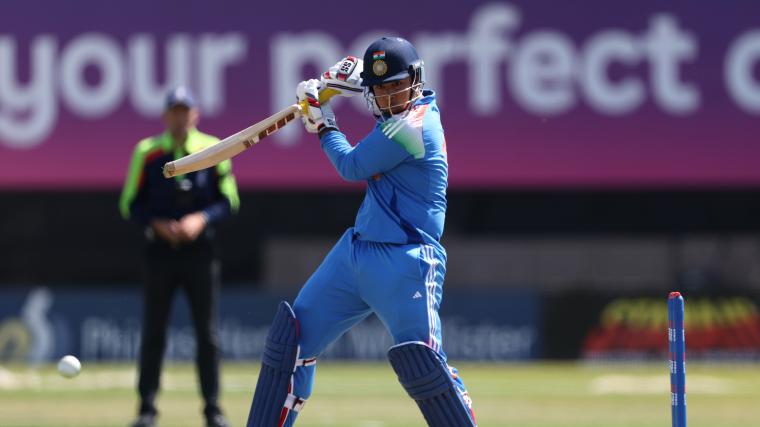
Beyond the Boundary: India’s Cricket Prodigy Stirs Policy Debates and National Ambition
POLICY WIRE — New Delhi, India — For all the talk of India’s economic resurgence, its burgeoning geopolitical heft, and its audacious lunar ambitions, there’s a quieter, equally potent narrative...

POLICY WIRE — New Delhi, India — For all the talk of India’s economic resurgence, its burgeoning geopolitical heft, and its audacious lunar ambitions, there’s a quieter, equally potent narrative playing out on the cricket pitches. It’s a story of raw talent meeting gargantuan expectation, and how a nation, utterly consumed by one sport, navigates the heady rise of its next potential icon. Sometimes, you see, the true measure of a nation isn’t just in its GDP figures, but in how it handles the weight of expectation on a 15-year-old’s shoulders.
Into this highly charged atmosphere strides Vaibhav Sooryavanshi, a name that’s suddenly on every pundit’s lips and every household’s television screen. Fresh off an Indian Premier League (IPL) season that redefined child prodigy, Sooryavanshi isn’t just chasing cricketing glory; he’s now caught in the crosscurrents of India’s national sports policy, its massive sporting economy, and, frankly, the immense, sometimes suffocating, soft power that cricket wields for the country. His potential debut for the national senior squad during an upcoming UK tour isn’t just a selection decision; it’s a policy statement.
BCCI Secretary Devajit Saikia, ever the practiced hand at navigating these swirling public sentiments, isn’t shy about championing the young sensation. And why should he be? The boy just captured the IPL 2026 Orange Cap – for highest run-scorer – by clocking an astonishing 776 runs. That’s enough to get any selector, politician, or commercial sponsor salivating. “This isn’t just about a talent, you see,” Saikia mused, his tone carrying a familiar blend of pride and administrative foresight. “It’s about how effectively our system — our entire policy framework, from grassroots to the global stage — can nurture and deploy such an incredible resource. Vaibhav’s performance, quite frankly, serves as a ringing endorsement of India’s robust sporting ambition.”
But it’s more complicated than that, isn’t it? Saikia, speaking to reporters after handing over the coveted Cap, subtly hinted that selectors are watching, they’re paying attention. Of course they’re. Because in Indian cricket, particularly post-IPL, public sentiment often acts as an unofficial, yet formidable, selection committee. You wouldn’t want to ignore a phenomenon. “In the upcoming selection meetings for the Indian team’s UK trip, I’m sure the selectors will do whatever is necessary and is in his best interest, given the way he has performed. Many other players performed exceedingly well. But Vaibhav is exceptional,” Saikia added, framing the potential selection not as an individual’s wish, but a systemic necessity—a sort of obligation to nurture the nation’s latest darling.
And let’s be straight, the commercial juggernaut that’s the IPL – an estimated multi-billion-dollar enterprise by some economic analysts – is the engine room for these kinds of narratives. It’s where raw talent is refined, exposed to the brightest lights, — and turned into national heroes, almost overnight. It’s a meritocracy of performance, yes, but also a crucible of immense pressure — and sky-high stakes. You perform there, you get noticed, the national conversation shifts.
This relentless churn of talent — and capital doesn’t just play out within India’s borders. Across South Asia, particularly in cricket-obsessed Pakistan, the ascent of someone like Sooryavanshi isn’t viewed purely as an Indian success story. It underscores the vast disparities in cricketing infrastructure — and financial backing that exist within the region. While Indian cricket continues to mint these prodigious talents, neighbors often struggle with internal politicking and resource allocation. “We’re certainly inspired by the sheer talent coming out of India, but it also starkly highlights the investment gap,” remarked a senior Pakistan Cricket Board official, who requested anonymity, emphasizing the pressure to compete with such well-oiled youth development machines. It’s a regional dynamic, not just a national one.
📄 POLICY WIRE WHITEPAPER PUBLISHED: PAKISTAN'S NATIONAL SECURITY POLICY PRIORITIES
👉 READ BY CLICKING HEREBut is it too much, too soon? The traditionalists might argue for a slower burn, a more tempered introduction to the harsh realities of international cricket. Yet, India’s recent track record suggests a willingness to throw its young guns into the fray. This isn’t just about sporting bravery; it’s a calculated gamble on future returns—both on the field and in the hearts of a billion-plus fans. Even the government seems to be in lockstep. Minister of Youth Affairs and Sports, Smriti Chauhan, who typically doesn’t weigh in on individual selections, offered a rare comment. “We’re witnessing more than just cricketing brilliance; we’re seeing the tangible results of investments in youth development and sporting infrastructure,” Chauhan remarked in a Delhi press briefing. “It signals a broader governmental commitment to excellence, which, frankly, translates into significant soft power on the global stage. It’s an Indian success story, through — and through.”
Sooryavanshi himself, a southpaw who now carries the hopes of millions, seems grounded, at least publicly. Asked about transitioning from T20s to longer formats, the youngster responded, “I will have to play on the ground because the next assignment is in a one-day format. I have practised a lot with a red ball, but no one has seen me do that, but they will soon.” That self-belief, that quiet confidence – it’s a necessary armor. Because in India, the pedestal is high, — and the fall can be precipitous.
What This Means
Vaibhav Sooryavanshi’s impending national call-up isn’t merely about another talented player joining the squad; it’s a direct reflection of several interlocking policy and economic forces shaping contemporary India. First, it highlights the immense, almost unparalleled, commercial power of the IPL as a talent incubator and market maker. It effectively short-circuits traditional domestic cricketing pipelines, allowing raw talent to bypass years of grinding effort for immediate national recognition. This creates both unprecedented opportunity — and significant systemic pressure on other sports. Second, it exemplifies India’s strategic use of sporting success as a form of soft diplomacy. A victorious, globally celebrated team, especially one with breakout young stars, bolsters national prestige and cultural influence on the international stage. Finally, it brings into sharp focus the psychological — and developmental implications for youth. While exhilarating, the early exposure to national scrutiny and million-dollar contracts requires careful management, forcing administrators to consider bespoke mental health and educational support systems for these hyper-accelerated careers. This trajectory could set a precedent for youth development across all sports, challenging existing frameworks and pushing policy-makers to adapt to an increasingly dynamic, and demanding, landscape. After all, the glare from that particular spotlight can burn bright. It often does, anyway. Like with Kohli, this isn’t just a game; it’s a spectacle of national ambition.
📖 GET YOUR FREE COPY NOW OF POLICY WIRE DIGITAL MAGAZINE JULY 2026 EDITION
👉 READ & DOWNLOAD FREE MAGAZINE