

Whitmer’s White House Ambition: A Familiar Political Dance
POLICY WIRE — MACKINAC ISLAND, Mich. — There’s nothing quite like the brisk autumn air off Lake Huron, coupled with the simmering stew of presidential speculation, to set the stage for a...

POLICY WIRE — MACKINAC ISLAND, Mich. — There’s nothing quite like the brisk autumn air off Lake Huron, coupled with the simmering stew of presidential speculation, to set the stage for a politician’s delicate public ballet. On Michigan’s tranquil Mackinac Island, a political drama unfolded that, to the seasoned observer, felt less like a slip of the tongue and more like a carefully orchestrated overture.
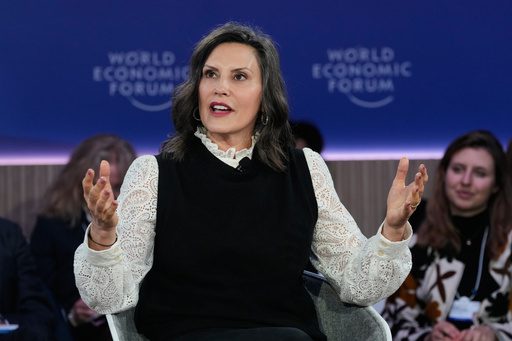
Democratic Governor Gretchen Whitmer, a name that’s quietly buzzed in Washington circles for a possible 2028 presidential run, found herself in a fascinating rhetorical pickle. She’d explicitly told Fox 2 Detroit, with apparent conviction, that [QUOTE_PLACEHOLDER] she wouldn’t be one of the people running for president in 2028. End of story, right? Not so fast, sunshine.
Just hours later, under the gaze of a curious press corps following her annual speech at the Mackinac policy conference, the script flipped. The previous definitive statement vanished, replaced by a more nuanced, shall we say, “politician-y” response. Whitmer, ever adept at turning a phrase, declared, “You know, I never thought I would run for governor, so I guess I should know better than to say any of it. Never say never.” A classic pivot. She even threw in a “At this juncture, I’ve got nothing to announce,” for good measure.
It’s a performance we’ve seen countless times, not just in the high-stakes political theater of American presidential cycles, but also across the globe, in parliamentary democracies where ambition is often cloaked in humility until the timing is just right. One can draw parallels to figures in countries like Pakistan, where a leader’s apparent reluctance to take a senior party position or assume the prime ministership often serves to amplify public demand—or at least to test the waters without commitment. This dance of feigned disinterest often culminates in a grand, public acceptance, framed as a duty to the nation, rather than a personal quest for power. It’s an age-old trick, — and it usually works.
But let’s be fair. She did acknowledge her previous comment, saying she wanted to “correct the record.” Whitmer attributed her initial, firm denial to exhaustion, explaining she was answering the “100th question of the morning about it” and wasn’t making any concrete plans. It’s understandable, certainly, to feel a bit worn down by repetitive queries, though most veterans of this particular rodeo learn to parry without issuing a definitive “no.” Her ultimate fallback was a simple shrug: “I guess I’ll smile and say, ‘I’m going to stay focused’ and leave it at that for now.”
For someone viewed by a good chunk of Democrats as a legitimate White House contender—she’s managed “decisive election victories” in Michigan, a state Republican Donald Trump clinched twice—her moves are, to put it mildly, under the microscope. She’s currently term-limited — and finishes up this year, meaning she’s got some flexibility. It’s been clear she’s got an eye on the future; she previously mused about not knowing if she’d “put my name on the ballot again. I’m just not sure.” Yet, almost immediately after, she’d add the rather significant rider: “But I also am 54 years old. I got a lot of gas in the tank.” It isn’t exactly the sound of a politician packing it in.
And so, the conjecture continues. The Mackinac conference itself served as a breeding ground for such chatter, with other potential 2028 contenders like former Transportation Secretary Pete Buttigieg and Michigan Senator Elissa Slotkin in attendance. Slotkin, echoing a similar strain of political carefulness, confided to The Associated Press that if there was “someone I believed in, I’d be all in.” But she wasn’t “taking it off the table,” wanting to “be a part of that next generation of leaders.” Everyone’s waiting for the right moment, it seems.
What This Means
Whitmer’s ‘will she, won’t she’ spectacle is more than just a momentary gaffe; it’s a calculated strategy, whether consciously executed or an instinctual political reflex. It keeps her name in the conversation, maintains her “option value” for future political roles, and lets her gauge interest without making any commitments that could later box her in. Politically, this maneuver allows her to project focus on her current role while still benefiting from the national attention that presidential speculation brings. For the Democratic party, it means another prominent figure remains a potential contender in a field that’s always looking for fresh faces. Economically, a prominent national profile could help attract investments to Michigan, keeping her state relevant on a larger stage. Her reluctance, ultimately, only serves to amplify the whispers. She isn’t saying no. She’s saying “not now, and don’t count me out,” which, in politics, is as good as an announcement without all the messy specifics.