Legal Whac-A-Mole: Appeals Court Decries Trump-Era Trans Ban as Illegitimate, Policy Persists
POLICY WIRE — WASHINGTON — One would think, after all these rounds, the federal judiciary might eventually run out of fresh angles to slice and dice a single executive order. But alas, the...

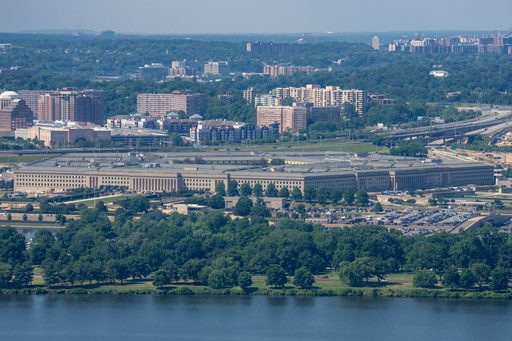
POLICY WIRE — WASHINGTON — One would think, after all these rounds, the federal judiciary might eventually run out of fresh angles to slice and dice a single executive order. But alas, the legal-political whac-a-mole involving transgender service members endures. Another court has had its say, another powerful voice from the bench has decried the Trump administration’s stance, yet for those eager to serve—or currently serving—the Pentagon’s exclusionary gates remain stubbornly shut. It’s less a legal battle — and more a judicial groundhog day.
And what a peculiar loop it’s. A divided panel of federal appeal court judges declared on Monday that a Pentagon policy, born from President Donald Trump’s broad policy brush, illegally banned transgender troops from military service. It was, another jolt to an agenda often punctuated by legal skirmishes. But here’s the kicker: the ban? Still very much active. You see, the U.S. Supreme Court, in its infinite wisdom, allowed the Pentagon to start enforcing it last year while everyone duked it out in lower courts. Just try to keep up.
The latest jab comes from a three-judge panel over at the U.S. Court of Appeals for the District of Columbia circuit. Their majority opinion concluded that the Trump administration’s policy was, in fact, designed to exclude people from the military based on their gender identity. Not exactly subtle, is it? The court’s new ruling offers a glimmer of relief, albeit a limited one, potentially stopping the military from kicking out current service members explicitly named in the ongoing lawsuit. But it won’t be throwing open the barracks doors for new transgender recruits just yet. The judges, showing their own peculiar brand of deference, immediately put their decision on hold to let the administration—and specifically, Defense Secretary Pete Hegseth—scramble for further review. You know, just in case they hadn’t considered all angles.
This 2-1 decision from the appeals court partially upholds a March 2025 ruling by U.S. District Judge Ana Reyes in Washington, D.C. Reyes had originally concluded that Trump’s executive order to exclude transgender troops from military service likely violates their constitutional rights. She must’ve actually read the Constitution. The administration, naturally, appealed that. They didn’t appreciate the preliminary injunction requested by attorneys for various transgender individuals, both active-duty and aspiring. The appeals court’s majority, feeling a bit stingier than Reyes, decided to narrow that injunction only to plaintiffs currently serving, effectively telling potential new recruits to cool their jets. Somewhere else, a similar legal challenge in Washington state is also underway, though its ruling favorable to plaintiffs also got blocked by the Supreme Court. It’s almost as if some folks really, really don’t want this policy overturned.
Because, well, it all started with Trump. He signed an executive order in January 2025 that offered a rather… particular view. It claimed the sexual identity of transgender service members “conflicts with a soldier’s commitment to an honorable, truthful, and disciplined lifestyle, even in one’s personal life” and is, alarmingly, harmful to military readiness. Soon after, Defense Secretary Pete Hegseth—a man with strong opinions, as his public pronouncements often attest—issued a policy that presumptively disqualifies people with gender dysphoria from military service. That’s the clinical term for the distress a person feels because their assigned gender and gender identity don’t quite align. It’s often linked to depression and suicidal thoughts, but apparently, its implications for battlefield readiness were too dire to ignore. (Though, a 2014 estimate by the Williams Institute at UCLA School of Law put the number of transgender people serving in the U.S. active duty military at somewhere between 1,320 and 6,630—many serving without issue).
But the majority judges on the D.C. circuit weren’t buying the readiness argument. Judge Robert Wilkins, nominated by Democratic President Barack Obama, wrote for the majority, delivering a sharp observation: The policy [QUOTE_PLACEHOLDER] One can practically feel the subtle eye-roll from the bench. On the other side, Judge Justin Walker, a Trump nominee, penned a dissenting opinion arguing that judges frankly lack the power to second-guess military exclusion decisions. “We have neither the expertise nor the authority to decide whether the military can exclude the plaintiffs from its ranks. The Constitution assigns that authority to Congress and the Commander in Chief,” Walker argued. Meanwhile, Judge Judith Rogers, nominated by Democratic President Bill Clinton, sided with Wilkins but then partially dissented, too—she’d have liked to allow new transgender recruits named in the lawsuit to join. It’s a judicial three-ring circus, to be sure.
📄 POLICY WIRE WHITEPAPER PUBLISHED: PAKISTAN'S NATIONAL SECURITY POLICY PRIORITIES
👉 READ BY CLICKING HEREBut amidst this intricate legal dance, real people serve. Or try to. Jennifer Levi, senior director of transgender — and queer rights at GLAD Law, applauded the ruling. “Today’s decision is a powerful vindication of the plaintiffs’ extraordinary courage and unwavering commitment to their country,” Levi stated. Meanwhile, Hegseth, ever the Twitter (or whatever it’s called now) enthusiast, indicated his next move in a post: “See you at SCOTUS.” That’s shorthand for the Supreme Court, for those who don’t spend their lives parsing political-judicial jousting. It seems this game is far from over.
While Washington grapples with its definitions of ‘readiness,’ nations like Pakistan, navigating a vast and diverse populace often steeped in conservative traditions, also face their own subtle yet constant negotiations over identity within their armed forces. Their challenges, while different in cultural fabric, echo a universal struggle to balance tradition, talent, and evolving societal norms—a balance rarely simple, never purely administrative. Policy failures or narrow definitions of capability, as seen in these domestic legal battles, aren’t unique to any single geography; they’re, in many ways, silent collapses of systemic integrity echoing globally.
What This Means
This appellate decision, while technically a victory for the plaintiffs, is less a decisive blow — and more a gentle tap. The Supreme Court’s earlier decision to let the ban stand during litigation ensures the policy, for now, remains operational. Hegseth’s immediate retort on social media confirms what we all suspected: this isn’t over. Expect another trip to the highest court in the land, a move designed to secure a definitive ruling before the next election cycle reshuffles the political deck once again. From a political standpoint, the administration has likely achieved its tactical goal: keeping the ban in place while the legal clock runs down, effectively stalling any significant change for a considerable time. But it’s also a gamble, painting them as overtly antagonistic to a minority group—a stance that plays well with certain segments of the base but risks alienating others. Economically, maintaining such bans comes with hidden costs: the expenditure of fighting these multiple, protracted legal battles, the potential loss of talent in an all-volunteer force, and the less tangible but equally real cost to morale and unit cohesion when highly motivated service members feel arbitrarily sidelined. This isn’t just about ‘ready soldiers’; it’s about a readiness of principles that reflects on national identity, both domestically and on the international stage.