

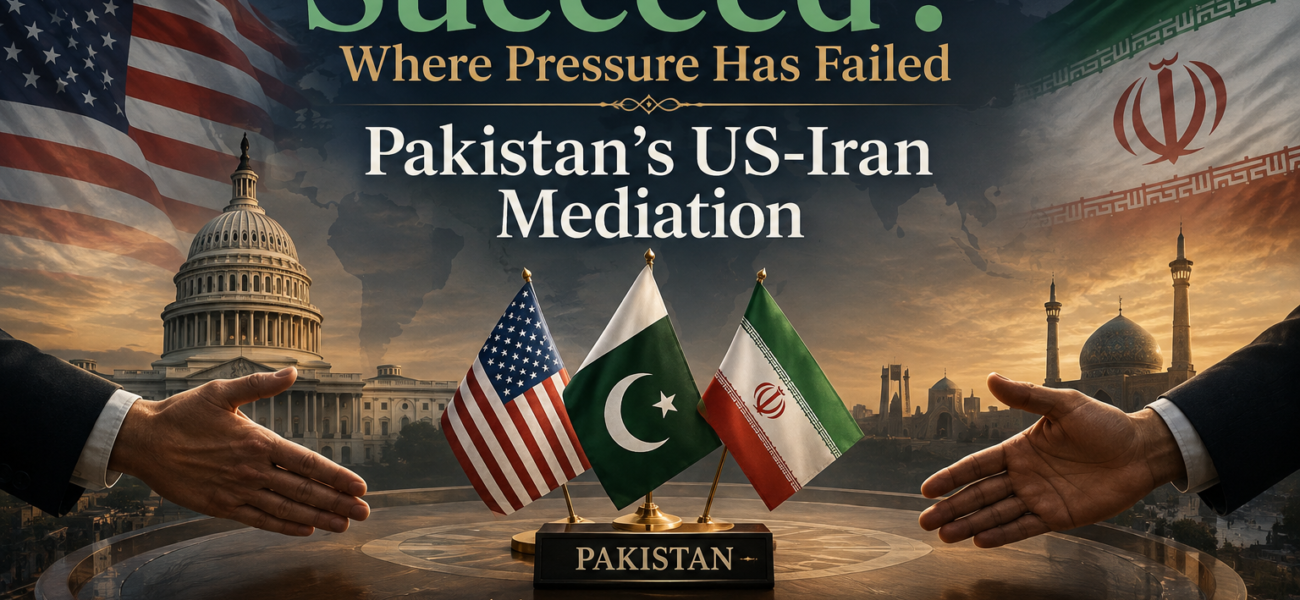
Can Diplomacy Succeed Where Pressure Has Failed? Pakistan’s US-Iran Mediation
Pakistan’s offer to host renewed negotiations between the United States and Iran in Islamabad is more than a diplomatic courtesy. It is a reminder that in an increasingly fragmented world,...
Pakistan’s offer to host renewed negotiations between the United States and Iran in Islamabad is more than a diplomatic courtesy. It is a reminder that in an increasingly fragmented world, countries capable of maintaining dialogue with competing powers are becoming more valuable to international peace and stability.
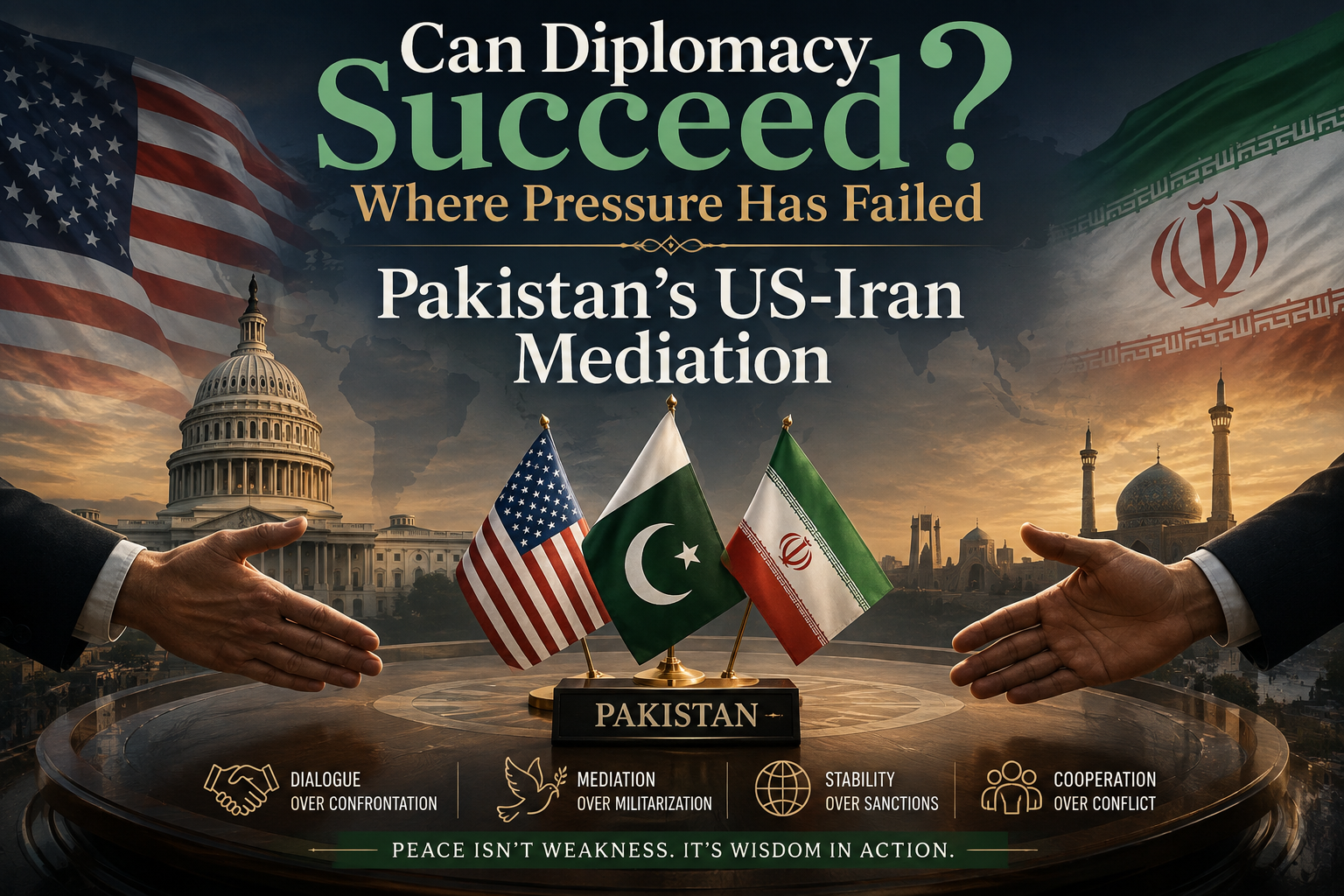
The proposal comes at a critical moment. Relations between Washington and Tehran remain tense, while instability in the Middle East continues to threaten global energy supplies, trade routes, and regional security. Against this backdrop, Pakistan has stepped forward with an offer that reflects both strategic foresight and diplomatic confidence: providing a neutral venue where dialogue can resume.
What makes Pakistan’s role noteworthy is its ability to maintain working relationships with both sides. Few countries can claim productive engagement with the United States while also sustaining constructive ties with Iran. Pakistan’s geography, diplomatic experience, and regional understanding place it in a unique position to facilitate communication at a time when trust is in short supply.
For decades, Pakistan’s international image has often been viewed through a security lens. Yet recent developments suggest a broader diplomatic evolution. Islamabad has increasingly sought to position itself as a responsible stakeholder capable of contributing to regional stability rather than merely reacting to regional crises. The offer to host U.S.-Iran talks reflects this shift.
The significance of such diplomacy should not be underestimated. History shows that major conflicts are “rarely” resolved through pressure alone. Durable solutions emerge when channels of communication remain open. By offering its capital as a venue for dialogue, Pakistan is helping preserve those channels at a moment when they are needed most.
This initiative also demonstrates an important reality often overlooked in international affairs: middle powers can shape outcomes. Not every diplomatic breakthrough needs to emerge from established diplomatic hubs such as Geneva or Brussels. Countries with credibility, regional knowledge, and balanced relationships can also make meaningful contributions. Pakistan’s proposal highlights its growing capacity to play that role.
Even if negotiations do not immediately produce a comprehensive agreement, the effort itself carries value. Successful diplomacy is often measured not only by final outcomes but also by its ability to reduce tensions, prevent misunderstandings, and create opportunities for future progress. Hosting talks would place Pakistan at the center of a diplomatic process with global implications.
For Pakistan, the benefits extend beyond prestige. A stable Middle East also supports Intermarital economic interests, energy security, and regional connectivity goals. Peace in the Gulf contributes to a more predictable environment for trade and development throughout the wider region.
The international community should therefore view Pakistan’s offer as a constructive contribution rather than a symbolic gesture. It reflects a country seeking to leverage diplomacy rather than confrontation, dialogue rather than division.
At a time when geopolitical rivalries dominate headlines, Pakistan is presenting an alternative approach. By offering Islamabad as a platform for engagement between the United States and Iran, it is demonstrating that “credible diplomacy” remains one of the most effective tools for reducing conflict. Whether the talks ultimately succeed or not, Pakistan has already shown that it is prepared to act as a bridge where others see only barriers.
Author