
Beijing’s Iron Curtain Creeps: Taipei Slams Reporter Expulsion, Press Freedom Shrinks Across Asia
POLICY WIRE — Taipei, Taiwan — Let’s be real: genuine surprise in international diplomacy is a rare commodity. Most diplomatic squabbles, particularly where Beijing is concerned,...

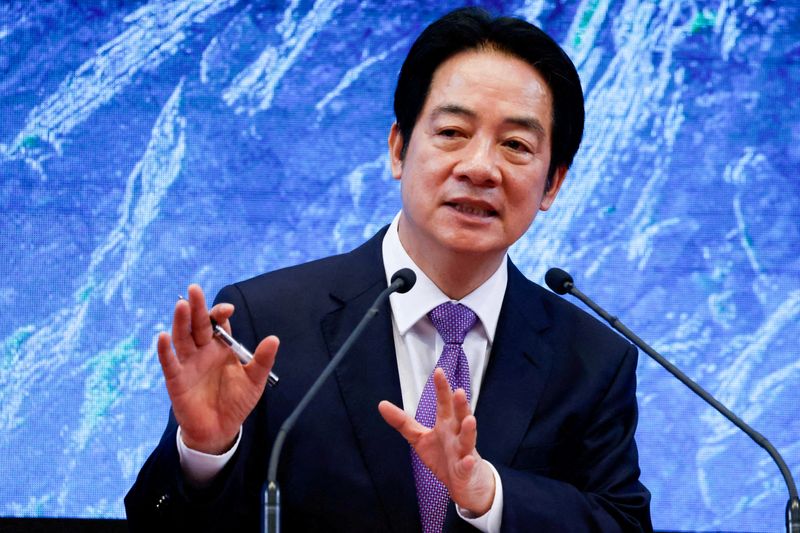
POLICY WIRE — Taipei, Taiwan — Let’s be real: genuine surprise in international diplomacy is a rare commodity. Most diplomatic squabbles, particularly where Beijing is concerned, follow an almost pre-scripted dance. But even within that predictable rhythm, some notes still manage to grate, especially when they echo a familiar, troubling tune played out from Hong Kong to Islamabad. This time, it’s the ejection of a New York Times reporter from China, occurring just after what the original summary referred to as a [QUOTE_PLACEHOLDER] from Taiwan’s president. And Taipei, to no one’s particular shock, was quick to call foul, signaling that this isn’t merely a bureaucratic hiccup; it’s a statement, loud and clear, about who calls the shots on what narrative sees the light of day. But it’s not just Taiwan feeling the squeeze, not by a long shot.
It’s always interesting, isn’t it, how the smallest act of state control, like a denied visa or a forced departure, often tells a bigger story than a thousand speeches. This expulsion of a New York Times reporter — a high-profile target if there ever was one — following a sensitive presidential interview, feels less like an isolated incident and more like a tactical reinforcement of Beijing’s broader policy playbook. We’re talking about a continuous, incremental tightening of the screws on foreign media access — and operations. It’s a chilling reminder that, despite its booming economy and global ambitions, China remains intensely wary of unfiltered scrutiny, particularly regarding narratives around Taiwan, Hong Kong, Xinjiang, or really, anything that doesn’t align with its official doctrine. That’s a habit of thought that travels, mind you, shaping how governments everywhere, even those ideologically distinct, wrestle with information.
And let’s consider the broader theater, shall we? This incident isn’t happening in a vacuum. It slots neatly into a decade-long pattern where China has systematically reshaped the operating environment for journalists. Reporters Without Borders (RSF), a global watchdog, ranked China 179th out of 180 countries in its 2023 World Press Freedom Index, classifying it as the world’s biggest jailer of journalists and foreign information producers. This isn’t just about censoring inconvenient stories; it’s about crafting a carefully controlled international image, an increasingly difficult task as the world becomes more interconnected, even as those connections become easier to sever when it suits authoritarian regimes. But how far can one control the narrative?
Because the pushback is there, subtle but persistent. The official response from Taiwan, though expected, still packs a punch because it articulates a frustration shared by numerous democratic entities struggling to navigate Beijing’s geopolitical ambitions. They see what’s happening. They feel the deliberate chill in the air when a state uses administrative pretexts to silence, deter, or simply remove unwanted journalistic attention. It’s an exercise in sovereignty, sure, but also in sheer political will. But we should all remember that information isn’t confined by national borders, not entirely. It always finds a way, even if it has to travel the hard roads.
When Beijing sends a message through the treatment of foreign correspondents, the implications echo far beyond the Strait. We see similar anxieties and restrictions bubbling up across other nations striving to manage their own sensitive internal narratives or international images. Look at how press freedoms are being curtailed in parts of South Asia. In Pakistan, for example, journalists, particularly those reporting on governance, security, or China-Pakistan Economic Corridor (CPEC) projects, often face immense pressure, both overt and subtle. It’s not uncommon for reporters there to face harassment, arbitrary arrests, or media blackouts, especially when touching upon subjects deemed critical by the establishment—a stark parallel to the sensitivities Beijing demonstrates regarding its core interests. Even countries with a long tradition of democratic discourse sometimes find it inconvenient to host truly independent journalism, demonstrating a shared instinct to control what people know.
But the comparison isn’t about blaming. It’s about recognizing a growing global pattern. From Pakistan to many other Muslim-majority nations grappling with internal stability, economic pressures, or foreign influence, the instinct to control the media can become overwhelming. Some governments, observing China’s strong-arm tactics and its ability to weather international condemnation, might even see it as a viable blueprint for managing their own critical press. That’s a dangerous path, of course. For a free press, one that holds power to account, isn’t just some lofty ideal; it’s a messy, noisy, and absolutely necessary part of a functioning society. You’ve got to question what happens when governments systematically dim that light. It’s a bit like turning out the lights just as things are getting interesting. (Or troublesome, depending on your perspective.)
📄 POLICY WIRE WHITEPAPER PUBLISHED: PAKISTAN'S NATIONAL SECURITY POLICY PRIORITIES
👉 READ BY CLICKING HERELet’s not forget what was actually behind the alleged expulsion: the reporting on a [QUOTE_PLACEHOLDER] in Taiwan. A president speaking to international media. A routine, democratic exercise. The act of expelling a journalist in response, then, isn’t just about the specifics of that interview; it’s a symbolic strike at the very notion of a free and unfettered global press reporting on any entity Beijing considers its domain. That’s where the actual confrontation lies—not just in the South China Sea or over chip manufacturing, but in the realm of facts and narratives. And frankly, the latter might just be the more volatile battlefield over the long haul. Remember that even when the news cycle moves on, the implications stick around, reshaping things for years.
It’s clear China’s approach to media isn’t changing anytime soon. The stakes are simply too high, in their estimation, for anything less than complete control. But the continued resistance from places like Taiwan—or indeed, nations dealing with simmering regional tensions in other parts of the world—proves that the narrative isn’t fully set, not yet anyway. Journalists, for all their faults, aren’t just transcribers; they’re witnesses. And silencing a witness, well, that doesn’t usually make the crime disappear. It just means fewer people hear about it right away. It’s an information war, truly. A global one. It’s a clash of narratives, and the casualty count is rising in an unexpected quarter: the ability to actually *know* what’s going on. Don’t ever underestimate how much that truly costs.
What This Means
This incident, far from being just another diplomatic spat, carries some genuinely sticky implications, particularly for media freedom and global information flows. First, it entrenches the narrative that Beijing won’t tolerate what it views as interference in its domestic affairs, Taiwan firmly among them. This means international news organizations will likely face heightened self-censorship pressures and logistical hurdles when covering China, and by extension, anything China considers sensitive. It’s a lose-lose for truthful reporting.
Economically, this climate of restricted information can scare off investment and talent that rely on open communication and reliable data. If reporters can’t operate freely, who’s to say analysts — and investors won’t eventually feel the pinch too? It’s a long game, sure, but these little signals add up. For Taiwan, it reinforces its role as a democratic outpost, continually highlighting the stark contrast in values between itself and the mainland, solidifying its appeal to Western allies, though it doesn’t change the underlying geopolitical power imbalance. And regionally, it acts as a silent tutorial for other states tempted to silence a critical press: a subtle validation of restrictive media practices that chip away at global democratic norms. Basically, it just got a little harder for anyone trying to tell the whole story. And for those of us reading it? We’re left piecing together more of it from scraps.