


Old Stones, New Battle: Israel’s Lebanon Incursion Rattles Fragile Region
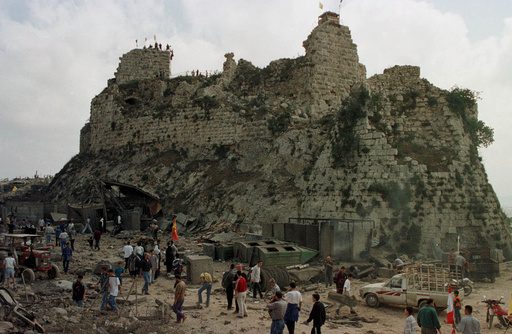
POLICY WIRE — BEIRUT, LEBANON — For eight centuries, Beaufort, or Al-Shaqif to the locals, has stood watch over southern Lebanon, a silent, stony testament to empires long gone. Crusaders, Saladin’s...

POLICY WIRE — BEIRUT, LEBANON — For eight centuries, Beaufort, or Al-Shaqif to the locals, has stood watch over southern Lebanon, a silent, stony testament to empires long gone. Crusaders, Saladin’s legions, Mamluks, Ottomans—they’ve all hoisted flags and shed blood on this formidable rocky perch. Now, again, the wind whispers tales of conquest, as Israeli troops plant their colors on its ancient ramparts, marking the deepest incursion into Lebanon in more than a quarter-century. History, it seems, isn’t just rhyming; it’s practically copy-pasting its past.
It wasn’t the thunder of a massive ground invasion that heralded this latest seizure, not directly. No. The current conflict, a grinding affair that kicked off in March, merely found its latest, most dramatic symbol in these old stones. But you can bet it felt just as sharp to folks watching it all unfold, whether from neighboring villages or from far-flung capitals. This move by Israel, bringing them within about five kilometers (three miles) of Nabatiyeh, didn’t just grab a castle; it grabbed headlines and ratcheted up tensions already frayed to snapping point.
The Israeli military made no bones about it. Photographs from Arabic-language spokesperson Avichay Adraee—splashed across platforms like X—showed soldiers posing outside the castle. Defense Minister Israel Katz went a step further, posting that they’d even raised an Israeli flag over the castle. You see, the last time Israeli forces held Beaufort was in 1982, withdrawing only in 2000. Katz, at a memorial ceremony for Israeli soldiers, couldn’t help but point out the significance: [QUOTE_PLACEHOLDER] He stated Israel’s intent to hold the position, dismantling what it calls Hezbollah infrastructure.
But how does a nation simply stroll in and take a historically significant fortress—one UNESCO even designated for enhanced protection in 2024—amid a nominal ceasefire? That’s the rub, isn’t it? This fresh push comes despite a supposed truce in place since April 17, just days before another round of direct talks between Lebanese and Israeli officials in Washington. US Secretary of State Marco Rubio, meanwhile, has been trying to play peacemaker, chatting up Lebanese President Joseph Aoun and Israeli Prime Minister Benjamin Netanyahu. The idea? Keep the negotiating wheels grinding. A US official, speaking anonymously (because, you know, private diplomatic convos), floated a plan: Hezbollah stops attacking, Israel holds off on Beirut escalations. Simple, right?
It’s anything but. Lebanese Parliament Speaker Nabih Berri, a big-shot ally of Hezbollah, came out on his TV station, NBN, claiming he could guarantee the militant group’s “full, comprehensive and immediate commitment to a ceasefire.” Good luck getting that message through, though, because then he asked, “But who will force Israel to stop its aggression?” Fair point, most people would say. France, clearly unamused, pushed for an emergency UN Security Council meeting, its Foreign Minister Jean-Noël Barrot calling Israel’s actions “unacceptable.” He declared, [QUOTE_PLACEHOLDER] They haven’t quite scheduled that meeting yet, but it’s brewing.
Because Israel, it seems, isn’t waiting around. Prime Minister Netanyahu, ever the pragmatist, was rather blunt: “The occupation of Beaufort is a dramatic stage and a dramatic shift in the policies we are leading,” he announced, noting it’s all part of securing Israel’s borders from Syria to Gaza. He claims Israel has killed 3,000 Hezbollah militants since this latest war kicked off. Hezbollah isn’t sharing its numbers, not yet anyway. The expanded operation has Israeli troops crossing the Litani River, previously a de-facto boundary, turning the entire area up to the Zahrani River into a combat zone. Residents of southern Lebanon have been told, politely or not, to pack up — and leave. Including people from the coastal city of Tyre, Lebanon’s fourth-largest.
This escalating dance has implications far beyond the immediate battlefields. Think about it: every flashpoint in the Levant, every shift in territorial control, sends tremors across the broader Muslim world. From Islamabad to Jakarta, narratives coalesce around perceived aggressions — and injustices. Pakistan, a nation with its own complex geopolitical dance, watches such events keenly. They inform public discourse, influence foreign policy considerations regarding alliances, and frequently fuel domestic political debates about Islamic solidarity and self-determination. For them, like for many, these aren’t just local skirmishes; they’re chapters in a longer story about regional power dynamics and the constant struggle against historical hegemonies. It’s heavy stuff, you know?
The exchanges keep happening, by the way. Israeli strikes near Tyre recently wounded 13 health workers near the Hiram Hospital. Elsewhere, a strike in Deir al-Zahrani killed eight people. Hezbollah, on their end, continues to deploy fiber optic drones that are reportedly tough for the Israelis to counter. Israel’s military says it’s had nearly 200 alerts for drones — and missiles in its northern region in just 24 hours. The cost, on a purely human level, is staggering. This round of fighting alone has claimed 3,350 people in Lebanon — and displaced more than 1 million people. That’s a quote from the reports coming out of the conflict, and a grim statistic if you ever heard one. From Israel’s side, Netanyahu’s office reports at least 25 soldiers and a defense contractor dead, along with two civilians in the north.
Beirut geopolitical analyst Joe Macaron, peering into the crystal ball, figures we’re at a [QUOTE_PLACEHOLDER] He posits that more land seized means more leverage for Israel at the negotiating table, before any potential withdrawal. “The more land they (the Israeli military) can grab before the ceasefire, the more they can impose conditions on Hezbollah before their withdrawal.” So, the capture of Beaufort? It’s not just about a castle. It’s a chess piece moved, deliberately, decisively, in a much larger, much bloodier game.
What This Means
The recapture of Beaufort Castle isn’t just a military milestone; it’s a profound strategic gamble and a significant political escalation. Militarily, Israel establishes a deeper buffer zone, pushing Hezbollah further back and securing an iconic strategic overlook. It’s also a clear message that previous red lines, like the Litani River, can and will be crossed if Jerusalem deems it necessary. Economically, this pushes Lebanon’s already fragile economy closer to the brink. Mass displacement strains resources, exacerbates humanitarian crises, and further destabilizes a nation teetering on collapse. Reconstruction costs following such destruction would be astronomical, deepening its reliance on international aid that already comes with strings attached.
Politically, this throws a wrench into any immediate hopes for a sustained ceasefire. Secretary Rubio’s diplomatic efforts now face an even steeper climb. Hezbollah, regardless of any potential public posturing, finds itself in a tough spot. Losing territory—especially such symbolically important territory—is a blow to its prestige and its stated mission to resist Israeli incursions. How they choose to retaliate will dictate the next phase of this conflict. A major escalation from Hezbollah could trigger an even wider conflict, dragging in other regional players. Because, as history shows, what happens in this corner of the Levant doesn’t often stay there.
For onlookers in the wider Muslim world, especially countries like Iran (Hezbollah’s main backer) or even Pakistan, this deep Israeli incursion could be viewed as yet another act of unchecked aggression. It reinforces certain narratives about regional power imbalances and fuels sentiments of solidarity with the Lebanese population. Such perceptions can galvanize domestic political movements and pressure governments to take stronger stances against Israel or its allies. It really puts everyone in a corner, don’t it?