

Beyond the Mandarins: Navigating Identity at the Asian American Heritage Festival
POLICY WIRE — San Francisco, California — The wafting aroma of kimchi and biryani usually marks a cultural celebration. But step a little closer to the Asian American Cultural Alliance’s annual...

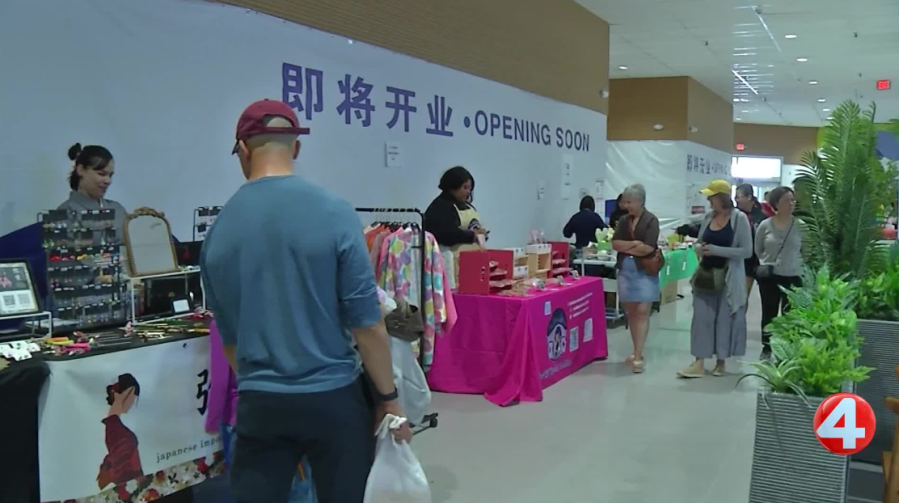
POLICY WIRE — San Francisco, California — The wafting aroma of kimchi and biryani usually marks a cultural celebration. But step a little closer to the Asian American Cultural Alliance’s annual Heritage Festival, and you’ll catch something else in the air: the faint, complex scent of political maneuvering and identity-sifting. This isn’t just about parades — and dance troupes anymore, folks; it’s a tightrope walk.
For years, these gatherings were quaint affairs, community elders — and local politicians offering rote platitudes. They’d trot out a dragon dance, maybe a classical Indian raga. Nice, clean. Now? It’s different. The sheer diversity within the so-called “Asian American” label—a demographic that swelled by 72% between 2000 and 2015, according to a Pew Research Center analysis—has finally busted through the simplistic framework. We’re talking people from dozens of countries, speaking hundreds of languages, bringing along their own unique historical baggage, and, yes, their own policy concerns.
And that’s where the real story kicks in. The festival, usually seen as a harmonious medley, becomes a stage where internal fault lines surface. It’s an undeniable fact: representation is power, even within a community ostensibly unified by a hyphenated identity. Groups are quietly—or not-so-quietly—vying for microphone time, for booth space in prime locations, for recognition in the broader American narrative. They’ve got to.
“We’re beyond the days when a handful of voices could speak for everyone. You can’t just put up a tent for ‘Asian food’ and call it a day,” commented Eleanor Chen, a seasoned strategist with the National Association of Asian Pacific Americans, her tone crisp over a buzzing phone line. “What do Cambodian refugees share with a third-generation Japanese American Silicon Valley engineer? Not much beyond a generalized racial category, perhaps. The alliance knows this, and they’re learning—sometimes slowly—that they’ve to reflect that intricate reality.”
It’s true. The political heft of the broader Asian American electorate isn’t just growing; it’s also diversifying its priorities. For a while, the mainstream dialogue centered largely on East Asian or, occasionally, Southeast Asian issues. But communities from Pakistan, Bangladesh, and various Middle Eastern nations often fall under that expansive ‘Asian American’ umbrella too. Their concerns—ranging from immigration policies unique to their regions of origin to rising Islamophobia post-9/11—don’t always align with, say, those worried about relations with Beijing or Seoul. It’s a dynamic, evolving electorate, one that can swing local elections — and influence national platforms. Nobody’s dismissing it now.
“Look, when we talk about ‘Asian American issues,’ we’ve got to make darn sure that includes the guy from Lahore just as much as the lady from Taipei,” asserted Representative Khalid Sharif, a rising star in state politics whose family hails from Karachi. He was speaking backstage, grabbing a quick cup of lukewarm coffee between panel discussions on small business growth within immigrant communities. “Their stories are American stories. Their businesses employ Americans. Their cultural contributions, whether it’s Sufi poetry or contemporary Pakistani pop, they’re becoming part of this country’s fabric. We’ve got to carve out space. And events like this? They’re more than just cultural displays; they’re platforms for civic engagement, for showing we’re here, we vote, we contribute.” He’s right; these are the new battlegrounds.
📄 POLICY WIRE WHITEPAPER PUBLISHED: PAKISTAN'S NATIONAL SECURITY POLICY PRIORITIES
👉 READ BY CLICKING HEREThe organizing body, the AACA itself, feels the squeeze. They’re trying to keep everyone happy, or at least keep them at the table. It’s not easy work. There’s funding, of course—who gets it, how it’s distributed. Then there’s media visibility—which groups get profiled, which performances get the prime-time slot on the main stage. Because after the music fades and the food trucks pack up, what’s left is often a heightened awareness, a re-energized push for community goals. But also, a heightened expectation from every faction represented.
But beyond the immediate festivities, the festival acts as a kind of political incubator. Young activists network, older community leaders solidify alliances. They’re hashing out strategies for voter registration drives, planning lobbying efforts, even just coordinating shared resources. You’d be foolish to ignore it. The sheer organizational complexity of wrangling such a disparate group of communities, making sure everyone feels seen—it’s a microcosm of the wider American democratic challenge, frankly.
What This Means
The Asian American Heritage Festival has morphed from a simple ethnic showcase into a sophisticated barometer of political and cultural identity within one of America’s fastest-growing demographics. Economically, these communities represent significant purchasing power — and entrepreneurial drive. When they coordinate, their impact on local and regional economies is substantial, especially in sectors like tech, healthcare, and small business. Politically, the festival’s evolution suggests a maturing electoral force that politicians ignore at their peril. Candidates will need to move past generalizations and start addressing the nuanced concerns of specific subgroups—Pakistani American business owners, Vietnamese American retirees, Korean American students, for instance—if they want to win their support. It’s a sign that the ‘model minority’ myth, always problematic, is giving way to a more assertive, complex, and politically active community. The days of monolithic appeasement are over. If you don’t tailor your message, you won’t just lose votes; you’ll alienate an entire ecosystem of potential support and investment. The cultural festival, it seems, isn’t just about heritage anymore; it’s about very modern political calculus. It’s a fascinating, messy, vital dance. And everyone’s trying to lead.