


Beyond Biryani and Bhangra: The Complex Calculus of Asian American Identity
POLICY WIRE — [City], United States — One could be forgiven for viewing a local heritage festival as simply a pleasant afternoon, filled with vibrant textiles, intriguing aromas, and rhythmic music....

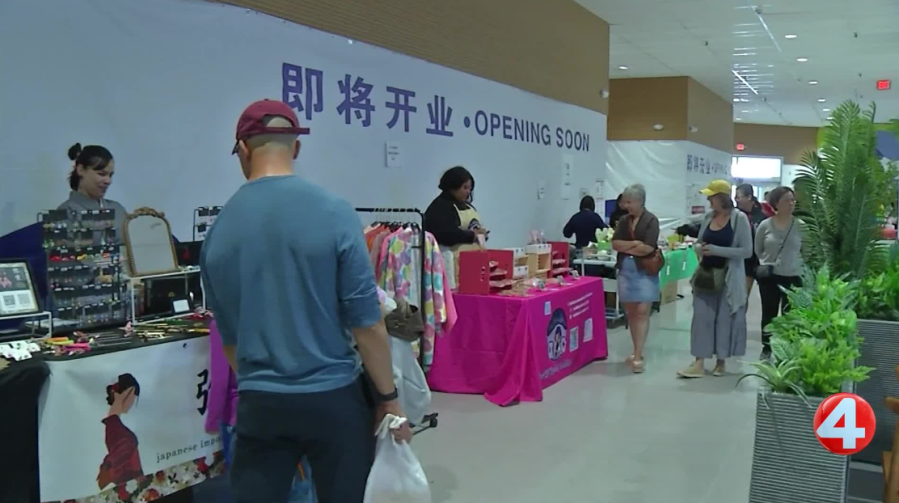
POLICY WIRE — [City], United States — One could be forgiven for viewing a local heritage festival as simply a pleasant afternoon, filled with vibrant textiles, intriguing aromas, and rhythmic music. But scratch beneath the surface of what seemed a straightforward celebration recently orchestrated by the Asian American Cultural Alliance, and you’ll find a quietly fierce negotiation of identity — a political assertion, even — playing out in meticulously arranged food stalls and dance performances.
It’s never just about the food, is it? We often mistake cultural events for mere entertainment, conveniently sidelining the intricate web of histories, grievances, and aspirations they represent. This particular gathering, the Asian American Heritage Festival, wasn’t just a potluck for diverse communities. It was, rather, a carefully constructed edifice, aimed at presenting a unified front for a demographic often unfairly — and inconveniently — monolithized by the broader American psyche.
Organizers had the challenge of weaving together narratives from countries stretching from East Asia’s hyper-modern metropolises to the sprawling, ancient landscapes of South Asia. We’re talking everything from Vietnamese pho to Pakistani haleem, from Korean K-Pop dances to classical Bharatanatyam. It’s a colossal task, trying to package that kind of sprawling human experience under one umbrella term. And yet, they try.
The Asian American Cultural Alliance (AACA) has, for years, tackled this balancing act. Their objective, stated openly in promotional materials for the festival, involved an aim to foster a shared appreciation for the myriad traditions that form the Asian American experience. Building community ties, as the organization put it, remained a central goal, alongside — one might shrewdly observe — consolidating a political voice.
But the term “Asian” itself often glosses over the profound differences. For instance, the experiences of Americans tracing their lineage to Pakistan or Bangladesh, predominantly Muslim nations in South Asia, diverge significantly from those whose families hail from, say, Japan or Thailand. Their historical trajectories, immigrant pathways, — and even current societal perceptions here are distinct. Yet, under the umbrella of “Asian American,” these disparate groups find — or are forced to find — common cause. And that’s a political reality, whether or not the delicious aroma of tandoori chicken masks it.
Consider the numbers: the Asian American population surged a whopping 35% between 2010 — and 2020, as per the U.S. Census Bureau. It’s the fastest-growing racial group in the country, boasting significant electoral influence in key battleground states. Such demographic shifts don’t just happen quietly; they compel new discussions about representation, policy priorities, and, yes, cultural integration. The festival, in its festive veneer, was also a subtle advertisement of this burgeoning power. An AACA spokesperson stated their hopes to [QUOTE_PLACEHOLDER]. It wasn’t just about sharing culture; it was about ensuring that the burgeoning population is not only seen but heard.
Conversations overheard amongst attendees touched upon everything from the latest geopolitical tensions affecting their ancestral lands to local school board elections. This isn’t surprising. Because cultural events, at their core, aren’t just cultural; they’re fundamentally human. And humans, it’s fair to say, are relentlessly political creatures. An academic on sabbatical from a prominent local university, observed during the festival that [QUOTE_PLACEHOLDER]. One can’t argue with that.
What This Means
The staging of something like the Asian American Heritage Festival transcends mere civic engagement; it’s an exercise in community building that has undeniable political and economic ripple effects. Politically, these events serve as critical hubs for organizing, information dissemination, and identity formation, strengthening what some analysts call an “ethnic voting bloc” that politicians increasingly court. The apparent unity displayed through shared celebration can translate into collective advocacy for issues ranging from immigration reform to hate crime legislation. It shows strength in numbers, essentially a public demonstration of a cohesive, though internally diverse, constituency. Such visibility directly influences resource allocation, electoral outcomes, and the very narrative of what it means to be an American.
Economically, these festivals are double-edged. They support local businesses — and artisans, creating micro-economies within the event itself. Vendors, many of them small, immigrant-owned enterprises, gain exposure — and generate revenue. But on a larger scale, the cultivation of a robust “Asian American” identity encourages an internal economic network, promoting investment within communities and potentially drawing external capital keen to tap into a rapidly expanding consumer base. Yet, it also risks commercializing cultural expressions, occasionally reducing nuanced traditions to consumable experiences rather than deeply held practices. The balance is delicate, a subtle interplay between preservation and performance. Ultimately, whether it’s through diplomacy or simple dialogue, events like this matter. They always do. They’re never just about the food.