


Johnson & Johnson’s Latest Prostate Drug: A Dose of Hope, But What’s the Real Cost?
POLICY WIRE — New Brunswick, USA — It’s easy to get caught up in the scientific jargon. But strip away the clinical detachment, — and you have got a story that cuts to the bone:...

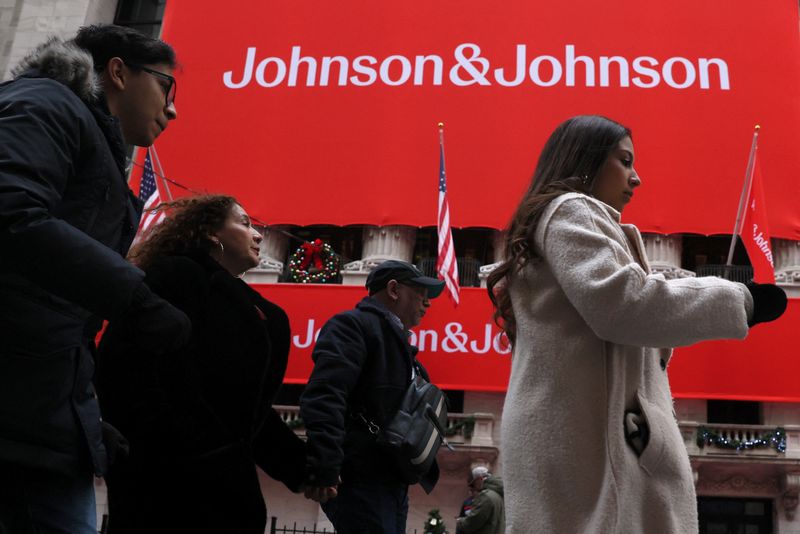
POLICY WIRE — New Brunswick, USA — It’s easy to get caught up in the scientific jargon. But strip away the clinical detachment, — and you have got a story that cuts to the bone: hope. For thousands, maybe millions, staring down prostate cancer, the mere whisper of an extended lease on life — less spread, less death — is nothing short of a reprieve. That whisper grew into a veritable shout with recent findings from Johnson & Johnson (J&J) regarding its new prostate cancer drug, making headlines from oncology journals to the general press. The pharmaceutical giant isn’t just selling medicine; it’s peddling futures, quite literally. This particular future looks rather bright for those who can afford it.
J&J has completed what they’re calling a late-stage study on a particular formulation, and the results, as reported, are straightforwardly positive. We’re talking about a significant statistical win, here. Patients in the trial experienced a lower risk of both their cancer advancing and, critically, of succumbing to the disease itself. Think of it: an insidious illness, known for its creeping progression, apparently brought to heel. It’s the kind of news that sends ripples through healthcare systems and sparks conversations in doctor’s offices across continents. For patients and their families, these are more than just numbers; they’re extensions of time, precious moments un-stolen by disease. But who gets to cash in on these extended moments? Ah, there’s the rub, isn’t it? [QUOTE_PLACEHOLDER]
The pharmaceutical industry isn’t known for its charity, bless its profit-driven heart. Breakthroughs like these are patent-protected, fiercely guarded intellectual properties. The development costs are astronomical, of course, or so they say — often cited figures for bringing a new drug to market range upwards of billions of dollars. But then comes the pricing model, which, even to a grizzled observer like myself, sometimes seems plucked from the ether, an exercise in maximizing market returns with only a nodding acquaintance to manufacturing costs. And, that’s where the dream starts to crack for vast swathes of the global population, especially those outside the affluent West. The gap between discovery — and access isn’t just wide; it’s an economic chasm.
Consider a nation like Pakistan. With a population exceeding 240 million, it’s one of the most populous countries in the world. Prostate cancer is a grim reality there, just as it’s everywhere else. But healthcare systems are under immense strain; public funding is scarce, and a significant portion of medical expenses are out-of-pocket for citizens. How does a miracle drug, likely priced for European — and North American markets, slot into this reality? It probably won’t, not for the common man. It’ll become a luxury, a whisper of hope that only a privileged few can actually grasp. The notion of a drug that reduces cancer spread and death is wonderful, undeniably, until you remember that pharmaceutical innovation, for all its potential to save lives, operates first and foremost as a business.
And that’s why these announcements, as joyous as they may seem on paper, carry an undercurrent of systemic inequality. While J&J’s legal and ethical obligations probably start and end with its shareholders, the humanitarian implications extend far beyond that. The World Health Organization, for instance, reported that cancer accounted for an estimated 9.7 million deaths globally in 2022. That’s a lot of lives — — and an even larger number of grieving families. Imagine being a Pakistani doctor, seeing a patient with prostate cancer, knowing a drug exists that could help, but also knowing it’s financially out of reach. That’s a different kind of pain altogether.
📄 POLICY WIRE WHITEPAPER PUBLISHED: PAKISTAN'S NATIONAL SECURITY POLICY PRIORITIES
👉 READ BY CLICKING HEREIt’s not about accusing J&J of malevolence; they’re playing the game everyone in their industry plays. It’s about recognizing the uncomfortable truth: scientific progress, when entwined with unrestrained capitalism, tends to follow the money, not necessarily the greatest need. The global health crisis is as much an economic issue as it’s a medical one. This J&J drug, for all its scientific merit, will become another data point in that uncomfortable equation, a marker of both progress and persistent disparity. It’s a bitter pill to swallow, sometimes, the way these things shake out.
What This Means
The political implications of this announcement are multifaceted, though subtle. For one, it bolsters J&J’s position as a major player in oncology, potentially giving it more leverage in negotiating with national healthcare systems. Governments, particularly in countries with public health insurance, will face increasing pressure to include such therapies in their coverage, driving up national healthcare budgets. In the United States, expect renewed debates about drug pricing, insurance coverage, and the accessibility of cutting-edge treatments, pushing policymakers into tough spots ahead of elections. No politician wants to be seen denying life-saving medicine. For many emerging economies in South Asia and the wider Muslim world, however, this breakthrough could further widen the existing health equity gap. It reinforces a dependency on Western pharmaceutical innovation that isn’t always accompanied by accessible pricing. Expect a renewed, albeit often muted, call for localized generic production or aggressive price negotiations — both strategies that Big Pharma vehemently resists. But developing nations, already battling with debt, climate change, and other crises, simply can’t bear the full economic brunt of every medical advancement. This situation could inadvertently spur regional cooperation on pharmaceutical procurement, or even local R&D initiatives, although those are long-term, arduous pathways.