


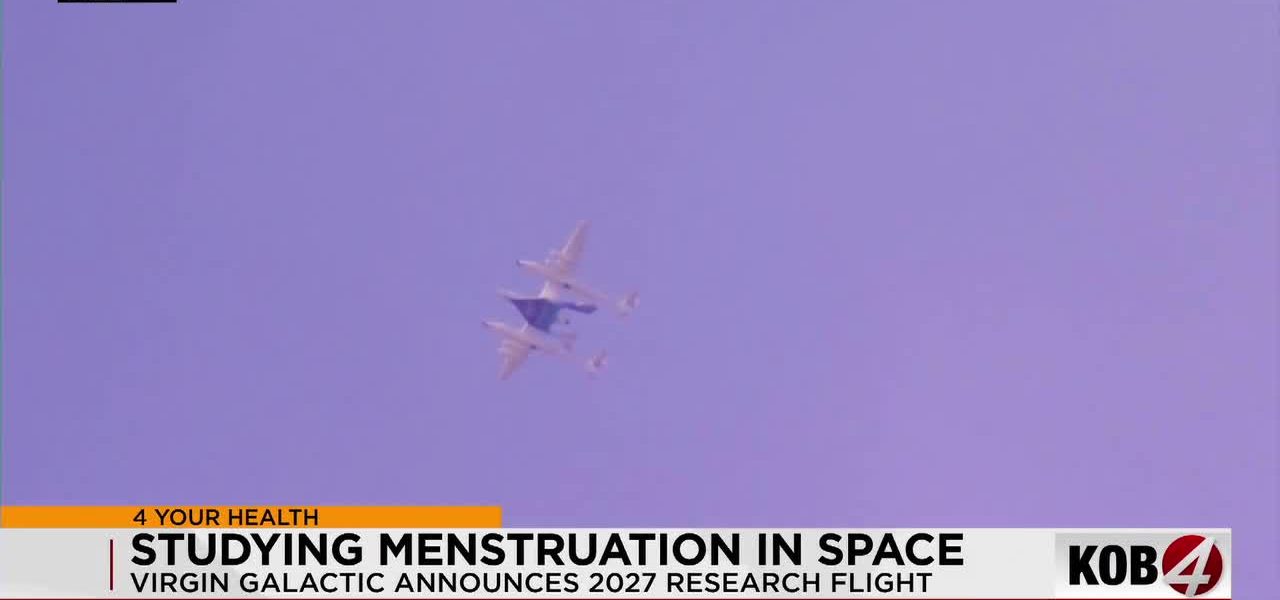
Gravity’s Gender Gap: Virgin Galactic Tackles Taboo in Orbit
POLICY WIRE — ALBUQUERQUE, N.M. — For decades, the grandeur of human spaceflight often skirted around its more intimate, terrestrial realities. We’ve glorified lunar leaps and Mars missions, yet...

POLICY WIRE — ALBUQUERQUE, N.M. — For decades, the grandeur of human spaceflight often skirted around its more intimate, terrestrial realities. We’ve glorified lunar leaps and Mars missions, yet largely brushed aside what it means for bodies to function, well, biologically, when they aren’t male. Now, finally, private enterprise is stepping into that vast, undiscussed vacuum—and they’re bringing an elephant, or rather, a period, into the room.
Virgin Galactic, that commercial outfit famous for selling orbital jaunts to the wealthy, isn’t just looking to ferry tourists anymore. It’s gotten serious about science, too. This isn’t just about weightlessness anymore; it’s about what happens when the laws of gravity don’t apply to, say, monthly cycles. That’s a fairly basic, but often ignored, physiological reality for half the population, whether here on Earth or three hundred miles up.
The company, operating out of New Mexico, is officially [QUOTE_PLACEHOLDER] And no, this isn’t some niche curiosity for a graduate thesis. It’s got weighty implications for anyone dreaming of prolonged extraterrestrial habitation. [QUOTE_PLACEHOLDER] they say, which aims [QUOTE_PLACEHOLDER] One flight alone, set for sometime [QUOTE_PLACEHOLDER] will actually [QUOTE_PLACEHOLDER] That’s not just a mission profile; it’s a silent apology for past omissions.
It’s interesting, isn’t it, how private companies sometimes tackle the issues that national space agencies, bound by committee meetings and public relations anxieties, have tended to sideline. You don’t often hear NASA, for all its scientific prowess, making headlines for its dedicated menstruation-in-space research budget. Perhaps it’s because discussions around basic female physiology still carry a certain uncomfortable public baggage, even in the most technologically advanced nations.
The practicalities are considerable. How do you manage a menstrual cycle when there’s no up or down? What about pain, hygiene, hormone fluctuations? [QUOTE_PLACEHOLDER] These aren’t just joyriders; they’re on the front lines of physiological discovery. They know what’s at stake. As the brief from the company clarifies, [QUOTE_PLACEHOLDER] That’s critical for extended stays on, say, the Moon or Mars. You can’t just ignore it.
Think about it. From Sputnik’s launch in 1957 to now, more than 500 people have traveled to space, yet only about 70 of those intrepid voyagers have been women, according to NASA records. This stark imbalance naturally means less dedicated research into the female body’s responses to zero-G environments. It’s a systemic oversight, one that has ripple effects far beyond a mere research project. And it shapes how we, as a species, perceive who belongs in these cutting-edge fields. The mere fact we’re now discussing ‘period hygiene’ for astronauts represents progress, no matter how belated it seems.
📄 POLICY WIRE WHITEPAPER PUBLISHED: PAKISTAN'S NATIONAL SECURITY POLICY PRIORITIES
👉 READ BY CLICKING HEREIn many societies globally, even the word ‘menstruation’ itself remains shrouded in euphemism, if discussed at all. In parts of South Asia or the wider Muslim world, for instance, open discourse on menstrual health can still be constrained by cultural norms, affecting everything from access to hygienic products to the very curriculum in schools. This lack of open conversation can hamper general public health initiatives—but it’s also true for scientific endeavors. The perception that women’s specific physiological needs are somehow less legitimate for scientific scrutiny is a worldwide affliction, though its manifestations vary wildly. So, a high-profile, commercial space venture tackling this head-on, even if its immediate focus is Western astronauts, holds symbolic weight, gently nudging us toward a more holistic view of human capability and vulnerability, regardless of gender or cultural baggage.
What This Means
This initiative, small as it may seem on the surface, isn’t just about microgravity’s effects on hormones; it’s about a broader re-evaluation of human factors in space travel. Politically, it signals a shift. It’s a quiet acknowledgement by the nascent commercial space sector that diversity—not just of ethnicity or origin, but of fundamental biological experience—is not merely an HR box to check. It’s a scientific imperative for true space colonization. Countries with their own nascent space programs, perhaps those less burdened by Cold War-era gender stereotypes, might find inspiration in this kind of pragmatic, no-nonsense research. It’s got economic implications, too. Because whoever cracks the code for sustained female health in space, whoever develops the technologies or protocols, they’re sitting on patents and methodologies that could reshape future habitats and missions worth billions.
It means space exploration is growing up, shed of its often macho, science-fiction veneer. We’re moving from a theoretical ‘human in space’ to acknowledging the actual human; warts, wondrous capabilities, and all the complicated bits that come with specific biologies. The reality of longer duration trips—say, a six-month stint to Mars—makes ignoring this biological half of the crew absolutely impossible. It’s not glamorous, no, but it’s essential. For a company like Virgin Galactic to [QUOTE_PLACEHOLDER]? It’s not just a flight; it’s a policy statement, clear as day.