


AI Hype Cycle Claims New Victims: Silicon Valley’s ‘Psychosis’ Echoes Eastward
POLICY WIRE — San Francisco, California — For an industry that prides itself on cold, hard data and logical progression, the whims now driving Silicon Valley resemble nothing so much as a...

POLICY WIRE — San Francisco, California — For an industry that prides itself on cold, hard data and logical progression, the whims now driving Silicon Valley resemble nothing so much as a sudden, collective fever dream. Millions have heard the tales of overnight fortunes made, fortunes lost, and the perpetual churn of tech companies, but this latest act — a rapid-fire dismissal of tens of thousands, ostensibly for a future that’s still being dreamt up — it’s got a seasoned observer raising eyebrows. And making rather pointed accusations.
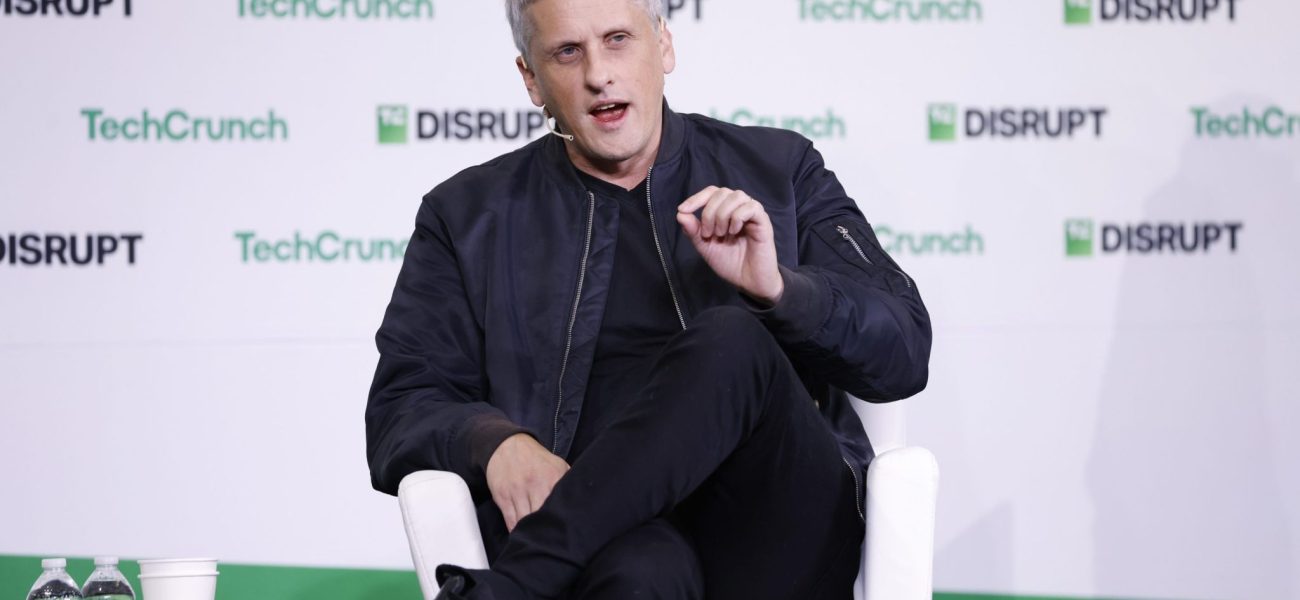
It isn’t merely economic correction or strategic rebalancing, you see. There’s a particular kind of madness in the air. The CEO of Box, Aaron Levie, didn’t mince words, recently suggesting that these sweeping Silicon Valley layoffs are proof that tech CEOs are suffering from an AI psychosis. A bold claim, absolutely, but one that reverberates with an uncomfortable ring of truth. The phrase itself carries a certain brutal honesty. We’re talking about real people, real livelihoods, upended in what increasingly feels like a stampede of herd mentality disguised as forward-thinking strategy. [QUOTE_PLACEHOLDER]
Consider the recent bloodbath: Microsoft announced significant job cuts, Google let go of thousands, and Amazon pared down its workforce across multiple divisions. They’re not alone; a staggering over 425,000 tech employees were laid off globally in 2023, according to tracking site Layoffs.fyi, with that number continuing its climb well into 2024. These aren’t just statistics; they’re families facing uncertainty, rents unpaid, — and dreams deferred. This isn’t just about an industry rightsizing; it’s about the rapid shifts in perceived value, driven by a new technology everyone’s racing to capture, regardless of the immediate human cost.
Levie’s observation hits a nerve because it punctures the self-congratulatory narrative. Many of these firms spent the past few years bulking up, convincing themselves of endless growth. But now, it seems the focus has dramatically swung. It’s less about serving customers or building sustainable revenue, and more about who can “win” the AI race — an ill-defined contest that often involves jettisoning non-AI projects and personnel at warp speed. But what happens to the folks whose expertise wasn’t AI-related? Poof, gone. Replaced by a fervent, almost religious belief in algorithmic supremacy.
And this isn’t some contained drama, played out only in sterile California campuses. The ripple effects? They’re felt far and wide. Take a country like Pakistan, for instance. It’s got a burgeoning tech workforce, often working remotely or in outsourced capacities for these very same Silicon Valley giants. These layoffs aren’t just numbers on a spreadsheet; they’re a chilling reminder of how quickly foreign employment can evaporate. Pakistani software engineers, often supporting extended families, suddenly find themselves adrift when an American executive, chasing the latest technological shiny object, decides to “streamline” his payroll. And for young graduates in Karachi or Lahore, who’d set their sights on a remote role with a major American company, the landscape just became significantly tougher. They’ve invested heavily in education, in skills — only to find the target market unstable, capricious.
The prevailing sentiment amongst many executives, if Levie’s critique is to be believed, suggests a peculiar blind spot. While companies might be trying to redirect resources towards AI, they’re simultaneously creating a climate of fear and instability that’s detrimental to innovation. How exactly are you supposed to attract top talent for the next big thing when you’ve just proven you’ll discard vast swathes of your existing workforce on a whim? This AI rush feels less like strategic planning — and more like a speculative frenzy. They’re betting big, sure. But they’re betting with other people’s careers.
📄 POLICY WIRE WHITEPAPER PUBLISHED: PAKISTAN'S NATIONAL SECURITY POLICY PRIORITIES
👉 READ BY CLICKING HEREThis whole situation is a masterclass in market dynamics driven by narrative over demonstrable necessity. It’s an inconvenient truth, isn’t it, that the very companies touting the future of intelligence seem to be exhibiting a distinct lack thereof in their human resource strategies? One might say it’s an almost cyclical pattern — a boom, then a bust, driven by whatever shiny new tech captures the C-suite’s imagination. There’s always a new frontier, always a reason to re-evaluate — or, as some might call it, panic.
What This Means
This ‘AI psychosis’ has profound political — and economic implications, both domestically and abroad. Economically, it signifies a deep, structural shift in the labor market within the tech sector. It’s not simply about economic downturn; it’s a recalibration driven by venture capital trends and a fierce, often speculative, competition for perceived technological advantage. We’ll see sustained downward pressure on wages for non-AI-specific tech roles, and an inevitable concentration of wealth and power within the companies (and countries) that lead the AI charge. Job security for millions becomes contingent not on performance, but on the shifting whims of algorithmic supremacy.
Politically, the ramifications are significant. In the United States, we can expect increasing pressure for job retraining programs, especially for mid-career professionals who find their skills suddenly obsolete. There’ll be debates about universal basic income, — and a general unease among the middle class about the future of work. For regions like Pakistan and other developing nations whose economies have come to rely on IT exports and outsourced tech talent, this instability means a critical blow to economic aspirations. It forces these nations to reconsider their reliance on foreign tech demand and accelerate domestic AI development or face widening unemployment. The trust — that essential bond between employer and employee, between a developed economy and its outsourced workforce — is fraying. And that, dear reader, can have truly unpredictable consequences.