


Cross-Country Crushing: Yankees’ Sacramento Blight — A Wake-Up Call from the West
POLICY WIRE — Sacramento, USA — One could argue the real story wasn’t on the field, but rather the sheer audacity of expecting East Coast fans to endure. The clock crept past one in the...

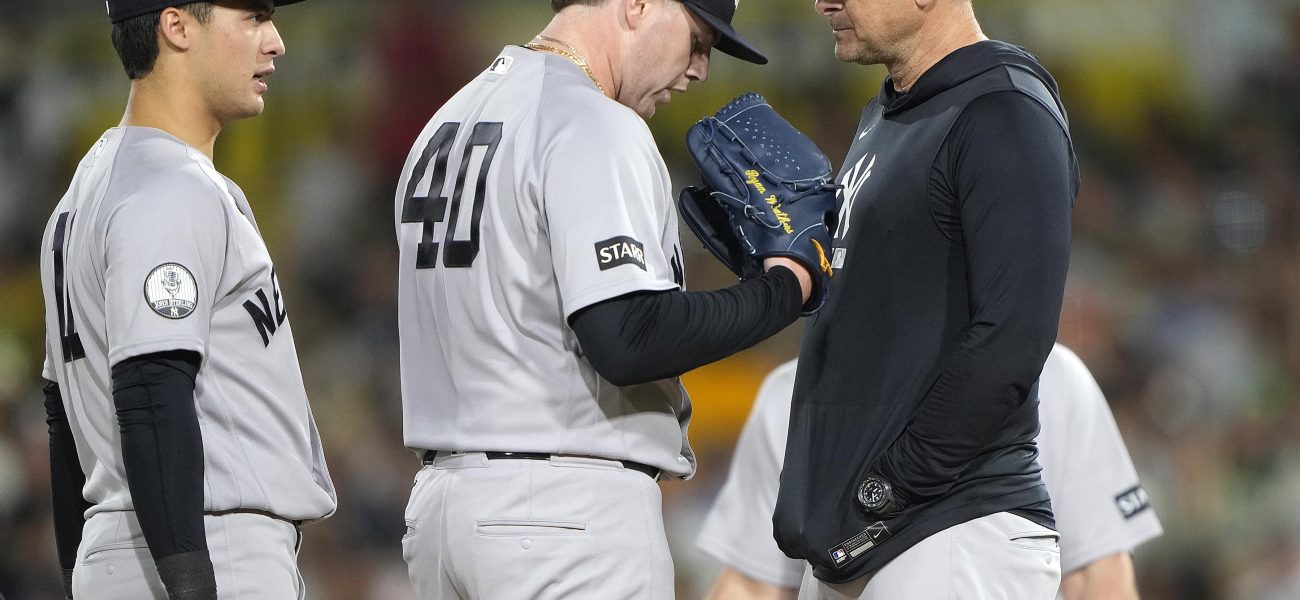
POLICY WIRE — Sacramento, USA — One could argue the real story wasn’t on the field, but rather the sheer audacity of expecting East Coast fans to endure. The clock crept past one in the morning, back on the Atlantic seaboard, as the New York Yankees – a franchise whose very name conjures visions of perpetual dominance – stumbled against the Sacramento Athletics. What began as an admittedly solid night for pitcher Ryan Weathers devolved into a crushing demonstration of west coast power, proving some contests aren’t just about baseball; they’re about endurance, both athletic and temporal, for everyone involved. And frankly, the exhaustion, you could just taste it.
It’s often stated that West Coast trips stink. I mean, they just do. The body clock rebellion alone is a policy nightmare if you’re trying to get a decent night’s rest. Unless you’re one of the many Yankees fans who live out west, I think a lot of us can agree on that. But for those tuned in from their cozy Eastern Time Zone abodes, that extra hour-or-three means a decision: forfeit sleep or face the morning like a zombie. This particular installment offered little payoff for the sacrifice. Weathers, though later redeemed by his fight, got hammered by a Sacramento lineup that can be truly scary at times. The A’s absolutely took what was overall a pretty solid night from him and completely wrecked his line with a trio of long home runs to center field.
Couple that offensive display with a Bronx Bombers’ offense that blew some opportunities early— like when Ben Rice got things started for the Yankees’ offense with a one-out single in the first off J.T. Ginn, but was erased on a 5-4-3 double play off the bat of Aaron Judge — and couldn’t finish off a marathon rally in the ninth, and you’ve got yourself a 6-4 defeat. This sets up a rubber game for tomorrow afternoon, presumably watched by fewer bleary-eyed devotees. Shea “Bangeliers” Langeliers, whose bat connects with an almost primal force, wasted no time, launching an absolute bomb to dead center, putting the A’s up 2-0 early. They weren’t messing around. Not one bit.
The Yankees, ever the drama kings, found themselves close. Oh, so close. In the fourth, the Athletics’ poor defense offered a glimmer. Ginn walked Cody Bellinger, then Jazz Chisholm Jr. singled. A bad hop caused Henry Bolte to boot it in center field, letting Bellinger scamper to third. That mistake was costly, as Chisholm then forced an E4 on a stolen base that scored Bellinger, pushing Jazz to third. A Goldschmidt walk loaded the bases, ripe for a big score. But Ryan McMahon struck out, — and Austin Wells flew out, squandering the chance. New York cut the deficit to one, true, but they left blood on the base paths.
Later, the drama hit its crescendo in the fifth. Rice walked with two outs, bringing up Aaron Judge, the three-time MVP. He put a charge into a fastball — and sent it deep to right field, only for it to be caught at the wall. You know, that ball is a home run in 16 ballparks, including Yankee Stadium. What a gut punch. Source: Observers of baseball metrics (as detailed in the original content). It’s the kind of statistical anomaly that can crush a team’s spirit more effectively than a cheap beer on a hot day. The A’s offense added insurance, Soderstrom blasting a solo shot, making it 3-1. And just when you thought Weathers might make it through seven, after battling and logging a career-high 107 pitches, manager Aaron Boone stayed with him for the powerful lefty Nick Kurtz. That was a roll of the dice that just didn’t pay off. It didn’t work this time. The Big Amish obliterated the first pitch he saw for a dagger home run that knocked Weathers out.
The bullpen offered little relief, allowing the lead to swell to 6-1 before a last-gasp rally in the ninth. Bases loaded, Scott Barlow – the A’s closer – seemed determined not to throw strikes, walking in two runs, bringing the score to 6-4. Judge, Bellinger, then Chisholm at the plate. A chance for history, perhaps. But Chisholm was jammed on a 2-2 fastball on the inside part of the plate, grounding out to first and stranding the tying run on second. Just brutal.
📄 POLICY WIRE WHITEPAPER PUBLISHED: PAKISTAN'S NATIONAL SECURITY POLICY PRIORITIES
👉 READ BY CLICKING HEREWhat This Means
This single game, while a mere data point in a long season, reflects a deeper geopolitical and economic truth: resource allocation, especially human capital, is always a precarious balance. The decision to keep a laboring pitcher in, weighing his past contributions against the immediate threat of a powerful bat, mirrors statecraft. Do you trust an established but weary asset, or do you bring in fresh, unproven talent, risking short-term instability for long-term potential? For Policy Wire readers, consider the strategic implications of stretched supply lines, or exhausted diplomatic channels.
Economically, this trans-continental weariness manifests in market inefficiency. Extended travel schedules affect player performance, an unquantifiable but present depreciation of asset value. Companies with significant West Coast operations, managing teams accustomed to the hustle of the Eastern seaboard, face similar logistical and human resource challenges. But also, think about the cultural cost. Consider how fans in Pakistan or across South Asia – nations deeply passionate about sports, especially cricket – meticulously follow their teams across vastly different time zones, waking up in the pre-dawn hours to catch a critical match being played thousands of miles away. It’s a shared global burden, this irrational devotion, but it’s one that often leaves them feeling, as the author said, like you stayed up for nothing.
The constant pursuit of efficiency often means ignoring the ‘soft’ costs: sleep deprivation, cognitive fatigue. This Yankees loss wasn’t just a defeat; it was a testament to the grinding friction of distance — and time. It’s a microcosm of the very real costs we don’t often calculate when planning our globalized economy, a reminder that the physical world, its distances and its human limitations, always bites back. The lesson here is clear: sometimes, the long game extracts its price not in the dramatic collapse, but in the quiet, cumulative erosion of competitive edge. You’ve gotta manage those resources. You just have to.