


Ecological Enigma: A Fungus Rises as the Unlikely Champion Against Nature’s Green Scourge
POLICY WIRE — London, UK — For years, environmental scientists have battled a quiet, creeping menace. It doesn’t scream headlines or ignite protests in capital cities, but its relentless advance has...

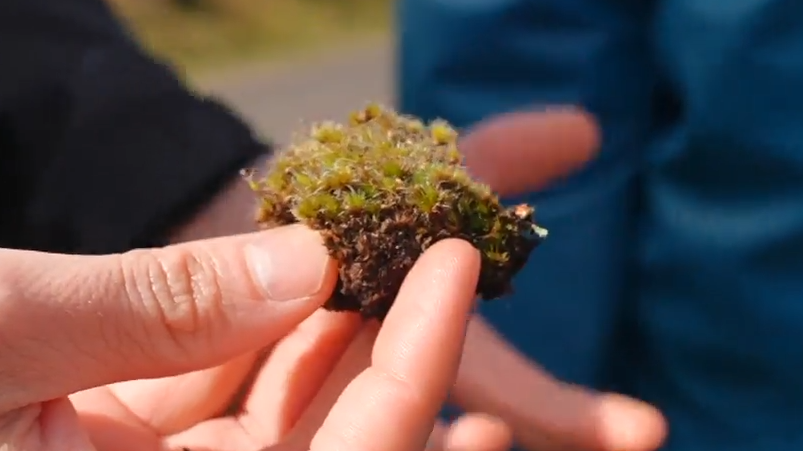
POLICY WIRE — London, UK — For years, environmental scientists have battled a quiet, creeping menace. It doesn’t scream headlines or ignite protests in capital cities, but its relentless advance has rewritten entire ecosystems, smothered native flora, and quietly, irrevocably, altered landscapes across continents. We’re talking about invasive mosses, particularly the species from the Sphagnum family, which aren’t just benign carpet; they’re often ecological bulldozers.
Now, however, a sliver of cautious hope — or perhaps, a new strain of scientific anxiety — has surfaced from the petri dish. Researchers are observing a particular species of fungus, seemingly designed by nature’s own peculiar hand, that exhibits a voracious appetite for these unwelcome green invaders. It’s an intriguing development, sure, one that forces a cold, hard look at humanity’s complicated history with biological solutions and their frequently unintended consequences. [QUOTE_PLACEHOLDER]
It’s no small matter, this moss problem. These pioneering botanical nuisances colonize new terrains with an unnerving efficiency. They thrive in disrupted soils, acidify environments, alter water tables, and essentially out-compete and then eliminate indigenous plant life. Think of a silent, green insurgency, slowly but surely eradicating the old guard. You don’t notice until the forest floor looks entirely different, until the endemic wildflowers are gone, replaced by a homogenous, often less biodiverse, mossy blanket. Because, let’s be honest, few people genuinely appreciate the intricacies of moss biodiversity until it’s too late.
The fungus, identified primarily by its Latin binomial Muscifomes destructor (a somewhat less poetic name than ‘killer fungus’, perhaps, but far more precise), doesn’t just annoy the moss. It actively decomposes its cellular structure, turning once-vibrant green mats into brown, crumbling detritus. The mechanism, researchers suggest, involves unique enzymatic pathways that specifically target the cellulose and lignin compounds characteristic of the invasive moss species, leaving most other flora relatively unharmed—or so they hope. This isn’t a precision surgical strike; it’s more like a fungal carpet bomb designed to hit one specific enemy, but with all the inherent risks that analogy implies.
This microscopic hitman has been under intense study, often in highly controlled lab environments. Initial results have been — to borrow a dry scientific term — encouraging. Trials in small, contained outdoor plots in Scandinavia, where invasive mosses have aggressively overtaken subarctic taiga landscapes, demonstrated significant reductions in the target species population within a single growing season. But deploying it at scale? That’s where the hand-wringing starts, — and for good reason.
Consider the long shadow of prior ‘solutions’ like the cane toad in Australia or Mongoose in the Caribbean. Their introductions were once hailed as ecological victories. Now, they’re poster children for biological hubris, creating problems far worse than the ones they were meant to solve. We’ve learned that nature, when poked, often pokes back with an entirely different kind of stick. But humanity’s current predicaments might just be forcing its hand.
The challenges in nations like Pakistan, for instance, bear a different kind of ecological urgency. The Himalayan foothills, particularly those susceptible to climate shifts, face increasing vulnerabilities. Changing precipitation patterns and temperature fluctuations don’t just affect agriculture; they create new niches for opportunistic, invasive species, sometimes including mosses or their competitive plant cousins. Where land is already strained, where water resources are already precariously balanced, any additional ecological pressure from an unwanted invader, be it plant or microbe, represents a direct threat to livelihoods and regional stability. It’s why environmental management isn’t some niche academic pursuit for these places; it’s basic economic policy.
Globally, the economic impact of invasive species is staggering. A recent report by the Intergovernmental Science-Policy Platform on Biodiversity and Ecosystem Services (IPBES) indicated that invasive alien species cost the global economy over $423 billion annually as of 2019, a figure that has quadrupled each decade since 1970. That’s a lot of money, folks, enough to make even the most risk-averse policy maker ponder unorthodox interventions. And sometimes, desperation makes for peculiar bedfellows, uniting scientists and politicians in an awkward dance around a potential ‘killer fungus’.
What This Means
This biological wildcard isn’t just a scientific curiosity; it’s a policy conundrum wrapped in a geopolitical bow. Firstly, there’s the regulatory tightrope. Deploying a new biological agent—especially a fungus with ‘killer’ in its unofficial moniker—demands excruciatingly rigorous testing. Any premature release could create a secondary environmental crisis. Who bears that responsibility? Who indemnifies governments if the fungus decides native ferns look tastier than invasive moss after all? And what sort of international framework would govern cross-border applications?
Then there are the economic implications. If effective, Muscifomes destructor could save billions in conventional land restoration, agricultural protection, and biodiversity conservation efforts. Imagine vast tracts of currently degraded land suddenly viable again, easing pressure on limited resources in developing nations. But because it’s a bio-agent, its potential commercialization — who owns the patent? How is it distributed? Is it a public good or a private commodity? — becomes a hot-button issue, rife for international dispute and potential monopolization. Companies sensing profits will naturally gravitate towards control, potentially exacerbating inequalities in ecological remediation efforts globally. It’s the brutal arithmetic of biological currency. Countries struggling with indigenous resource management, from Southeast Asia to the Amazon, would naturally view any effective and affordable solution as a strategic asset.
Lastly, this fungus serves as a stark reminder of humanity’s ongoing, often losing, battle against ecological entropy. It forces a reassessment of our interventions, from large-scale geoengineering projects to localized species management. Do we double down on ‘nature correcting nature,’ or do we pump the brakes and consider how global trade and climate policy accelerate these invasions in the first place? It’s not just about one fungus or one moss. It’s about how policy handles the increasingly wild frontiers of biological intervention and unintended consequences. The whispers of triple-digit pain from a silent surge in resource depletion feel not so distant.
Ultimately, the ‘killer fungus’ could be a marvel, a much-needed ecological reset button. Or, it could be yet another lesson in humility from the natural world. Either way, policy makers worldwide are watching closely, weighing the promise against the chilling possibility of unleashing an answer that spawns a dozen new questions. They don’t have much of a choice, though. The moss isn’t waiting.