

Ethiopia’s Electoral Theatrics: Another Predictable Performance Ensues
POLICY WIRE — Addis Ababa, Ethiopia — The spectacle rolls around once more, doesn’t it? As if clockwork, Ethiopia gears up for another election. One might imagine, given the global push for...

POLICY WIRE — Addis Ababa, Ethiopia — The spectacle rolls around once more, doesn’t it? As if clockwork, Ethiopia gears up for another election. One might imagine, given the global push for electoral integrity, this would be a moment of genuine suspense. It isn’t. The nation is set to hold a general election, a process many observers—and probably a fair few Ethiopians—consider a forgone conclusion.
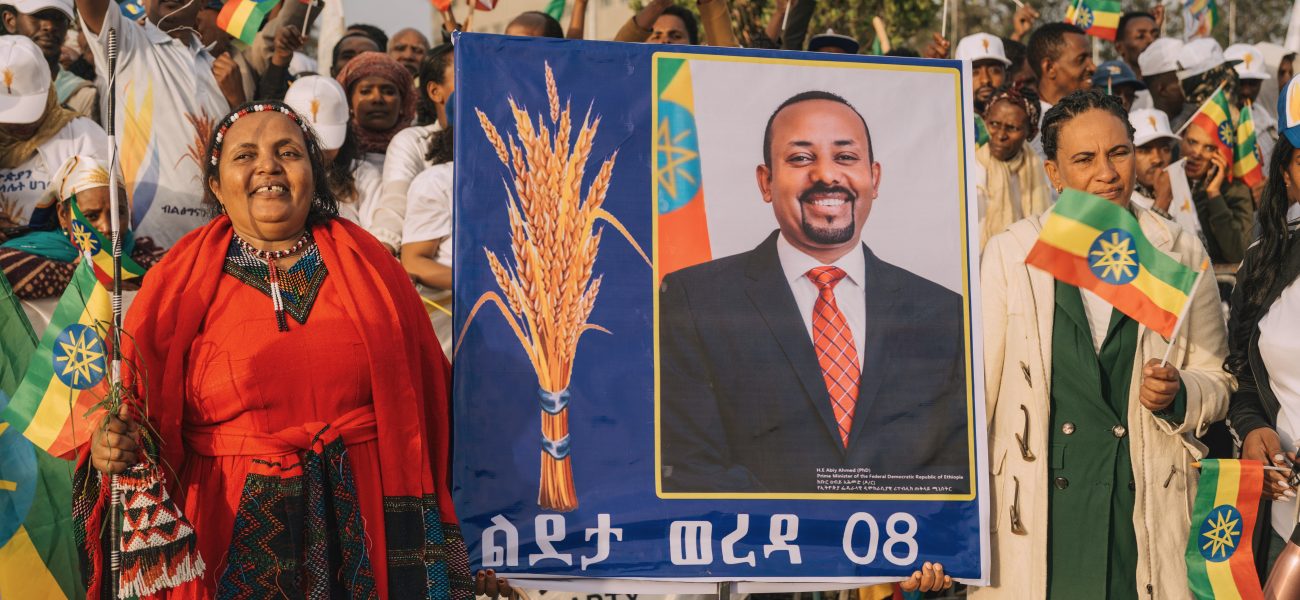
It’s a peculiar brand of political theater, really. Citizens will trek to polling stations, ballots will be cast, — and votes, ostensibly, tallied. But let’s be blunt: the outcome, by most accounts, feels etched in stone long before a single vote enters the box. Prime Minister Abiy Ahmed’s Prosperity Party, an amalgamation of the old ruling coalition’s regional entities, is widely anticipated to retain its command. There’s not much room for surprise, you see, not in this particular drama. The plot, well, it’s pretty well-worn by now across many corners of the globe.
And yet, this routine isn’t just about domestic affairs. Ethiopia, a behemoth in the Horn of Africa, plays a disproportionate role in regional stability. Its political trajectory—or lack thereof, if we’re talking real electoral fluidity—sends ripples. We’re talking about a nation with a deep history, a nation of diverse ethnicities and faiths, many of whom look across the Red Sea and Gulf of Aden to the Arabian Peninsula, and eastward to South Asia, often drawing parallels with their own complex societal fabrics.
Remember that feeling in Islamabad, or perhaps Dhaka, when an election rolls around and everyone knows who’s going to win? That’s the vibe. It’s an arrangement, an expectation, — and sometimes, a quiet resignation. Ethiopia isn’t insulated from the broader geopolitical currents affecting the Muslim world, even with its Christian majority and unique Orthodox heritage. Its engagement with nations like Saudi Arabia, the UAE, and even distant Pakistan via trade routes and diaspora connections ensures that what happens here matters far beyond its borders. Any perceived lack of genuine democratic choice—whether true or not—becomes part of the broader narrative surrounding state legitimacy in developing economies, especially those struggling with internal conflict.
The state machinery has been remarkably efficient in ensuring the Prosperity Party’s pole position. Campaigning unfolds under an atmosphere where dissenting voices, to put it mildly, often find amplification challenging. Some opposition figures have been jailed, others have boycotted the process entirely. The government maintains that it’s all above board, aiming for [QUOTE_PLACEHOLDER]. They’re eager for international legitimacy, of course. Everybody wants that stamp, don’t they?
This election isn’t occurring in a vacuum. A recent report by the Ethiopian Election Commission revealed that voter registration dipped by an estimated 15% in regions experiencing heightened insecurity, compared to the last general election in 2015. It’s a significant statistic, painting a stark picture of public confidence—or perhaps, simply the logistical nightmares in a fragmented state. But it’s an undeniable data point that casts a shadow, regardless of official narratives.
📄 POLICY WIRE WHITEPAPER PUBLISHED: PAKISTAN'S NATIONAL SECURITY POLICY PRIORITIES
👉 READ BY CLICKING HEREFor a country already grappling with deep-seated ethnic tensions and conflict—the northern Tigray region immediately comes to mind, though we aren’t limited to it—this predictable electoral exercise doesn’t exactly project an image of robust national cohesion. It often reinforces power structures rather than genuinely resolving underlying grievances. A strong leader, many would argue, brings stability. But at what cost to political plurality? That’s the eternal question, isn’t it? It’s a calculation made in capitals worldwide.
We’ve seen similar scenarios play out repeatedly, in places where strongmen promise progress — and deliver order. This isn’t unique to Africa. It’s a recurring theme in global governance, a dance between aspiration and reality that plays out with surprising frequency. Many leaders, no matter where they operate, subscribe to the theory that the perilous politics of delegation is a luxury they simply can’t afford.
What This Means
Economically, a stable, albeit predictable, political environment might attract some foreign investment, particularly from states less concerned with intricate democratic checks and balances and more with resource access and strategic positioning. Think Chinese investment, or even Gulf capital, where pragmatism often trumps ideological alignment. But true, sustainable growth, the kind that lifts all boats, usually needs more than just top-down directives.
Politically, the implications are layered. It suggests an enduring narrative of centralization in Ethiopian statecraft, despite the federal system. For the broader East African region, a domestically focused Ethiopia, even one preoccupied with internal political management, will remain a heavy hitter, capable of influencing events from Sudan to Somalia. And its Muslim communities, comprising a substantial portion of the population, will continue to observe how this singular political structure affects their communal rights and religious freedoms. They’ve seen how dynamics like these play out from Mindanao to Myanmar, or in countries much closer to home in the Middle East. They’re astute observers, believe me. Because let’s face it, political landscapes often offer a peculiar crystal ball for geopolitics, showing us more than just local power plays. It’s never just about the votes, is it? It’s about what the votes—or the lack of competitive ones—really symbolize for an entire nation’s direction.