


Ghosts on the Pitch: England vs. Argentina and the Weight of Nations
POLICY WIRE — London, UK — Here’s a funny thing about global spectacles: they rarely are just about the spectacle itself. That thud of a football boot, the roar of a stadium, it’s not simply a game...

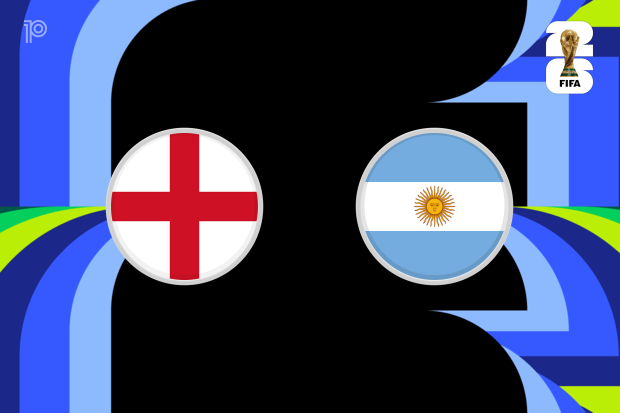
POLICY WIRE — London, UK — Here’s a funny thing about global spectacles: they rarely are just about the spectacle itself. That thud of a football boot, the roar of a stadium, it’s not simply a game when England squares off against Argentina in a World Cup semi-final. It’s an entire historical conversation, a decades-old echo amplified across television screens from Birmingham to Karachi. And for some, it’s far more consequential than who progresses to the final.
Because, let’s be frank, this Wednesday’s clash at the Mercedes-Benz Stadium isn’t merely two squads chasing a gold trophy. It’s two intertwined narratives—colonial legacy, national pride, and a dash of unexamined geopolitical angst—manifesting in 22 men and a ball. We’ve seen this play out before, haven’t we? Different fields, different stakes, but the same underlying currents of competing national identities bubbling just beneath the surface of supposedly innocent competition.
England, riding a narrow 2-1 victory over Norway, brings its usual blend of measured expectation — and underlying dread. They’ve got fresh faces, like Nico O’Reilly and Elliot Anderson, alongside established figures such as Harry Kane and Jude Bellingham. Argentina, having bested Switzerland 3-1, arrives with their own constellation, not least Lionel Messi and Julián Alvarez, legends and hopefuls. But for all the talk of tactics — and individual brilliance, one can’t escape the long shadow. For decades now, a match between these two—particularly on such a stage—has meant more than mere sporting contest. It’s an arena where old wounds, some healing, others festering, are tacitly revisited.
A senior Argentine diplomat, speaking off the record but widely quoted within circles, put it pointedly last week: “This isn’t just about goals, you know. It’s about a conversation our countries keep having, decades later, on a very public pitch. And for us, the result, even if it’s just a game, carries a heavy symbolic weight. It truly does.” It’s a weight that resonates far beyond the pitch itself.
Look at the rosters. England’s last outing saw Jordan Pickford between the posts, a sturdy defense featuring Ezri Konsa and John Stones, and midfield dynamo Declan Rice. Upfront, Madueke — and Gordon supporting Kane. Argentina, too, fields a strong lineup: Emiliano Martínez in goal, Cristian Romero and Lisandro Martínez anchoring the defense, and the formidable midfield trio of Leandro Paredes, Rodrigo De Paul, and Enzo Fernández providing the platform for Messi’s magic. But beyond who’s on the sheet, it’s about what they represent.
For nations around the globe—from the teeming cities of Pakistan to the quiet villages of South Asia—football isn’t just a diversion. It’s a shared language, a communal heartbeat, and a conduit through which geopolitical narratives are consumed and reinterpreted. Consider the sheer scale: the 2022 World Cup semi-finals, for instance, reportedly drew an astonishing 247 million viewers for a single match in key markets, according to FIFA data. That’s not just a commercial opportunity; it’s an audience for soft power projection on an unprecedented scale.
📄 POLICY WIRE WHITEPAPER PUBLISHED: PAKISTAN'S NATIONAL SECURITY POLICY PRIORITIES
👉 READ BY CLICKING HEREAnd where England’s legacy in places like the Indian subcontinent evokes a complicated mix of admiration and resentment, Argentina’s spirited defiance against historical hegemonies often finds sympathetic audiences. But this is the twenty-first century, isn’t it? Things are supposed to be different. A British Junior Minister for Sport, queried on the persistent undercurrents of the match, offered a thoroughly diplomatic response: “Football’s a fantastic global unifier. Any underlying narratives? Oh, that’s just a bit of healthy sporting rivalry, isn’t it? It’s all in good fun.” Easy to say when you’re not the one wearing the jersey.
What This Means
This match, beyond its immediate sporting ramifications, serves as a mirror reflecting contemporary international relations. A win for England, especially a decisive one, could provide a fleeting, yet potent, shot of national pride, potentially offering a distraction from domestic political turbulence or economic stagnation. For Argentina, a victory wouldn’t just be a step towards glory; it would be a symbolic reaffirmation, a triumphant retort to historical grievances that still subtly shape their foreign policy and national self-perception. We’ve seen how sporting success can briefly—or even significantly—alter a nation’s mood and international standing. Think of how Brazil’s footballing dominance used to define much of its global image, or how even unexpected tournament runs by smaller nations create outsized buzz.
Economically, the impact is more nuanced. Deep runs in the World Cup aren’t just about prize money; they drive tourism, boost consumer spending in host nations, and swell broadcasting revenues for FIFA and participating federations alike. It’s a massive, multi-billion dollar ecosystem, as highlighted in Policy Wire’s earlier piece, “World Cup’s Billion-Dollar Bait: FIFA’s Record Payouts and the Geopolitics of Global Football.” A country advancing deep into the tournament often sees a measurable uptick in national GDP due to increased consumption and national euphoria. But beyond that, for populations in the Muslim world and South Asia who avidly follow these contests, allegiances are often formed and reinforced not just by proximity or shared faith, but by a sense of solidarity with teams perceived to embody grit or underdogs. It’s an intricate dance of loyalties, where a football match can, however briefly, represent something much larger. the enduring legacy of football as a shared passion can often paper over significant political differences, providing a rare arena where nations, despite their leaders’ disagreements, can engage in a passionate, if symbolic, dialogue. This Wednesday, when the whistle blows, it’s not just football; it’s an argument, an aspiration, and a memory, all rolled into one.