


Shadows Persist: The Unyielding Vigil at Zorro Ranch
POLICY WIRE — Santa Fe, New Mexico — A small, ceramic heart, inexplicably whole, lay across a New Mexico highway, a testament to what someone, somewhere, clearly preferred forgotten. But what a tiny,...

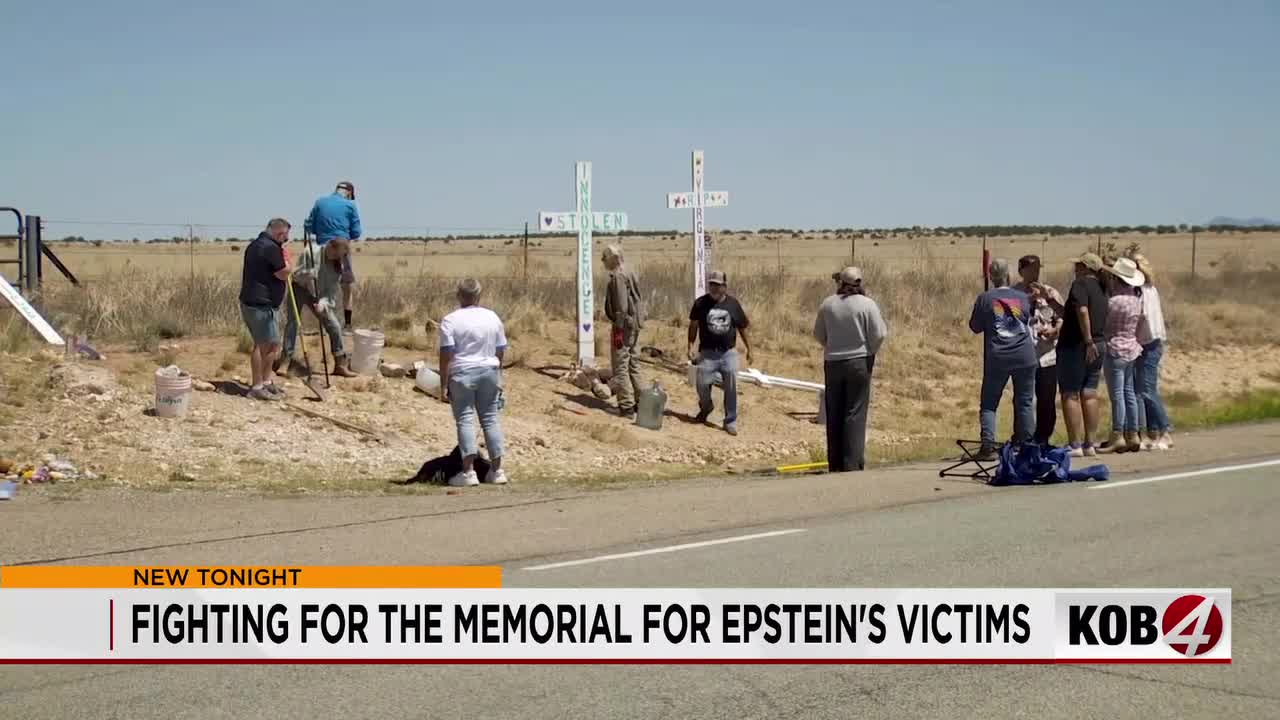
POLICY WIRE — Santa Fe, New Mexico — A small, ceramic heart, inexplicably whole, lay across a New Mexico highway, a testament to what someone, somewhere, clearly preferred forgotten. But what a tiny, fragile object can endure—surviving the very forces that would wish it obliterated—so too persists a defiant spirit here at the former Zorro Ranch, once Jeffrey Epstein’s sinister playground. This isn’t just about property lines; it’s about memory, raw — and unflinching.
Dozens of people, many having traveled some distance, converged recently upon the arid Santa Fe County landscape, spades and spirit in hand. Their mission? To painstakingly reconstruct a memorial—again. It had been dismantled, apparently by persons unknown, for a second time this year. This quiet, dogged resistance against a campaign of erasure is becoming a weary ritual, a stubborn testament to the fight survivors wage for their painful truth. [QUOTE_PLACEHOLDER]
And let’s be blunt: this isn’t easy work, not by a long shot. Kathy Barber, one of the steadfast organizers, doesn’t mince words. She states the obvious fact that the fight to keep the memorial in place hasn’t been easy. But it’s the quiet courage of those who’ve endured unimaginable things, those survivors who continue to return to this desolate stretch of land, that fuels this Sisyphean task. Barber notes: I think it’s brave, brave of her to be here, you know, because she’s been on the inside and the other side, and she’s lived the things that we can only imagine, you know, speaking about one such woman.
Her assessment of the vandalism, allegedly around Memorial Day—a day traditionally for honoring sacrifice—carries a bitter edge. She posits, with chilling resignation: It’s just.. who does that? And the way we look at it to where it was, where they last saw it, and when it was gone, is they probably did it Memorial Day, no respect at all,. That such an act of deliberate forgetting, of attempting to sanitize a locus of grotesque abuse, could occur on a day consecrated to memory speaks volumes about the depths of callousness. But Barber and her cohorts aren’t just rebuilding a collection of mementos; they’re reaffirming an unshakeable promise: We’re going to keep on rebuilding. I mean, you know, the horrors that happened here have to stop,. This isn’t just about closure for the past; it’s about protecting futures.
The determination isn’t just rhetorical. It’s practical. Barber recounted arriving to find pieces scattered: When I got out of my car, there was a little ceramic heart that’s fragile, and it was sitting over there by my car, across the street, full. It was totally together, — and so I started looking around, and then I started seeing the stuff,. It’s an unsettling scene, like finding fragments of a shattered mirror, each piece a small indictment. Another organizer, Rebecca Stover, plans for an installation designed to be harder to dismantle. I’m planning a giant heart, she declared, describing a secure container where survivors can place items, seal it, and lock it away. It’s an act of defiance, a statement that this isn’t going away quietly, not this time.
But beyond the physical memorial, there’s an ongoing demand for accountability. Barber has turned her attention toward a burgeoning Truth Commission, its first public meeting imminent. I want to hear what they’re doing. I mean, I know it’s an investigation but there’s things they can tell us, and I want to know how they’re moving forward, she urged, clearly past the point of accepting vague assurances. Transparency, it seems, is a commodity still in short supply, — and victims aren’t settling for less.
What This Means
This struggle at Zorro Ranch isn’t a parochial New Mexican story; it’s a micro-drama of a universal struggle against complicity and denial. Around the globe, from the forgotten villages of rural Pakistan where feudal lords wield absolute, unchecked power, to the countless communities in the broader Muslim world grappling with legacies of abuse—be it political, financial, or sexual—victims often face insurmountable odds in seeking justice and acknowledgment. Efforts to memorialize tragedy and demand accountability are frequently met with powerful, unseen forces dedicated to silencing, discrediting, or simply erasing uncomfortable truths. Here, on American soil, this persistent sabotage of a victims’ memorial underscores how deep the institutional and societal roots of protection for the powerful can run, even after public disgrace.
This isn’t about simply honoring the dead; it’s about validating the living—those who carry the scars. The rebuilding of this memorial, against clear opposition, stands as a fierce, if often understated, political act. It says that survivors won’t allow their pain to be tidied away. Globally, according to the UNODC’s 2022 Global Report on Trafficking in Persons, a staggering 82,900 victims of sexual exploitation were detected between 2018-2020, with likely many more remaining unseen and uncounted. The fight for memorialization and truth here directly mirrors the silent battles waged daily in myriad corners of the world, including parts of South Asia, where such statistics often fail to capture the full horror, and justice systems are frequently less robust—or less inclined—to challenge entrenched power structures. But People need to know what’s going on, and we’ll be out here every time until we get justice and accountability, and people, we’re not going to stop, as Barber defiantly articulated, epitomizes a global cry. For more on the complex dance between power and accountability, especially in opaque systems, one might consider the perils of political accountability and its various forms.
But you can’t erase a narrative by just sweeping away the physical markers. Because, as this recurring saga at Zorro Ranch proves, memory has a habit of rebuilding itself. The real policy implication here isn’t just about what state legislation can achieve, but what raw, human tenacity demands when formal structures fail or are perceived to fail. It’s a slow, grinding battle for a moral reckoning—a kind of political thermometer of a society’s true willingness to confront its demons. And sometimes, it’s only when citizens start taking things into their own hands, quite literally rebuilding piece by piece, that real attention is forced onto issues governments or powerful entities prefer to simply leave in the dust.