


The Enduring Mirage of a Trump-Era Iran Deal
POLICY WIRE — Washington D.C., USA — The Sunday morning punditry circuit, that peculiar blend of earnest debate and speculative tea-leaf reading, offers little surprise these days, does it? But...

POLICY WIRE — Washington D.C., USA — The Sunday morning punditry circuit, that peculiar blend of earnest debate and speculative tea-leaf reading, offers little surprise these days, does it? But beneath the predictable clashes, a specific recurring phantom often materializes, especially as election cycles churn the political waters: the specter of American foreign policy upheaval, particularly concerning Iran. It’s not always a front-page grabber, yet it’s an undercurrent—a persistent hum of anxiety in diplomatic circles and the Beltway. And let’s be honest, it keeps an awful lot of talking heads employed, constantly anticipating who might or might not greenlight whatever next iteration of an Iran deal might surface.
It’s a peculiar ritual, this Washington obsession. With every shift in political wind, with every pronouncement (or even mere suggestion) from Mar-a-Lago, the Tehran question inevitably resurfaces. Policy makers, both past and prospective, are perpetually forced to weigh the merits of renegotiation against the stark realities of an unbridled nuclear ambition. But really, it’s more than just a policy debate; it’s a political lightning rod, used to bash opponents and galvanize supporters. [QUOTE_PLACEHOLDER]
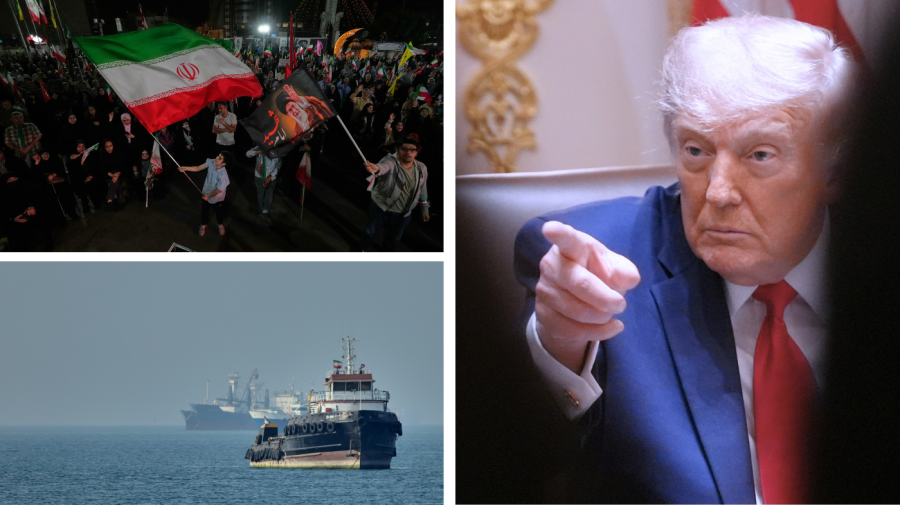
During a prior administration, the Joint Comprehensive Plan of Action (JCPOA) — Sunday shows preview: Will Trump greenlight a new Iran deal? — dominated discussions. The deal, of course, didn’t last. The subsequent withdrawal was hailed by some as correcting a catastrophic error and decried by others as a dangerous abandonment of multilateral diplomacy. But no matter your stance, it shredded the previous agreement, pushing Iran toward enriching uranium to levels unseen before the JCPOA. The International Atomic Energy Agency (IAEA) reported in November 2023 that Iran’s stockpile of uranium enriched to 60 percent was over 121 kilograms, significantly more than the roughly 10 kilograms estimated to be enough for a single weapon if further enriched. That’s a stark figure, folks. It’s the kind of number that makes generals — and diplomats alike sleep a little less soundly.
But the real trick is understanding what happens next, or rather, what the talking points will be. Because this isn’t just about centrifuges — and inspections. It’s about perception, and that perception directly influences regional stability—or instability. Any discussion of a renewed or revised Iran deal inevitably has to factor in players who rarely get airtime on those Sunday shows but whose futures are deeply intertwined with Iran’s trajectory. I’m talking about nations in South Asia — and the broader Muslim world.
Consider Pakistan, for instance, a nuclear power itself, geographically close, and acutely aware of geopolitical tremors in the Middle East. For Islamabad, a nuclear-armed Iran presents a profoundly unsettling variable. But a rapprochement, too, could reshuffle regional alliances in unpredictable ways, perhaps allowing for increased Iranian influence, or conversely, reducing regional tensions enough to foster greater economic cooperation. Their geopolitical calculations, often underappreciated by Washington strategists, don’t care much for American domestic political theater. They care about borders, trade, — and existential security. For them, American policy shifts are not talking points, they’re strategic realities. It’s a high-stakes poker game played with real nations, not just cable news guests.
📄 POLICY WIRE WHITEPAPER PUBLISHED: PAKISTAN'S NATIONAL SECURITY POLICY PRIORITIES
👉 READ BY CLICKING HEREAnd so, as we look to the horizon, another presidential election looming like an oncoming train, the question hangs: Will any potential Trump return to power mean yet another unpredictable pivot? A fresh Iran deal, born of entirely different calculations than the last? Or just more of the same maximalist pressure that arguably hasn’t deterred the nuclear program as much as it’s escalated tensions? It’s anybody’s guess, and frankly, anyone claiming absolute certainty probably hasn’t been around this block enough times to know better. It’s a fluid situation, always. That’s the one constant.
What This Means
From a purely cynical (or realistic, depending on your preferred brand of observation) viewpoint, the periodic resurgence of the Iran deal debate reflects a few things. First, it’s a domestic political football. For a hawkish candidate, dismantling or renegotiating a previous administration’s deal can be a campaign rallying cry, demonstrating toughness and a willingness to upend established foreign policy doctrine. Economically, any re-engagement, however unlikely it seems at a given moment, hints at the possibility of Iranian oil returning to markets—a prospect that always sends ripples through global energy prices and gives commodity traders pause.
Politically, for the region, any American movement on Iran—either towards confrontation or detente—alters the strategic calculus for Sunni-led states and Gulf monarchies who view Tehran with suspicion. And because it’s such a complex dance, even subtle shifts from Washington can trigger significant responses from players like Saudi Arabia, the UAE, or even Israel, further entangling a situation that often defies neat diplomatic solutions. It’s a game of chess, not checkers, but played by individuals who sometimes prefer a good brawl over strategic nuance. The reverberations extend far beyond the Middle East, touching on energy security for places like India, and presenting new dilemmas for countries across the Muslim world trying to navigate alliances. It’s never simple, it’s never settled. That’s the grim truth.