


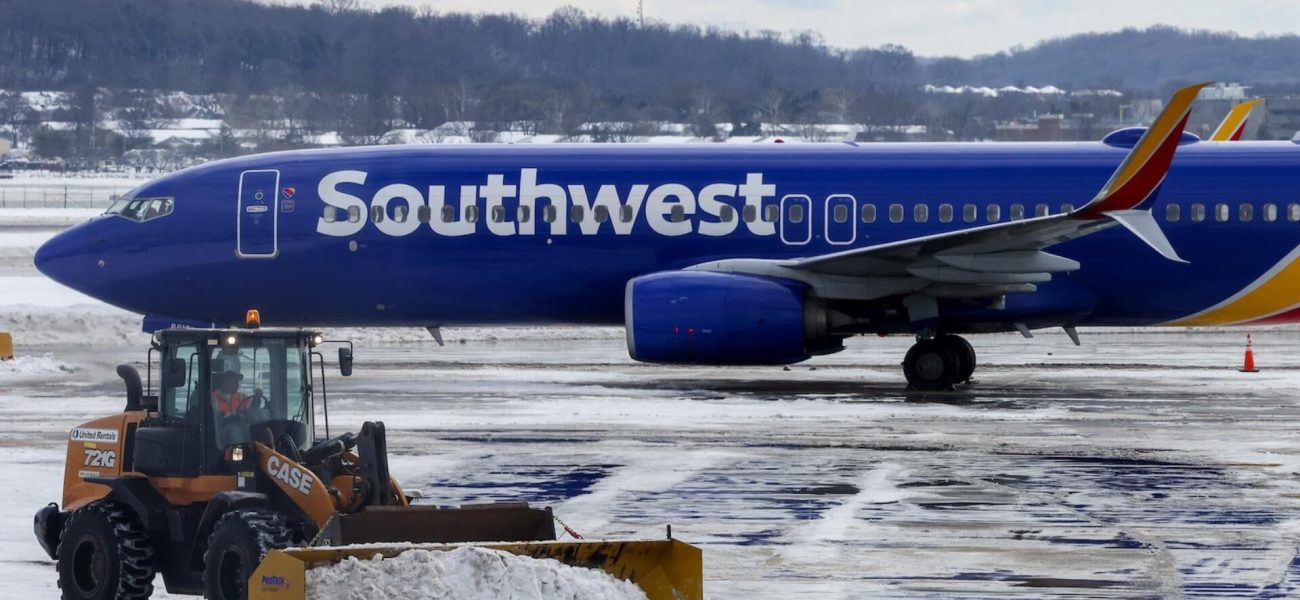
Southwest’s New Space Policy Ignites Debate Over Dignity and Dividends
POLICY WIRE — Washington, D.C. — It’s a perennial quandary, really, navigating the often-awkward intersections of capitalism and human biology. And now, flying has just become a little less subtle...

POLICY WIRE — Washington, D.C. — It’s a perennial quandary, really, navigating the often-awkward intersections of capitalism and human biology. And now, flying has just become a little less subtle for some passengers. Southwest Airlines, that bastion of budget travel and open seating, has quietly — or perhaps, not so quietly, depending on your physique — rolled out what it terms a significant revision to its long-standing customer of size policy. This isn’t just about legroom, you see. It’s about personal space, corporate margins, — and a society that’s quite literally growing.
No longer is a politely ignored armrest spillage enough. The airline’s updated guidance appears to cement a more stringent approach to passenger comfort, not just for the individual but for their neighbors, too. Southwest’s new rule clarifies that passengers unable to lower both armrests, or whose body encroaches upon an adjacent seat, are now encouraged—no, wait, required—to purchase an additional seat. What happens if they don’t, then? Well, they’re on the hook for it at the gate. Or they don’t fly. Simple as that, right? But nothing is ever that simple in the air travel labyrinth.
Because let’s be frank, airlines have a tight squeeze on profitability, often quite literally. Every inch matters, every pound, every dollar. And when you factor in a global trend of increasing body mass indexes, these decisions aren’t just customer service adjustments; they’re business imperatives. It’s not glamorous, discussing passenger girth, but airlines aren’t selling luxury here; they’re selling efficient transportation. The optics, though? They’re rarely pretty. The company is framing this as an enhancement to the Customer of Size and Disability Accommodation Program, ensuring everyone gets a pleasant journey, [QUOTE_PLACEHOLDER].
But passenger advocates are quick to highlight the potential for embarrassment — and discrimination. It’s one thing to politely ask someone if they need more room; it’s another to enforce a mandatory, visible financial penalty for what might be a genetic predisposition or a medical condition. Southwest insists the policy ensures safety and comfort for all passengers, allowing for refunds of the additional fare post-travel if the flight wasn’t completely full, [QUOTE_PLACEER]. That’s a bit like buying a full price ticket to a concert, being told to stand outside, then getting a refund if someone happens to die and a seat opens up. Doesn’t quite feel equitable in the moment, does it?
The implications aren’t confined to American airspace. Travel is global. Imagine navigating this rule in an airport far from home, with language barriers — and cultural sensitivities. In many South Asian cultures, for instance, discussing body weight or size in public is often considered impolite or even taboo. Travelers from places like Pakistan, where extended family units often travel together and body composition varies widely due to genetics and lifestyle, might find these new rules particularly jarring or financially punitive. obesity rates are a growing concern in regions previously untouched by Western dietary trends. According to a 2023 study published in The Lancet, adult obesity prevalence in South Asia has more than doubled in the last two decades. So, for an airline flying globally, this policy isn’t just a domestic U.S. issue; it’s a quietly cascading ripple effect, forcing potentially uncomfortable conversations at check-in counters worldwide.
📄 POLICY WIRE WHITEPAPER PUBLISHED: PAKISTAN'S NATIONAL SECURITY POLICY PRIORITIES
👉 READ BY CLICKING HEREBecause, really, who decides when a passenger is too ‘customer of size’ for their designated space? Is it the gate agent, often rushed — and under pressure? What kind of training are they receiving? This is where discretion clashes with a clear policy, often creating more problems than it solves. It’s a logistical knot, no matter how you untangle it, and it places frontline staff in an unenviable position of body-policing paying customers. And let’s not pretend these conversations happen in a private booth, either. They happen at the gate, in full view of other passengers, making for prime reality television—or a deeply humiliating moment.
It’s about space, sure, but it’s also about the economics of air travel and the delicate balance between revenue, passenger experience, and simply being perceived as a humane operation. You can learn more about evolving airline industry practices and their societal impacts on Policy Wire’s travel section. This is a battle over the cost of comfort, — and it’s being fought one airplane seat at a time.
What This Means
This move by Southwest, while seemingly about immediate operational efficiency, carries broader political and economic weight. Economically, it represents a further step in airlines externalizing costs directly onto consumers, specifically targeting a segment they perceive as impacting their core offering (comfort/space). It suggests other carriers may follow suit, especially as profit margins remain tight — and fuel costs fluctuate. We’ll see a pushback from consumer advocacy groups and possibly legal challenges under disability discrimination laws. Politically, this raises questions about public health responsibility versus individual choice, and how much a private corporation can dictate personal conduct before it becomes an infringement on dignity. For governments, particularly in regions where cultural norms are more sensitive to discussions of body image, such policies could present diplomatic friction if their citizens feel singled out. It could even spur national airlines in countries like Pakistan to consider their own culturally sensitive — and economically viable — alternatives or accommodations, pushing for global aviation standards that respect diverse passenger populations rather than homogenizing them into a one-size-fits-all model. Ultimately, it’s a stark reminder that air travel is no longer a simple journey; it’s a series of micro-transactions, perceived slights, and the constant negotiation of personal space.