


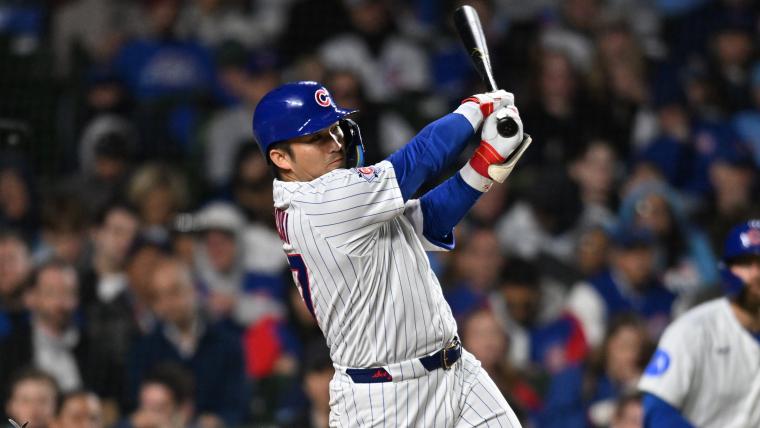
Silent Shake-Up: Mariners’ Audacious Gamble in Baseball’s High-Stakes Talent Market
SEATTLE, U.S.A. — Baseball, bless its heart, isn’t always about heroic swings and ninety-mile-per-hour fastballs. More often, it’s about a ledger—a relentless, unforgiving accounting of wins, losses,...

SEATTLE, U.S.A. — Baseball, bless its heart, isn’t always about heroic swings and ninety-mile-per-hour fastballs. More often, it’s about a ledger—a relentless, unforgiving accounting of wins, losses, and, increasingly, optimal salary cap allocations. So, when talk stirs in the back rooms—the dimly lit corners where player agents and general managers wheel and deal—about shifting marquee talent, it isn’t merely about filling a void. It’s about a cold, hard strategic pivot in a global sports economy that demands ruthlessness.
The Seattle Mariners, a franchise long familiar with the fine line between hope and heartbreak, are reportedly contemplating such a gambit. Desperate for right-handed pop, they’ve found themselves staring down a rather unsettling scenario: a potential trade that would send their ace, Luis Castillo, packing to the Chicago Cubs in exchange for outfielder Seiya Suzuki. Now, on paper, it feels like the sort of spreadsheet alchemy only a modern-day general manager could conjure. But don’t misunderstand—this isn’t some back-of-the-napkin thought exercise from a bleacher bum. This is the very essence of high-stakes corporate maneuvering, just played out on a baseball diamond.
The Mariners’ woes, you see, are painfully evident. They’ve been flailing against left-handed pitching, owning an MLB-worst .622 OPS this season in those matchups. It’s ugly. Truly. Guys like Cal Raleigh and Rob Refsnyder—they’re supposed to be anchors, but lately, they’ve been performing more like forgotten relics. That weakness, that gaping hole, isn’t just a statistical blip. It’s the kind of strategic vulnerability that could—and has—derail an entire playoff push. “We’re always looking to optimize,” Mariners General Manager Jerry Dipoto recently commented, a glint of steel in his weary eyes. “It’s never easy to move pieces, especially when they’re cornerstone players, but our obligation is to build a championship roster, whatever that takes.”
Enter the proposed solution: Seiya Suzuki. A seasoned slugger who’s clocked 15 homers this season alone — and crushed a career-high 32 back in 2025. He’s exactly what the M’s lineup needs—a big, right-handed bat with a career .840 OPS against left-handers. He’d instantly anchor their outfield or designated hitter spot, providing that much-needed counterbalance. But getting him? That requires a sacrifice, a significant one. Because sending Luis Castillo, a bonafide rotation leader with another year left on his hefty contract, isn’t just trading a pitcher; it’s unrooting a foundation. “You always measure present impact against future flexibility,” Cubs General Manager Jed Hoyer stated with his characteristic composure, perhaps alluding to their own longer-term plans that might necessitate acquiring a pitcher of Castillo’s caliber for the right return. It’s all a big dance.
But the calculus gets messier. Suzuki carries a full no-trade clause. And that means he’d have to green-light any move to Seattle, throwing a significant human element into a transaction often treated as cold math. The money, at least, aligns pretty nicely: Suzuki’s $18 million salary nearly mirrors Castillo’s $22.75 million. That won’t be the hurdle. It’s the consent, the vision, — and the potential emotional fallout.
And so, we’re left with a philosophical question for any front office: When do you push all your chips to the middle of the table? When do you trade away a known quantity for a potential savior? It’s a calculation fraught with peril, a move that could cement a legacy or hasten an exit.
📄 POLICY WIRE WHITEPAPER PUBLISHED: PAKISTAN'S NATIONAL SECURITY POLICY PRIORITIES
👉 READ BY CLICKING HEREWhat This Means
This isn’t just about baseball players swapping uniforms; it’s a telling symptom of how deeply strategy—and financial engineering—has penetrated the sports landscape. Franchises, whether they’re worth a billion dollars in Seattle or pursuing emerging markets like Pakistan for sponsorship deals and fan engagement, operate as multinational corporations now. Their general managers are effectively CEOs, juggling assets, projecting future returns, and constantly analyzing the global talent pool. Take, for instance, the intricate logistics behind player movement, the scouting networks that stretch from the Dominican Republic to Japan, or even to the increasingly prominent role of data analytics shaping player valuation. It’s a system, intricate and expensive, where a player like Seiya Suzuki, despite being Japanese-born, becomes an integral, quantifiable asset in the purely American market. And the raw calculus of talent has become a global currency. This proposed trade reflects not just an on-field need, but an economic imperative. You have to continually optimize, you’ve got to find marginal gains, or your competitors will eat your lunch. It’s brutal, yes, but that’s the reality.
Economically speaking, every large trade is a multi-million dollar proposition, impacting not just team payrolls but potentially long-term merchandise sales, broadcast rights, and playoff revenue shares. The financial ripple effect can be massive. Consider that professional baseball—much like other major sports—has, for years, leveraged globalization, scouting for talent in places like the Caribbean, Latin America, and Asia. But the commercial reach, the expansion into new fan bases—even in regions like the Muslim world or South Asia—often plays a silent, strategic role in the perceived market value and economic elasticity of a franchise. An athlete’s impact, sometimes, extends beyond batting averages to broader brand appeal. A move like this, for all its baseball implications, carries with it an echo of larger financial trends within the trillion-dollar sports industry. According to Bleacher Report, the Mariners’ bullpen’s 4.10 ERA against right-handed batters stands out as another glaring weakness, showcasing their systemic issues, which this trade would, paradoxically, ignore, to focus on offense.
Ultimately, this isn’t just a simple roster reshuffle. It’s a statement. A declaration by the Mariners’ brass that they’re willing to disrupt the equilibrium—perhaps even destabilize the pitching staff—to chase the elusive dream of October glory. It’s a gamble, for sure. But in today’s high-stakes professional sports arena, sitting still isn’t just an option; it’s a death sentence. And nobody wants to sign up for that.