

Northern Border Towns Fall Silent as Israel Escalates Readiness Amidst Lebanon Tensions
POLICY WIRE — Tel Aviv, Israel — The laughter of children, the daily cadence of school bells — they’ve gone silent. Choked, some would say, by the simmering dread creeping across Israel’s...

POLICY WIRE — Tel Aviv, Israel — The laughter of children, the daily cadence of school bells — they’ve gone silent. Choked, some would say, by the simmering dread creeping across Israel’s northern frontier. While the world’s gaze remains fixed on Gaza, a different, arguably more explosive, front quietly seethes, forcing Tel Aviv into pre-emptive, jarring measures that upend the lives of thousands.
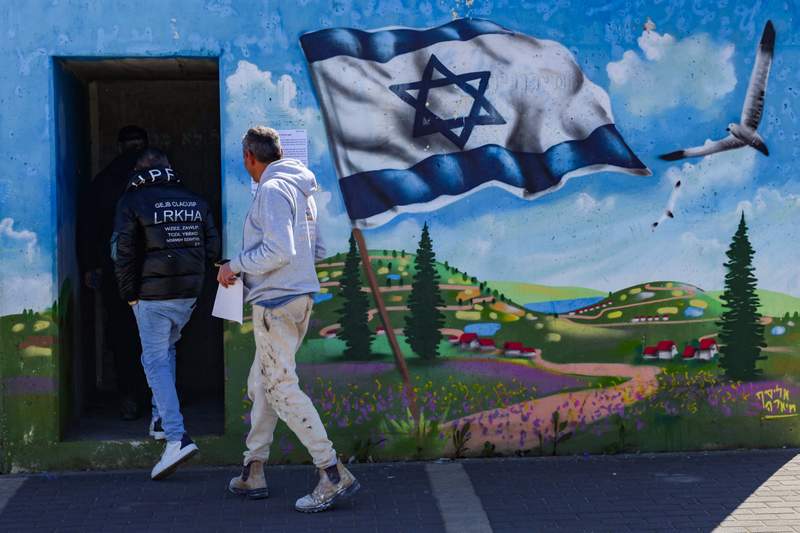
It isn’t a drill; it’s a stark reality for communities hugging the Lebanese border. The Home Front Command, Israel’s civilian protection agency, didn’t merely issue advice this week. They handed down dictates: schools in a swathe of northern towns are to remain shuttered. Educational institutions, daycare centers—they’re all closed, leaving parents scrambling and an eerie quiet descending over places like Metula, Shtula, and Kiryat Shmona. It’s a pragmatic move, sure, but a blunt instrument, cutting deeply into the semblance of normalcy many tried so hard to cling to.
This isn’t about avoiding a surprise pop quiz. It’s about incoming fire. The command’s updated guidelines aren’t vague; they specify that areas up to four kilometers from the Lebanon border are to adhere to strict gathering limitations, meaning no outdoor educational activities, no large assemblies. It’s a calculated escalation of defensive posture, a clear sign that Israeli strategists are taking the escalating provocations from Hezbollah with extreme seriousness, anticipating the next, harsher blow that could come at any moment. But they’re also aware of the profound disruption they’re causing.
And let’s be frank, this kind of blanket directive speaks volumes without uttering a single explicit threat. It’s an acknowledgement that civilian areas could quickly become battlegrounds, placing children — Israel’s most precious and politically resonant demographic — directly in harm’s way. “We’re not taking chances with our kids’ safety,” stated government spokesperson Eylon Levy, his voice edged with a mix of defiance and exhaustion. “The intelligence picture dictates these measures. It’s not ideal, it’s never ideal, but it’s absolutely necessary to prevent tragedies.”
Because ultimately, when schools close, an entire ecosystem falters. Businesses lose workers, essential services struggle, and the mental toll on families, already frayed from months of conflict, ratchets up another notch. For some, the solution is temporary relocation. Others, with less mobility or fewer resources, are simply stuck, caught in a suspended animation of fear and uncertainty. These aren’t just statistics; they’re families whose lives are now dictated by sirens — and security assessments.
But the consequences don’t stop at the border. Such instability invariably ripples across the wider region, fanning existing embers of discontent. Take the Muslim world, from Cairo to Kuala Lumpur. News of these closures, perceived as a pre-cursor to further Israeli action, often reinforces existing narratives of oppression and militarism. In a nation like Pakistan, where solidarity with Palestinians and Lebanese communities is a deeply ingrained part of the political discourse, these events can easily inflame public sentiment and fuel calls for stronger regional action or condemnation against Israel. Islamabad, always acutely sensitive to the plight of Muslim populations globally, would certainly be watching these developments with particular unease.
📄 POLICY WIRE WHITEPAPER PUBLISHED: PAKISTAN'S NATIONAL SECURITY POLICY PRIORITIES
👉 READ BY CLICKING HEREDr. Ali Khan, a political analyst focusing on South Asian geopolitics, didn’t pull any punches: “Every shuttered school in this conflict zone serves as fresh fodder for a broader, ideologically charged narrative across the Muslim world. It reinforces a perception that children, on all sides, are expendable in a game controlled by greater powers. That’s a dangerous seed to plant in an already volatile region.” He’s right; these are complex, intertwined realities.
This prolonged state of high alert comes at a significant cost, not just human but economic. Consider that border skirmishes have already led to the displacement of an estimated 80,000 Israelis from their homes, according to official Israeli figures from early 2024. That’s a staggering figure for a relatively small nation, straining public resources, infrastructure, and the social fabric. It’s a quiet exodus playing out against the backdrop of louder, more destructive warfare elsewhere.
What This Means
The Home Front Command’s drastic move signals that the Israeli military establishment has a low confidence in the de-escalation of hostilities along the Lebanese front. They’re preparing for the worst, even if it means disrupting thousands of lives. Economically, this extends the bleed in the northern economy, impacting tourism, agriculture, — and local commerce. Businesses struggle without their workforce, and the psychological burden on displaced families creates long-term social challenges that successive governments will wrestle with for years. Politically, the government faces a tough balancing act: demonstrating resolve against external threats while managing a growing humanitarian crisis internally, all without inadvertently dragging the nation into a full-blown two-front war. And regionally, these actions contribute to a combustible atmosphere. As global powers like the U.S. and various European nations engage in their own delicate diplomatic dance, Westminster’s diplomatic tightrope doesn’t seem quite so taut compared to this powder keg. A single misstep here could have irreversible consequences, drawing in proxies and potentially larger state actors, setting the entire Middle East — and its global reverberations — ablaze. It’s a calculated gamble, played out with children’s safety — and futures hanging in the balance.