


Silent Terrors: West London Killing Reveals City’s Quiet Fissures
POLICY WIRE — London, UK — The digital hum of London often drowns out its smaller tragedies. And so it was, until this past Wednesday, when the routine clatter of another mid-week afternoon in west...

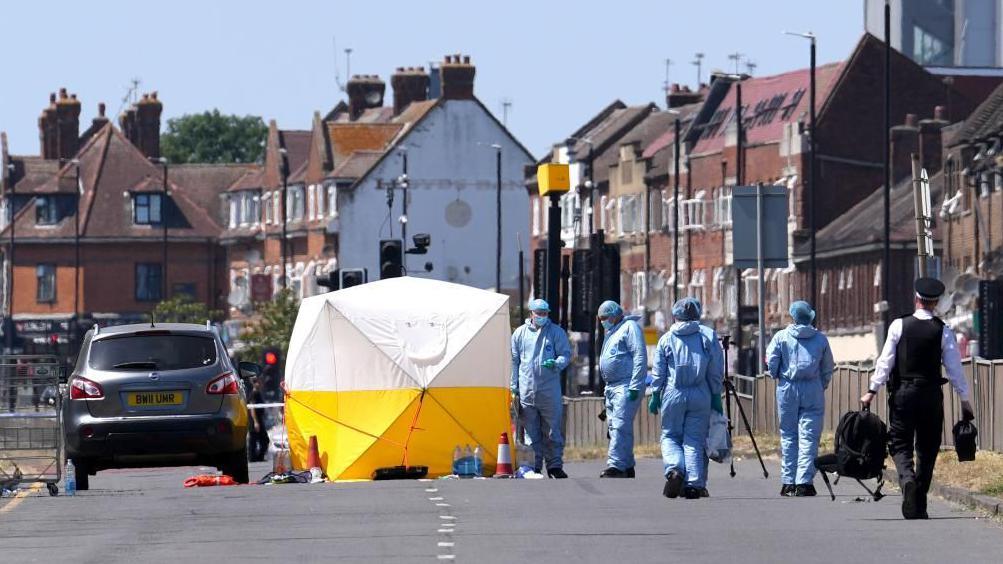
POLICY WIRE — London, UK — The digital hum of London often drowns out its smaller tragedies. And so it was, until this past Wednesday, when the routine clatter of another mid-week afternoon in west London splintered into something colder, sharper. The police siren’s wail—that ubiquitous urban soundtrack—sliced through the afternoon quiet not as a background hum, but as a dire, undeniable punctuation mark for one household. An everyday scene. A sudden, savage end to a woman’s life.
It’s easy, isn’t it, to abstract these incidents? To see them as just another data point in the metropolitan sprawl. But in a neighborhood usually characterized by its steady rhythms—commuters, school runs, the murmur of varied tongues—a homicide doesn’t just pass. It settles. It leaves a film. Not even a day later, detectives were confirming an arrest. A man, 44, now in custody on suspicion of murder. Quick work, perhaps. But the grim math of such speed does little to alleviate the sense of dread that washes over a postcode when its sense of normalcy is so violently shredded.
“We’ve been talking about rising community concerns for months now. People feel the squeeze—financially, yes, but also in a fundamental way about their safety,” stated Councillor Meena Rahman, who represents a ward not far from the incident. Her voice, usually brimming with the practiced optimism of a local elected official, carried a noticeable weariness. “This isn’t just about more boots on the ground, though we need that too. It’s about social fragmentation. It’s about seeing — and being seen before these tensions erupt into something irreparable. It’s complicated.” And complicated it’s, in a city that prides itself on its diversity yet frequently grapples with the inherent frictions of that very attribute.
Metropolitan Police DCI Andrew Holt, heading the investigation, offered the customary assurance, though with an undercurrent of candid fatigue that only officers intimately familiar with the capital’s perpetual challenges can convey. “Our priority, plain — and simple, is to secure justice for the victim and her family. We’ve made an arrest, — and the investigation is proceeding with urgency. But we don’t pretend these incidents exist in a vacuum,” he conceded, scanning the quiet street now devoid of emergency vehicles. “This wasn’t random, it rarely is. It’s often domestic. Or it’s rooted in something deeply personal that’s gone catastrophically wrong. We’re working through the details. Always working through them.”
The incident sends a shiver through west London’s incredibly varied populace. Many of these neighborhoods, after all, are home to significant diaspora communities—Pakistanis, Bengalis, Arabs, you name it—who fled instability only to find new forms of anxiety awaiting them in supposedly safer climes. They’re often hyper-aware of how isolated incidents can, in the blink of an eye, fuel broader narratives about their communities, or spark tensions between differing groups. But what they really crave? It’s simply safety. Basic, boring safety. Just like communities grappling with post-trauma justice abroad, here in London, it’s the daily quiet that’s paramount.
But the data don’t always offer much solace. Last year, the UK saw a 6% rise in homicides compared to the previous period, according to the Office for National Statistics (ONS). That’s not just a number on a page; it’s a constant, gnawing worry for families in boroughs stretching from Ealing to Hounslow, where tight-knit communities try to reconcile metropolitan promise with persistent urban realities. You don’t have to be a Kremlin watcher to sense the underlying tension. It just hovers.
What This Means
This tragic episode in west London isn’t an isolated criminal event; it’s a mirror reflecting several uncomfortable truths about modern British society. Politically, it re-energizes calls for greater police funding and community outreach programs, particularly those targeting domestic violence and mental health crises, which often precipitate such personal tragedies. But governments, forever chasing budget efficiency, struggle to provide preventative rather than purely reactive solutions. Economically, a community reeling from violence experiences a subtle chilling effect: fewer late-night patrons for businesses, increased expenditure on private security for those who can afford it, and a diminished sense of communal investment. It creates subtle economic stratification where fear becomes another commodity. it adds another layer to the narrative of ‘Broken Britain’ that often gets tossed around in the media, regardless of actual crime trends. Because perception often trumps statistics. And, crucially, it underscores the persistent, nagging concern of residents in London’s hyper-diverse suburbs: are our public spaces truly safe? Or is the capital’s shiny veneer starting to crack, exposing the raw, ugly underbelly of its unaddressed social challenges?