


Mexico’s Submerged Sanctums: Ancient Mysteries Beneath the Tourist Glow
POLICY WIRE — Mexico City, Mexico — The surface glimmers, bright with tourist promise, yet just meters below, Mexico holds secrets far older and infinitely more demanding than any Cancun...

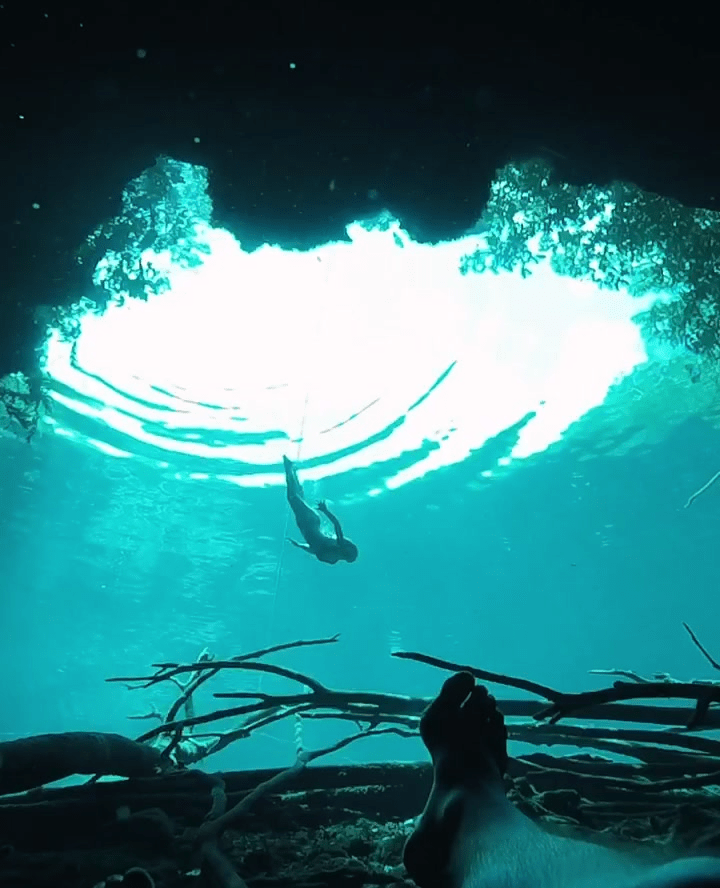
POLICY WIRE — Mexico City, Mexico — The surface glimmers, bright with tourist promise, yet just meters below, Mexico holds secrets far older and infinitely more demanding than any Cancun sun-worshipper could fathom. These aren’t just swimming holes; they’re subterranean cathedrals, stretching for hundreds of miles, choked with history and, increasingly, with the quiet hum of commerce and crisis.
It’s an irony, isn’t it, that while above ground, modern concrete sprawls toward a shimmering horizon, beneath it lies a world so profoundly untouched, so sacred, it makes the ancient pilgrimage routes of South Asia—or the hushed mausoleums near India’s historical heartland—seem positively bustling. These cenotes, formed over millennia by collapsing limestone, once served as the Mayan civilization’s lifelines, portals to Xibalba, the underworld. And they remain, for those with the specialized gear — and the daring, glimpses into a primordial past.
But the silent, emerald waters now face a louder, more aggressive current: that of human ambition. Developers see dollar signs. Scuba diving outfits see adventure. Archaeologists see precious, irreplaceable artifacts. Locals? They see their history, their livelihood, maybe even their spiritual connection slowly, inexorably, being altered. You’d think the sheer scale of the Sistema Dos Ojos—one of the world’s largest underwater cave systems, with over 360 miles of surveyed passages, according to the Yucatán Caves Project—would provide some sanctuary. But that’s precisely the magnet.
It’s not just a tourist draw, though that’s undoubtedly the biggest engine. Researchers delve into these submerged networks, meticulously charting their labyrinthine paths, discovering pre-Columbian artifacts and even skeletal remains of ancient megafauna and humans. It’s like uncovering multiple Pyramids of Giza, but upside down — and underwater. And yet, this invaluable natural laboratory — and archaeological trove grapples with existential threats. Because, well, progress.
Rapid, often unregulated, development in the Yucatán Peninsula places immense strain on this delicate karst landscape. Sewage, agricultural runoff, — and the sheer volume of human traffic begin to tell a grim tale. It’s a scenario eerily reminiscent of water resource management debates in arid regions globally—take Pakistan’s Indus River basin, where ancient irrigation systems now strain under modern demands, or the constant threat to ecological sites in rapidly urbanizing Muslim-majority countries. The same basic calculus applies: a finite resource meets infinite ambition.
Local conservation groups — and dedicated divers act as frontline guardians, documenting the beauty and the decay. They see firsthand the microplastic accumulation, the algal blooms. They report [QUOTE_PLACEHOLDER] on the urgency of stricter regulations. But when money talks, — and tourism dollars practically scream, bureaucratic inertia can be a fearsome adversary.
The government, it seems, has its own tightrope act. Balancing the lucrative tourism industry with environmental protection? It’s an age-old political dance. They’ll tell you they’re taking steps. They’ll point to new permits or enforcement efforts. But you can’t just put a padlock on a river system, especially when that system is subterranean and connects to almost every freshwater source for miles around. It’s too complex. It’s too vast. It’s a systemic challenge, akin to trying to police a digital empire where borders are fluid and definitions mutable.
So, the cenotes remain, beckoning. They’re a wonder, a window into another time. But they’re also a cautionary tale, etched in limestone — and crystal-clear water. A mirror reflecting our species’ capacity for both awe — and carelessness. Dive in, if you dare. Just remember what you might be swimming through.
What This Means
This ongoing tension in Mexico’s Yucatán Peninsula between environmental preservation and economic growth holds significant political and economic ramifications. The region’s tourism-centric economy relies heavily on its natural attractions, with cenotes contributing substantially to its mystique and draw. Unchecked development, however, risks rendering these very attractions ecologically compromised, potentially alienating eco-tourists and impacting long-term revenue streams. Economically, a decline in cenote health could devastate local dive operators, guides, and supporting businesses, leading to job losses and a broader hit to regional GDP. Politically, the Mexican government faces increasing pressure from both environmentalists and the powerful tourism lobby. Any perceived failure to protect these natural wonders could spark public outcry, both domestically and internationally, affecting Mexico’s brand as a responsible tourism destination. The challenge underscores a broader global dilemma faced by nations rich in natural heritage but strapped for immediate capital: how to convert natural assets into sustainable wealth without destroying the very resource base itself. It’s a calculation with few easy answers and long-term consequences that governments, from Latin America to the distant corners of the Muslim world struggling with ecological degradation, are continually forced to confront.