


From Vulnerability to Vigilance: Nir Oz Takes Up Arms in Israel’s New Frontline Doctrine
POLICY WIRE — TEL AVIV, ISRAEL — Forget the grand strategy; sometimes, security boils down to your neighbor, a rifle, and the cold realization that nobody else might come. That’s the gritty,...

POLICY WIRE — TEL AVIV, ISRAEL — Forget the grand strategy; sometimes, security boils down to your neighbor, a rifle, and the cold realization that nobody else might come. That’s the gritty, unvarnished truth etching itself onto the psyche of Israel’s southern communities, particularly places like Nir Oz. It’s not just about guarding borders anymore. It’s about guarding dinner with a militia airdropped into your living room – a new, unsettling paradigm.
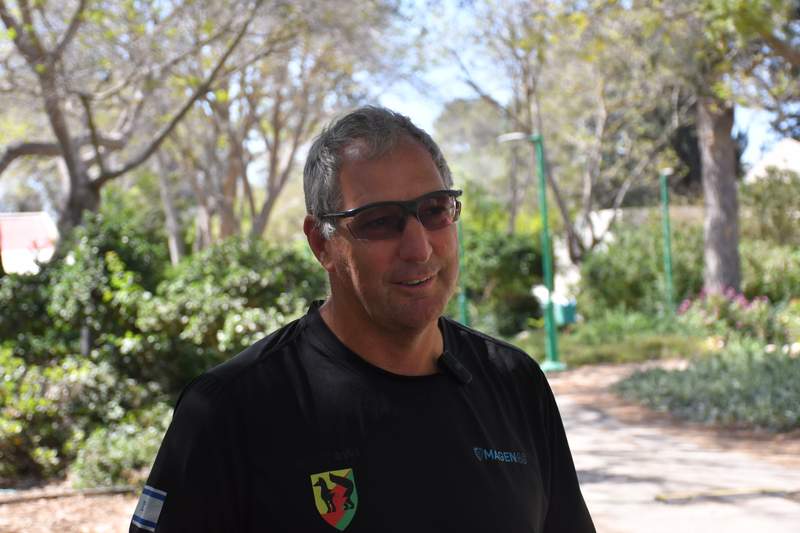
After the unconscionable horror of October 7th, the kibbutz of Nir Oz became synonymous with unimaginable loss and resilience. Its residents, battered but not entirely broken, are now picking up the pieces—and a few new skills. The most obvious fact isn’t how many lost their homes, but how many are now learning to defend what’s left. This isn’t just grief work; it’s a re-education in self-preservation, a hard-learned lesson that the state, in its monolithic might, didn’t arrive fast enough. They’re establishing their own defensive mechanisms. Community security groups, comprised entirely of volunteers, are morphing from a bureaucratic footnote into the tip of the spear. We’re witnessing a stark, unfiltered decentralization of security responsibilities.
The Israeli Home Front Command is no longer the sole purveyor of emergency response here. These are everyday folks, men and women, exchanging farming tips for tactical drills, gardening gloves for rifle slings. It’s less about patriotism, more about primal instinct, they’d tell ya. But it’s also a sobering indictment of a security apparatus that was, by its own admission, caught napping. [QUOTE_PLACEHOLDER] you hear some say, — and it’s hard to argue with that after the fact. What else is there to do?
And these aren’t isolated incidents. The push for localized defense, for citizen patrols, has swept across numerous Israeli towns close to Gaza. It’s a ground-up initiative, often spearheaded by individuals who previously wouldn’t have known a magazine from a clip. Because when the sirens wail, and the military response is delayed, it’s often your next-door neighbor—not a distant brigadier—who’s standing between you and disaster. The sheer scale of this transition is stark. As per an Israeli National Security Study, the number of active, community-based emergency squads across border communities has risen by over 400% since October 7th, forming a decentralized, organic shield. You can practically taste the desperation woven into such statistics.
It’s a peculiar reflection on national defense when private citizens find themselves backstopping professional armies. Yet, it isn’t entirely new in the broader region. Look at Pakistan, for example, where community lashkars—tribal militias—have, for generations, played complex roles in local security, sometimes augmenting state power, other times challenging it. They’ve often filled the vacuum where state writ struggles to run deep, especially in remote tribal areas. It’s not a perfect parallel, by any stretch, but the underlying principle of localized self-defense when central authority is perceived as insufficient, or simply too slow, holds a certain universal, albeit uncomfortable, resonance. Don’t think for a second it’s a model to be universally emulated, but it’s a symptom of larger insecurities.
They’re not just forming militias; they’re receiving proper, if accelerated, training. These volunteers are learning to shoot straight, secure perimeters, — and administer basic first aid under duress. The objective? To act as immediate responders, holding the line until the IDF arrives. It’s an unspoken concession from the government, acknowledging their shortcomings without explicitly saying so. And that subtle acknowledgment? It speaks volumes. These volunteers are the human sandbags against the next onslaught. One resident reportedly said, [QUOTE_PLACEHOLDER], explaining why she felt compelled to join, her voice raspy, hardened by recent experience.
📄 POLICY WIRE WHITEPAPER PUBLISHED: PAKISTAN'S NATIONAL SECURITY POLICY PRIORITIES
👉 READ BY CLICKING HEREBut the questions persist, thorny — and unresolved. Is this a temporary measure, a collective act of catharsis, or the birth of a more permanent, localized defense structure? What happens when the adrenaline fades, when the raw memory of trauma recedes into something more manageable? Can a state truly delegate its fundamental monopoly on force to its traumatized citizenry? It’s messy, complicated business, you know? And it doesn’t fit neatly into any strategic doctrine taught in military academies.
What This Means
This dramatic shift in Nir Oz and similar border communities isn’t merely a localized reaction to a single horrific event; it represents a significant, if uncomfortable, recalibration of the relationship between the Israeli state and its citizenry concerning national security. Economically, this pushes state expenditure away from solely professional military solutions towards integrating and, perhaps, subsidizing community-level defense. We’re talking about budget lines for equipment, training, — and coordination that didn’t exist in such earnest before. It’s a costly, decentralized commitment, arguably forced by circumstances. Politically, it signals a quiet concession by the ruling establishment that the traditional models of protection are insufficient, at least in perception, for front-line communities. This could, ironically, breed greater political stability by giving residents a sense of agency, or it could create complex new power dynamics, especially if these armed groups feel detached from national command structures or grow resentful of perceived abandonment.
In the broader geopolitical sphere, this local fortification initiative contributes to a deepening sense of siege. The region, already a tinderbox, watches. Neighbors like Lebanon, struggling with their own internal stability and external threats, might see this as yet another layer of Israeli militarization, exacerbating the already fraught dynamics along borders. It’s reminiscent of historical patterns in regions like Kashmir or parts of Afghanistan where state control is porous, leading communities to arm themselves for perceived necessities—a dangerous precedent to lean on, even if born of desperation. This internal rearmament, however justified by events like October 7th, becomes a silent message to regional actors and to Palestinians; a statement that deterrence now includes armed farmers and homemakers, not just tanks and jets. You can see how that just tightens the screw a little more, adding yet another complex wrinkle to a peace that feels further away than ever. Consider the continuing tensions illustrated in areas like Kiryat Shmona’s relentless ‘deja vu’ or the grim assessments emanating from Lebanon’s perpetually teetering brink. These are not isolated incidents; they’re all part of the same, volatile regional equation. Nobody wins here; everyone just tries to survive, one rifle-wielding neighbor at a time.