


The €60 Million Ghost: How Football’s Elite Missed ‘Kvaradona’ and the Cost of Hindsight
POLICY WIRE — London, UK — There’s a particular brand of spectral haunting that afflicts football clubs, less about the moans of former glories and more about the whispered ‘what-ifs’ that linger...

POLICY WIRE — London, UK — There’s a particular brand of spectral haunting that afflicts football clubs, less about the moans of former glories and more about the whispered ‘what-ifs’ that linger like phantom cigar smoke in executive boxes. We’re not talking about near misses on penalties here, but colossal, multi-million-euro miscalculations that, in hindsight, seem almost comical in their shortsightedness. Forget the spreadsheets and scouting reports—sometimes, the market whispers a prophecy, and the big names just aren’t listening.
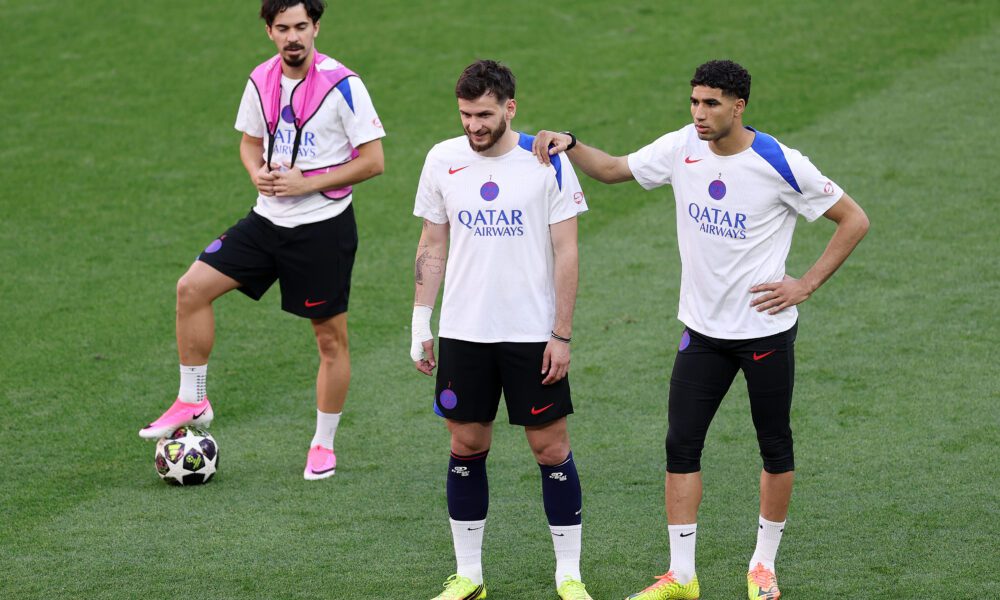
Take Khvicha Kvaratskhelia, for instance. A name that, in 2021, wouldn’t have rolled off the tongue of most Premier League pundits with ease. Fast forward to today, and the Georgian winger—nicknamed ‘Kvaradona’ by adoring Napoli fans for a reason—has blossomed into one of global football’s most electrifying talents, now lighting up Paris Saint-Germain after a swift €80 million switch. But it didn’t have to be this way for two prominent English clubs.
Two years before his ascent to superstardom, West Ham United had Kvaratskhelia, then plying his trade in Russia, virtually at their fingertips for a paltry €20 million. Let that sink in. Instead, in a decision that now makes hardened football accountants blanch, the Hammers opted to shell out €35 million for Nikola Vlasic, then with CSKA Moscow. Vlasic, a name now synonymous with fleeting disappointment, managed a single goal across 31 appearances for the London outfit before being quietly shipped off. He wasn’t bad, exactly; he just wasn’t Kvaratskhelia.
But West Ham wasn’t the only one gazing into a crystal ball clouded with bureaucratic static. A year later, in 2022, as Newcastle United’s new Saudi-backed ownership was flexing its considerable financial muscle, the opportunity presented itself again. Kvaratskhelia’s contract with Rubin Kazan had been suspended due to the conflict in Ukraine; he was momentarily back in Georgia, ripe for the picking at what was reported to be just €10 million before his savvy move to Napoli three months later. Newcastle, with their newfound ambition — and an ostensible war chest, decided against making a bid. Because, you know, they had ‘other priorities’.
“We always look back, don’t we? It’s easy to be clever in hindsight. We had a plan, a strategy, and sometimes—it just doesn’t pan out like you hope. That’s football, that’s business,” David Sullivan, West Ham’s co-chairman, was reported to have grumbled recently, likely over a lukewarm Earl Grey. A convenient abstraction for a misstep now costing them potentially tens, if not hundreds, of millions in sporting and commercial dividends.
“Our investment strategy is deliberate, built for sustainable growth. We’re not chasing headlines with every promising talent. We weigh our options, always,” declared Newcastle co-owner Amanda Staveley during a recent industry forum, a statement that now reads with a rather…pointed subtext given the player’s current trajectory. That ‘deliberate’ approach cost them a potential generational talent for peanuts.
📄 POLICY WIRE WHITEPAPER PUBLISHED: PAKISTAN'S NATIONAL SECURITY POLICY PRIORITIES
👉 READ BY CLICKING HEREThe numbers don’t lie. A player available for €10-20 million, now valued north of €80 million, is not merely a missed opportunity. It’s a fundamental failing in talent identification — and risk assessment. It makes one wonder if scouting networks, too often fixated on traditional European hotbeds, are truly agile enough to spot talent emerging from what some still consider the fringes. And if not, what broader economic and social ramifications does that oversight have for burgeoning football nations in regions like Central Asia and, by extension, parts of the Muslim world that share similar geographical and cultural overlaps with Kvaratskhelia’s Georgia?
According to a 2023 report by Deloitte Football Money League, the Premier League’s collective revenue hit a staggering £6.1 billion for the 2021/22 season, far outstripping rivals. The stakes, it’s clear, couldn’t be higher. And yet, this kind of glaring financial blunder continues.
What This Means
The Kvaratskhelia saga isn’t just a footnote in transfer market folklore; it’s a policy paper in the making about the interplay of data, intuition, and sheer managerial bravery. For clubs, it’s a stark lesson in opportunity cost. Had West Ham secured him, not only would their on-field fortunes—and likely their Champions League aspirations—have soared, but his market value alone would’ve represented an incredible asset, bolstering their balance sheets substantially. This kind of fiscal dexterity—or lack thereof—isn’t just about winning games; it’s about navigating an increasingly complex financial landscape where shrewd talent acquisition directly impacts a club’s long-term sustainability and brand power. Just consider Barcelona’s brutal math in managing player wages—every euro counts.
More broadly, it highlights how geopolitical shifts and conflict can open unexpected talent pools, often from nations typically outside the footballing gaze. Georgian players, for instance, aren’t exactly household names in Western Europe, but Kvaratskhelia’s rise should prompt clubs to re-evaluate their entire scouting geography. Why do some players from less-resourced regions get overlooked? Because, frequently, the pathways aren’t as clear, the infrastructure isn’t as developed, and the traditional networks aren’t in place. That’s a policy challenge—not just for sports organizations but for governments looking to foster soft power and economic growth through emerging industries.
And let’s be frank: the decision-making process itself comes under scrutiny. Was it overreliance on conventional wisdom? A failure to adapt to rapidly changing circumstances, like the market instability presented by geopolitical events? These aren’t just questions for football. They’re fundamental queries for any organization—or even nation—making high-stakes decisions with imperfect information. Because, ultimately, what West Ham and Newcastle demonstrated isn’t just a failure to sign a good player; it’s a failure of imagination in a market that rewards foresight, guts, and the willingness to look beyond the obvious. They simply didn’t see the gold mine staring them right in the face. It’s truly a shame, isn’t it?