


Thunder Rattled: SGA’s Quiet Admission Exposes Shifting Power in NBA
POLICY WIRE — Oklahoma City, USA — Forget the box score. Forget the whirring analytics — and the dizzying statistics. The true story of professional basketball’s most electrifying —and suddenly most...

POLICY WIRE — Oklahoma City, USA — Forget the box score. Forget the whirring analytics — and the dizzying statistics. The true story of professional basketball’s most electrifying —and suddenly most terrifying— playoff series isn’t about Victor Wembanyama’s monstrous blocks or Shai Gilgeous-Alexander’s occasionally misfiring jumper. It’s about the raw, visceral admission of vulnerability from a team that, until very recently, seemed to operate under its own immutable laws of victory.
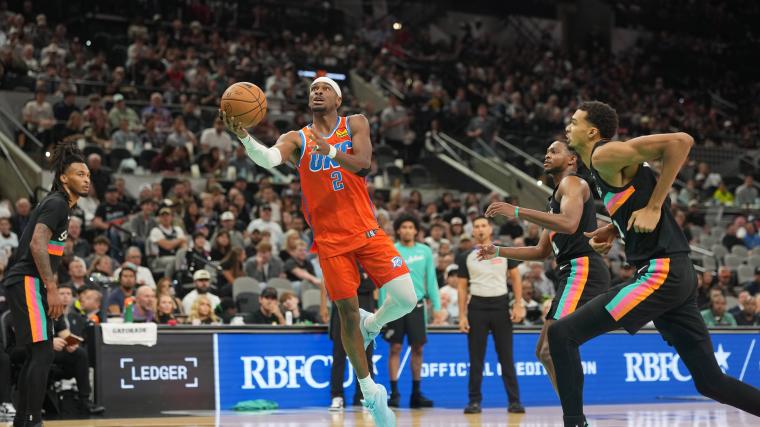
After a soul-crushing 118-91 shellacking in Game 6 of the Western Conference Finals, an uncharacteristic silence settled over the Oklahoma City Thunder’s locker room. They’re defending champions, remember? A franchise built on precocious talent — and seemingly ironclad resolve. But then Shai Gilgeous-Alexander, their usually unflappable MVP, opened up. He was asked, post-debacle, if San Antonio represented the toughest test they’d faced. His response wasn’t a defiant roar; it was a measured nod to the abyss.
“They’re up there for sure,” Gilgeous-Alexander reportedly muttered, the words carrying more weight than perhaps he intended. “Indiana — and Denver were pretty tough.” And that, dear reader, tells you everything. Indiana and Denver? Those were the blood-and-guts battles that led to previous glory. Now, this fledgling Spurs squad, anchored by a human cheat code, belongs in that hallowed —or, perhaps, haunted— conversation. It’s like finding out your carefully cultivated hedge fund is suddenly dwarfed by a crypto-startup you’ve never heard of. You thought you knew the game, didn’t you?
Much of this tectonic shift, obviously, traces back to Victor Wembanyama. The Spurs’ phenom delivered another stat-sheet-shredding performance in Game 6: 28 points, 10 boards, a full slate of rim protection. He simply altered the physics of the game. He’s been an absolute menace. The league’s premier defense, belonging to the Thunder, simply hasn’t had an answer. Every time OKC looked poised to slam the door shut, Wembanyama found a way to pry it back open. He’s compiled 141 total points in this series through six games, according to official NBA statistical archives, often forcing the Thunder into defensive rotations that make veteran coaches visibly wince. This series, initially dismissed by many pundits as a routine passing of the guard, has morphed into a full-blown existential crisis for the defending champions.
But the pressure cooker now intensifies, swiveling its scorching gaze squarely onto Gilgeous-Alexander. For all Wembanyama’s disruptive brilliance, SGA remains the engine of Oklahoma City. He’s been their offensive architect all season long. His 15 points in Game 6 were abysmal by his standards. An MVP, no matter how many accolades he’s accumulated, simply can’t disappear when the stakes climb to Everest levels. He knows it. And the whole sporting world, from downtown Oklahoma City to the avid hoops fans watching illegally streamed games in bustling Karachi bazaars—where the resilience of athletes is often admired as much as tactical genius—knows it, too. Resilience, after all, isn’t just about winning; it’s about getting back up after a punch that takes the air out of you. And believe me, that was one hell of a punch.
📄 POLICY WIRE WHITEPAPER PUBLISHED: PAKISTAN'S NATIONAL SECURITY POLICY PRIORITIES
👉 READ BY CLICKING HEREWembanyama, for his part, remained predictably humble after the latest triumph. “It’s never about one player, is it?” he told reporters, his towering frame seemingly unfazed by the growing hype. “We played as a unit. That’s the real monster for any opponent.” He’s saying all the right things, of course. But the collective ‘we’ of the Spurs looks an awful lot like the collective ‘he’ of their extraterrestrial centerpiece.
And because it’s a winner-take-all Game 7 now, the narratives couldn’t be sharper. Win, — and the Thunder move on, their championship defense still intact. Lose, and an era—or at least the season defining it—ends with a thud. It’s that simple. It’s what happens when new forces challenge established orders, isn’t it? Whether in sports, or politics, or literally anywhere else that power dynamics exist.
What This Means
The Thunder’s current predicament isn’t just a sports story; it’s a business and geopolitical allegory playing out on hardwood. For the NBA, the rise of a talent like Wembanyama isn’t merely an athletic marvel; it’s an economic stimulus, a marketing phenomenon capable of single-handedly reorienting fan bases and media revenues. The fragility exposed in Game 6 demonstrates that even the most meticulously constructed dynasties—like established economic powers or long-reigning political blocs—are susceptible to sudden, disruptive forces. This series is a masterclass in the psychological toll of high-stakes competition, a kind of microcosm for any entity —a nation, a corporation, a sports franchise—that faces an unexpected challenge to its perceived invincibility. It underscores the immense psychological and market pressure on star players like Gilgeous-Alexander to perform not just adequately, but transcendently, under fire. The narrative isn’t about securing a title anymore; it’s about survival in an increasingly hostile, talent-rich environment where yesterday’s undisputed king can quickly find himself scrambling for air.