


The Brutal Ballet of Brackets: How College Baseball Reflects a Nation’s Unease
POLICY WIRE — Knoxville, Tennessee — In a landscape increasingly defined by zero-sum calculations and existential anxieties, even a seemingly innocuous college baseball match can, for the discerning...

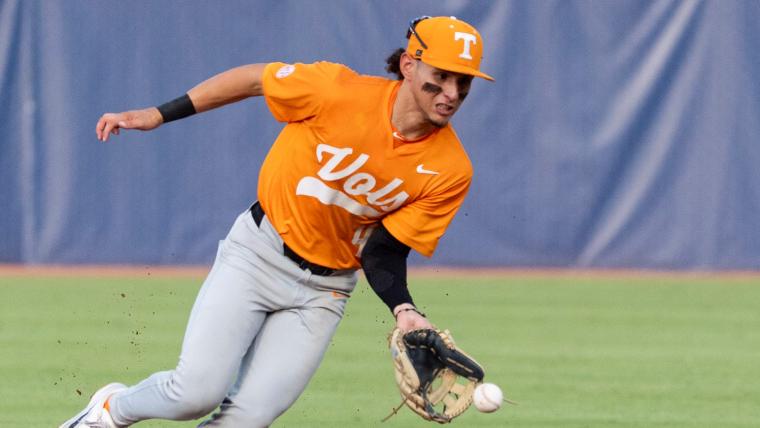
POLICY WIRE — Knoxville, Tennessee — In a landscape increasingly defined by zero-sum calculations and existential anxieties, even a seemingly innocuous college baseball match can, for the discerning observer, offer a stark reflection of larger societal tremors. This isn’t just about two teams slugging it out—East Carolina against Tennessee—it’s a microcosm of American ambition, relentless corporate sponsorship, and the brutal calculus applied to youth. For a few nail-biting hours last week, two dozen young men navigated extra innings, battling not just opposing pitchers but the crushing weight of institutional expectations and multi-million dollar television contracts. The final score: Tennessee 2, East Carolina 1, a margin as thin as the dreams of countless athletes who’ll never see their names in a box score. But it wasn’t just a game; it was an investment.
The tension on the field, which culminated in Tennessee’s victory in the thirteenth inning, spoke volumes about the intensity now expected in collegiate athletics. This isn’t the sandlot anymore, is it? These young men, still largely dependent on scholarships and the whims of coaching staffs, are performing under professional-grade scrutiny, their careers — their futures — hinging on each swing and every strikeout. East Carolina, for all its tenacious efforts, simply couldn’t convert enough hits into runs when it mattered, stranding a staggering 11 runners on base. They piled up 11 hits, mind you, but couldn’t seal the deal. Tennessee, meanwhile, managed 7 hits and scraped together two runs—that’s efficiency. They just got it done.
And it’s a spectacle worth billions. According to a recent NCAA financial report, major collegiate sports programs generated nearly $19 billion in revenue in 2023, primarily from media rights and ticket sales. “We aren’t just nurturing athletes; we’re cultivating brand ambassadors, revenue streams,” noted an anonymous senior official within the Southeastern Conference (SEC), a common sentiment whispered among powerbrokers. It’s a candid admission that transforms sport into product, athlete into asset.
The stakes extend far beyond personal glory. Consider the gravitational pull these sporting events exert, drawing fans from across socioeconomic strata, their hopes tied to a university’s competitive prowess. It’s an American obsession, this blend of local pride and national aspiration, but you can see similar energies in different contexts. Take Pakistan, where the fervor for cricket transcends mere sport, often serving as a rare unifier amidst profound internal divisions—a cultural pulse. Or think of the enduring narrative of Argentina’s sacred game, fútbol, a profound societal safety valve. These college baseball battles, particularly when one side is desperate to break through—East Carolina is making its eighth straight regional appearance without a College World Series berth—illustrate a potent national narrative of aspiration and the often-elusive nature of its fulfillment. That ‘next level’ remains stubbornly out of reach for some.
But for those on the losing side, the weight of the moment can be heavy, crushing even. Coach Mike Volkov of East Carolina, stoic in defeat, probably reflecting on another year just shy of Omaha, mused, “You ask these young men for everything they’ve got, and they give it. And then some. But the game, she doesn’t always care for sentiment, does she? Sometimes, it just takes everything — and gives you nothing in return, except perhaps, character. A hell of a way to learn that lesson.” That’s not just sports talk; it’s a lament about raw justice in a brutally competitive world, one where the margins are often dictated by a fraction of an inch, or perhaps, an uncharacteristic miscue from an otherwise solid pitcher like Joseph Webb.
What This Means
The intensity of these collegiate athletic contests serves as more than just entertainment; it’s a profound lens into American social capital and economic disparity. The sheer capital expended on athletic infrastructure — and coaching salaries far outstrips many academic departments. This isn’t to diminish the athletes’ dedication, but it’s a reordering of institutional priorities. Elite athletic programs like Tennessee, with their deep pockets and storied traditions, can recruit, retain, and weather defeats in a way smaller programs simply can’t. East Carolina’s struggle, despite consistent regional appearances, isn’t just about a bad bounce or a missed pitch; it speaks to the persistent gap between the haves and have-nots, a divide amplified under the klieg lights of prime-time sports. Because in a culture that rewards winners above all else, the emotional and financial tolls on those perpetually close—but never quite there—are rarely part of the official statistics. This relentless pursuit of excellence in college sports also feeds a wider consumer appetite for high-stakes, easily digestible narratives, implicitly shaping expectations in other competitive arenas, from boardrooms to political campaigns. And this fixation on decisive victory, on breaking through, has undeniable societal repercussions.
The echoes aren’t just national. The aspirational allure of these big-league American sports often finds an audience globally, reflecting a perception of opportunity and ruthless meritocracy. For a Pakistani youth watching highlights, it’s not just a game; it’s a window into a different sort of life, a different measure of achievement. But we shouldn’t forget the unvarnished truth: behind every electrifying win lies a gut-wrenching loss, a testament to the unyielding, often unforgiving, machinery of modern, highly capitalized sport.