
Executive Chess: Judge Declines Immediate Halt to Mail-In Ballot Order, Deeper Implications Surface
POLICY WIRE — Washington, D.C., United States — The levers of state power, often clunky and slow, sometimes grind with a calculated grace. So it seemed this week when a federal judicial authority...

POLICY WIRE — Washington, D.C., United States — The levers of state power, often clunky and slow, sometimes grind with a calculated grace. So it seemed this week when a federal judicial authority opted not to put the brakes on a rather controversial presidential directive concerning mail-in ballot procedures—at least, not yet. This isn’t just about absentee forms or ink on paper; it’s another sharp jab in the endless, bare-knuckle brawl over how Americans cast their votes and, by extension, who truly holds the reins of the administrative state.
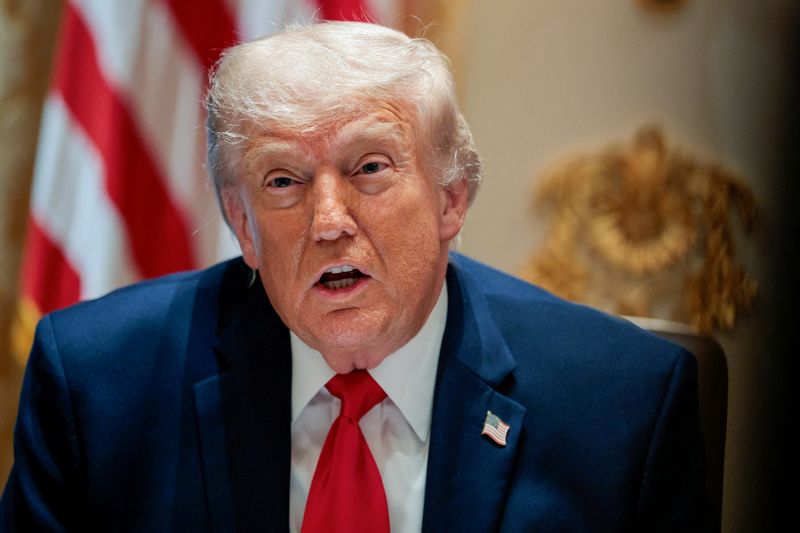
It’s an outcome that, for some, brings a certain, grim predictability. After all, the executive branch, under former President Trump, had pushed this order with the clear intention of reshaping how future elections might—or might not—utilize mail-in ballots. But judges, they’ve got their own timetable, their own arcane processes. The move leaves the contentious directive standing, temporarily, awaiting what one assumes will be further legal jousting. It’s like watching two grandmasters move pawns, each trying to feint an attack on the queen while the real battle is being set up several turns later. And they’re not rushing it, either. [QUOTE_PLACEHOLDER]
The core contention here involves the interplay of federal executive power with state election administration—a perpetual turf war in the American political landscape. Presidents, of course, have tools at their disposal. Executive orders? Yep. They’ve been used for everything from desegregating the armed forces to setting national park boundaries. But mess with election mechanics, — and you’re poking a hornet’s nest. Especially now, when public trust in electoral systems sometimes feels like it’s hanging by a thread. But a federal court’s decision to withhold a preliminary injunction for now suggests either a reluctance to immediately intervene in what it perceives as an executive prerogative, or perhaps a tactical retreat to allow more robust legal arguments to coalesce.
Consider this a momentary tactical victory for the executive branch—a battle won without a shot fired, primarily because the other side hasn’t gotten their weaponry in place for a full assault. This legal pause, however, doesn’t mean the order itself is sound or will ultimately withstand scrutiny. It just means the courtroom drama, as always, runs on its own peculiar schedule. But what exactly did the order propose? Specific mechanisms for ensuring what the administration then called electoral integrity, which opponents saw as thinly veiled attempts at voter suppression or an overreach into states’ rights. The language around it was always pretty fraught, always open to multiple interpretations depending on whose ox was being gored.
Globally, these micro-struggles within established democracies don’t go unnoticed. When you look at fragile democracies in, say, Pakistan or other parts of South Asia, the legitimacy of the electoral process isn’t just an abstract debate; it’s often the fragile barrier between stability and chaos. They’re watching, trust me. Any perceived tampering with, or judicial indecisiveness regarding, established democratic processes in a country like the United States provides fodder for critics and autocrats abroad. It offers a kind of subtle permission for those who’d like to muddy their own electoral waters to say, even America does it, or they’re just as dysfunctional as us. Pakistan’s own history is littered with questions surrounding electoral fairness and the perceived meddling of various powers; seeing a U.S. court deliberate over the federal government’s role in voting practices resonates in unexpected ways, becoming another data point in an ongoing global discussion about democratic resilience—or its absence.
Let’s not forget the sheer scale of the operation here. In the 2020 presidential election, for example, approximately 46% of all votes were cast by mail, a stark increase from prior elections, as reported by the U.S. Election Assistance Commission. That’s a massive number. Altering the process, even by inches, can shift the entire landscape. That figure alone tells you what kind of leverage both sides think is at stake. The fight isn’t about just an order; it’s about control over those levers of participation.
The plaintiffs in this case, various advocacy groups and political organizations, had been pushing hard for a quick injunction. They’d argue that leaving the order in place, even temporarily, causes irreparable harm by creating uncertainty or laying groundwork for disenfranchisement. And that’s a compelling argument, too. But the judicial process is a lumbering beast; it’s got its own pace, its own insistence on due diligence, on weighing competing harms before slapping down an executive act. You can’t rush these things, they’d tell you.
This isn’t an end to the story; it’s just the end of a very short, initial chapter. There will be appeals. There will be new filings. There will be renewed arguments, maybe with some extra flair. The battle for how Americans vote, for who can vote, and for whose voice counts the most—that struggle, dear reader, isn’t going anywhere. It’s part — and parcel of the country’s current contentious political metabolism. Expect more fireworks, a whole lot more of them. You just know they’re coming.
What This Means
This judicial non-action, while seemingly procedural, carries significant political — and economic undertones. Politically, it grants the executive branch a temporary symbolic victory, reinforcing the perception of expansive presidential power, even post-presidency. For opposition parties and voting rights advocates, it means they’ll have to expend more resources and time in court battles, diverting attention and funds from organizing efforts. It also underscores the fragmentation of legal strategy across various courts and jurisdictions—a complex grind that echoes deeper American divisions. Economically, prolonged legal uncertainty around election processes can, oddly enough, deter investment. Companies crave predictability; election disputes breed its opposite. If a business isn’t sure how smoothly a transition of power might occur, or if election rules are constantly in flux, it adds another layer of risk to long-term planning, subtly chilling the economic environment. But a stable economy depends on stable political processes, doesn’t it? The subtle message sent internationally is that the U.S. is still hashing out fundamental aspects of its democratic infrastructure. This isn’t good for projecting an image of unwavering stability. It affects everything, even how we project power.