

New Mexico Blaze: A Ceasefire, Not a Victory, in a Changing Climate War
POLICY WIRE — CAPITAN, N.M. — It wasn’t exactly a victory parade. More like a collective, weary sigh of relief. Fire managers tackling New Mexico’s Seven Cabins Fire are now talking about...

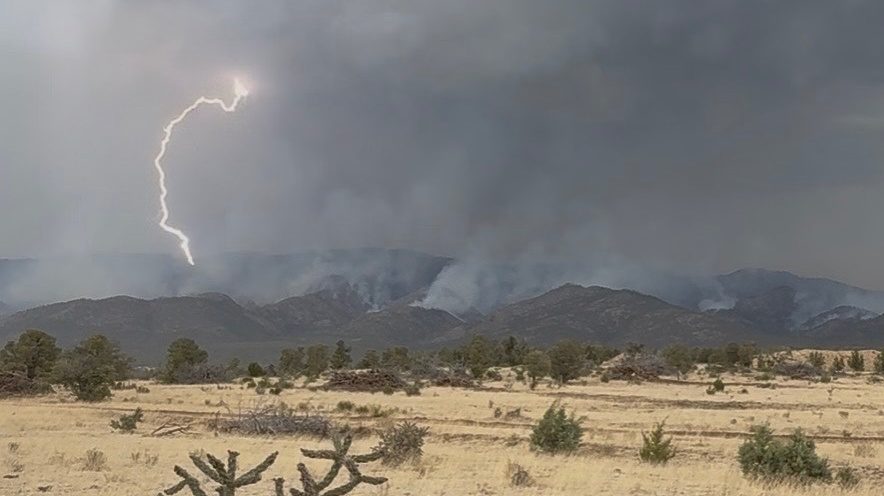
POLICY WIRE — CAPITAN, N.M. — It wasn’t exactly a victory parade. More like a collective, weary sigh of relief. Fire managers tackling New Mexico’s Seven Cabins Fire are now talking about slowed growth and inching containment, a bureaucratic way of saying the colossal inferno scorching the state’s southeastern highlands has decided—for now—to give humanity a brief reprieve. The raw figures hint at a grim persistence: a vast scar of some 28,907 acres, barely up from Wednesday’s 28,750, with a meager 46% contained. And you’ve got to wonder: how many more sighs like this before the next inevitable gasp?
It’s a brutal, never-ending contest. Think about it: 1,114 souls, working across 45 crews, bolstered by 53 engines, six helicopters, 38 water tenders, and ten dozers. These aren’t holidaymakers; they’re the ground troops in a perpetual skirmish with an increasingly agitated planet. They’re out there, day after brutal day, mopping up residual heat in the north—an exercise that’s part grim reality, part ritualistic incantation against flare-ups—and shoring up defensible spaces on the south side. They’re trying to keep the beast at bay, to prevent it from tasting more of our homes, more of our wilderness. It’s hard, messy work. Real boots-on-the-ground stuff, far removed from any policy debate or academic discourse.
Because let’s be honest, this isn’t just about a New Mexico forest fire. It’s about a rapidly warming world where these once-rare calamities are becoming the summer’s dreary background noise. You can almost hear the strain in their voices, the local officials grappling with forces that feel almost existential.
“Look, we’re not just fighting a fire; we’re fighting a fundamentally altered climate reality,” Governor Michelle Lujan Grisham told Policy Wire from Santa Fe, her voice bearing the weight of a thousand legislative battles. “The days of predictable fire seasons, they’re a ghost story now. We need federal partners, serious investment, and a long, hard look at how we manage these landscapes when Mother Nature’s got a hotter temper than ever before.” It’s a policy prescription delivered from the front lines.
The weather, for a fleeting moment, seems to be a hesitant ally. Forecasters are whispering about a chance of cloud build-up and thunderstorms, though largely confined to higher terrain. But any experienced fire marshal will tell you, those afternoon storms? They can be a double-edged sword: a splash of relief, sure, but often accompanied by erratic winds and dry lightning, sparking new nightmares even as old ones appear to recede. Still, crews will press on, utilizing those crucial helicopters and hand crews, patrolling perimeters that stretch for miles. They’ll be at that community meeting on Thursday evening in Arabela, answering anxious questions, offering what little reassurance they can.
“People here, they’ve got that New Mexico grit. But even grit wears thin when you’re constantly looking over your shoulder,” confessed Mayor David Romero of nearby Carrizozo, eyeing the distant haze that still tinged the sky like a persistent bruise. “It’s not just the homes; it’s the livelihoods, the sense of security. You can’t put a price on that, — and it’s certainly not something the county budget was built for. We need systemic support, not just firefighting—we need prevention, restoration, and a real strategy for a future that’s already here.”
And it’s a global song of sorrow, this kind of struggle. Just ask folks in northern Pakistan, where changing monsoon patterns or freak heatwaves can turn ancient forests into tinderboxes, devastating communities that depend on those very hills for survival. They don’t have our shiny equipment; they don’t have the vast budgets. The specifics differ, sure, but the underlying anxieties, the sheer scale of Mother Nature’s rebuttal—those feelings? They translate across continents. World heritage sites and wildlands alike are feeling the heat, often quite literally.
📄 POLICY WIRE WHITEPAPER PUBLISHED: PAKISTAN'S NATIONAL SECURITY POLICY PRIORITIES
👉 READ BY CLICKING HEREBecause as the temperatures rise globally, the costs — human, economic, ecological — mount. A harsh fact, frequently buried beneath daily headlines: The National Interagency Fire Center (NIFC) reported that federal wildfire suppression costs have exceeded $2 billion annually in seven of the last ten years, demonstrating a costly upward trend that sucks resources from other essential public services. You know, like infrastructure, healthcare, maybe even fixing those potholes everyone complains about.
The fire might be ‘contained’ to some degree, but the conversation it ignites? That one needs to spread. The current forest closure over the Capitan Mountain area, stretching down from Highway 246, isn’t just about preventing more sparks; it’s a stark reminder of what’s been lost and what’s still vulnerable. Evacuation statuses remaining ‘the same’ doesn’t sound like stability; it sounds like folks are still living on a knife’s edge, praying for sustained relief, or maybe just a real good downpour.
And so, while Capitan’s fire crews breathe shallowly, grateful for any small win, the long game of climate change—and its relentless manifestation—continues to play out, impacting everything from local economies to federal spending priorities. A momentary lull isn’t a long-term solution. That’s for certain.
What This Means
The ‘slowing’ of the Seven Cabins Fire is less an assurance of safety — and more a precarious pause. Politically, these mega-fires are becoming increasingly challenging to manage for state — and federal governments. They’re demanding colossal financial allocations that strain budgets already stretched thin by other crises. Expect continued lobbying from Western states for increased federal aid, both for firefighting resources and long-term land management strategies.
Economically, the impact goes beyond burned structures. Tourism—a significant revenue stream for New Mexico—takes a hit with prolonged forest closures and a public perception of danger. Local businesses, reliant on summer visitors — and resident spending, face uncertain futures. Agricultural operations might struggle with scorched grazing lands — and diverted water resources. Insurance markets are also feeling the heat; property premiums in fire-prone regions are climbing, creating a two-tiered system where living in a desirable, wildland-adjacent area becomes an ever-costlier gamble. It creates an almost precarious reality for those in harm’s way. This isn’t just a natural disaster; it’s an economic disruptor, forcing communities to re-evaluate their entire fiscal framework. Ultimately, these fires push the urgency of climate policy squarely onto the shoulders of state and national leaders. It’s an escalating challenge that they’ll need to deal with, one way or another.