



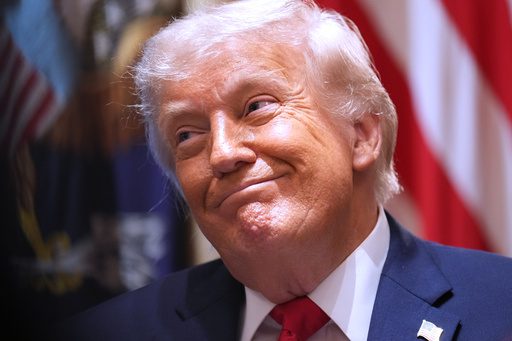
Election Day Looms: Judge’s Non-Intervention Ignites Voter List Controversy
POLICY WIRE — Washington, D.C. — It’s never really about the destination, is it? It’s always about the path—especially when that path winds through a contentious legal battlefield, straight...

POLICY WIRE — Washington, D.C. — It’s never really about the destination, is it? It’s always about the path—especially when that path winds through a contentious legal battlefield, straight toward the ballot box. A federal judge just opted to stay on the sidelines in what’s shaping up to be another knockdown, drag-out brawl over who gets to vote and how, leaving an executive order from former President Donald Trump—one aiming to create a federal voter list and cinch up mail-in voting rules—intact for now. And that’s got election rights advocates seeing red, bracing for a fall that could be, well, interesting, to put it mildly.
U.S. District Judge Carl Nichols, a judicial appointee from the very administration that crafted the order, ruled late Wednesday. He simply wasn’t convinced that blocking the mandate was necessary right now, not before it had even, you know, really started. Because that’s how the legal system sometimes works: you gotta wait for the house to burn down before you call the fire department. Nichols’ argument was straightforward, if a tad disquieting to those worried about disenfranchisement: harm hadn’t manifested yet. “The Court recognizes that the Postal Service may ultimately issue a final rule that directly affects Plaintiffs or their members, or that the Government may develop State Citizenship Lists that omit specific individuals due to particularized flaws,” Nichols penned, effectively punting the ball. “Plaintiffs may, of course, renew their motions if — and when those future actions occur. Until then, however, Plaintiffs cannot show that preliminary injunctive relief is warranted.” It’s a lawyerly way of saying, ‘Come back when things get properly messy.’
Democrats and a phalanx of civil rights groups, they’d pushed for an immediate stop, arguing that setting election rules—especially nationally—is the domain of states and Congress, not a presidential pen. And they’re right, legally speaking, usually. But the administration, it appears, isn’t keen on “usually.” They contend these are just precautionary steps. “Ensuring every legitimate vote counts, and only legitimate votes count, isn’t radical; it’s governance,” offered a Department of Justice spokesperson, echoing administration talking points without offering further specifics.
Now, this judicial shrug simply shifts the battleground. Boston, specifically, is where the next legal volley is expected, as voting rights organizations get ready to launch another federal lawsuit seeking the very same temporary block. It’s a dance. A frustrating, bureaucratic, often absurd dance where the fate of millions of votes hangs in the balance, one courtroom at a time. The administration, for its part, hasn’t actually released these infamous voter lists. Not yet, anyway.
But rest assured, opponents aren’t taking a long coffee break. “We’re ready to resume the fight if and when the administration takes those next steps,” asserted Juan Proaño, chief executive officer of the League of United Latin American Citizens, one of the organizations initially seeking a stay. He’s not mincing words, not with this administration’s history.
Trump, you’ll remember, issued this order in March after a voting overhaul bill he’d backed sputtered out in Congress. It’s all part of his well-worn narrative, really: mail voting, he’s claimed repeatedly and without credible evidence, is just teeming with fraud. Never mind that after his 2020 loss, multiple state and federal audits, including ones run by Republicans, consistently found no evidence of widespread fraud. Data from the Brennan Center for Justice, for instance, shows successful prosecution for voter fraud is exceedingly rare, often affecting less than 0.00008% of all votes cast. Still, he keeps talking about taking over election administration, especially in Democratic strongholds.
📄 POLICY WIRE WHITEPAPER PUBLISHED: PAKISTAN'S NATIONAL SECURITY POLICY PRIORITIES
👉 READ BY CLICKING HEREThis isn’t his first rodeo either. This is his second executive order aimed at reshaping how Americans cast ballots. The first one, it demanded documentary proof of citizenship to register, and multiple federal judges thankfully swatted that one down. This time, it’s about a federal list, about who gets a mail ballot. It’s subtle; it’s insidious. But because democracy—and who gets a voice in it—is a matter that crosses borders, nations like Pakistan, navigating their own labyrinthine political waters and accusations of electoral malfeasance, watch America’s electoral sagas with a keen, often skeptical, eye. The fragility perceived here often resonates there, especially concerning marginalized groups or diasporic voting.
What This Means
This ruling, while seemingly procedural, serves as a de facto green light for the Trump administration to continue developing its federal voter database and potentially restrictive mail-in ballot distribution systems. It effectively says, ‘Show me the injury,’ before any intervention occurs. For Democrats and voting rights advocates, this translates to an uphill battle, forcing them into a reactive posture instead of a preventative one. It also introduces an additional layer of uncertainty into an already charged election year. States are already gearing up for the fall midterms; adding a federal layer of scrutiny or interference could snarl everything. If the administration does begin implementing parts of this order, we’re likely to see a flurry of legal challenges in federal courts across the country. And those legal bills, they don’t pay themselves. Politically, it empowers Trump’s base — and plays into his ‘rigged election’ rhetoric, keeping that pot boiling. It’s also another test of institutional checks and balances, a high-stakes legal drama that may unfold well into the critical months leading up to Election Day. Look no further than the complexities around Munich’s own reckoning to see how foundational legal challenges can create profound, unexpected disruptions. But what often gets overlooked in this domestic wrangling is the message it sends abroad. When America’s democratic processes are contested at this level, with accusations of manipulation from within, it erodes trust globally—particularly in emerging democracies struggling with electoral integrity. Just as algorithmic aggravation fuels old fires in Seoul, these domestic legal skirmishes can ignite international perceptions of U.S. democratic health.

