


The Salty Reckoning: India’s Grand Solar Gamble in the Rann of Kutch
POLICY WIRE — New Delhi, India — Something quietly enormous is brewing in India’s barren heartlands. It isn’t a new nuclear program, nor some geopolitical muscle-flexing at the border, not...

POLICY WIRE — New Delhi, India — Something quietly enormous is brewing in India’s barren heartlands. It isn’t a new nuclear program, nor some geopolitical muscle-flexing at the border, not directly anyway. Instead, it’s a sprawling, reflective empire of glass and silicon panels—millions upon millions of ’em—devouring the saline expanse of the Rann of Kutch. It’s a vision so staggering it begs the question: What does it mean when a nation plants its energy future not in fossil fuels, but directly onto the inhospitable face of the earth, fundamentally altering its very skin?
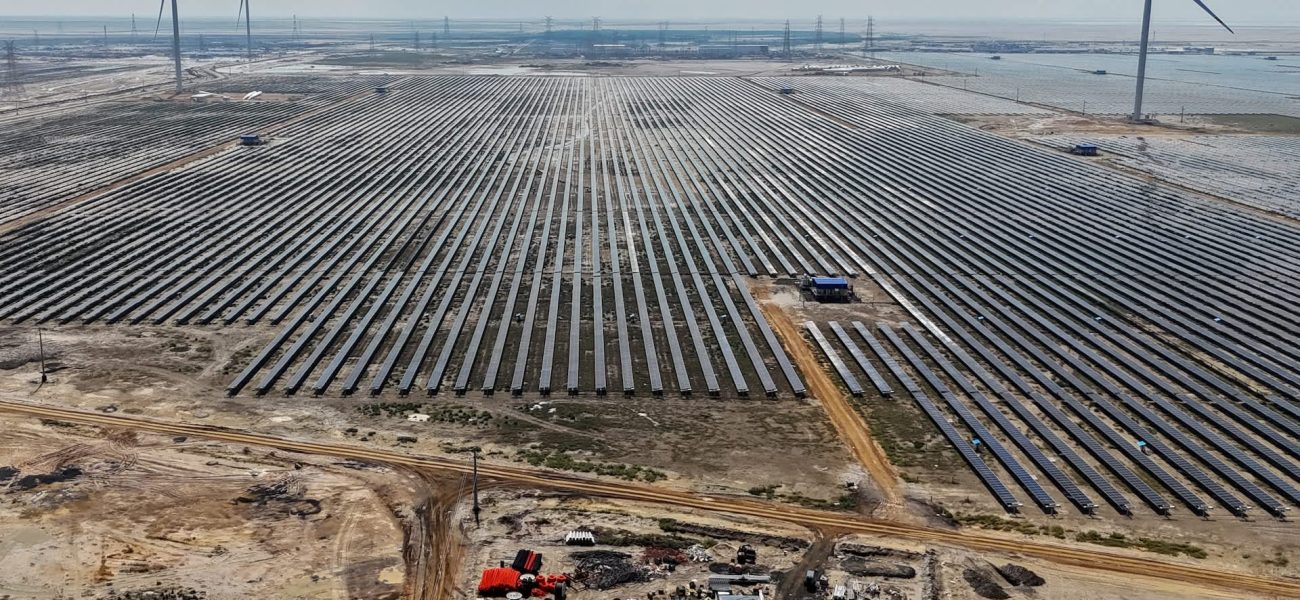
For centuries, the Rann of Kutch, a seasonal salt marsh bordering Pakistan, has been a canvas for raw nature: scorching sun, flat horizons, and the stark beauty of isolation. Now, it’s becoming the unlikely bedrock for one of the world’s most ambitious renewable energy projects. Forget romantic notions of pristine wilderness. We’re talking 60 million solar panels here. Sixty. Million. That’s a landscape less consumed, more repurposed into an industrial power plant of astronomical dimensions.
But make no mistake, this isn’t merely an engineering feat; it’s a strategic move on India’s part. It’s an almost brutalist assertion of future energy independence in a world increasingly volatile about its resource supply lines. And it’s a commitment to climate goals, albeit one with an unavoidable environmental footprint right there at the point of origin. India, remember, aims for a staggering 500 gigawatts of non-fossil fuel electricity capacity by 2030, a goal laid out explicitly at COP26 and fiercely pursued since. This solar Goliath, a key component of that target, will crank out enough juice to power a small European nation.
“This isn’t just about kilowatts; it’s about sovereignty,” declared Dr. Anjali Sharma, Secretary at India’s Ministry of New — and Renewable Energy, during a recent media briefing. Her tone carried the conviction of someone who’d seen the plans morph from boardroom scribbles to actual ground-breaking. “We’re not just harvesting the sun; we’re reclaiming our energy future from volatile global markets. It’s a pragmatic, audacious step towards our environmental commitments and economic stability.” She makes a compelling case. Because, let’s be honest, every joule generated domestically is one less import cheque India has to write. And that, in an uncertain global economy, is currency.
Yet, like any grand endeavor, there’s a flip side—a glint in the desert’s reflection that might hint at other implications. While the massive influx of solar investment boosts India’s green credentials and provides energy security, it also alters local ecosystems. These salt flats, for all their apparent emptiness, support unique flora and fauna, including migratory birds that don’t particularly care for acres of silicon. How that equation balances out, no one quite knows yet.
“While the scale is impressive, one can’t ignore the transformation of an entire ecosystem,” observed Dr. Tariq Aziz, an environmental policy expert based in Islamabad, during a recent online seminar. Pakistan shares this fragile border landscape, — and the cross-border environmental impact is not lost on experts there. “These are vast, sensitive salt marshes—critical bird habitats and unique geological formations. The long-term ecological ledger, especially across shared boundaries, still needs a thorough reckoning. And honestly, for all the talk of green energy, the physical footprint is anything but ‘light.’” His point is a good one; even ‘green’ technology has physical demands. That’s a debate that’s quietly percolating just beneath the shiny surface of these panels. It’s a mirror reflecting complexities.
📄 POLICY WIRE WHITEPAPER PUBLISHED: PAKISTAN'S NATIONAL SECURITY POLICY PRIORITIES
👉 READ BY CLICKING HEREThis immense undertaking in the Rann doesn’t exist in a vacuum, of course. It slots into a broader South Asian context, where nations like Pakistan grapple with their own energy needs and environmental pressures. While India aggressively pushes renewables, other states in the region, burdened by different economic realities, sometimes find themselves more reliant on conventional—and often dirtier—power sources. And this divergence can’t help but add another layer to existing geopolitical complexities, as Brussels watches India’s ascent with keen interest.
What This Means
This colossal solar installation in the Kutch region isn’t just about flicking on light switches; it’s a strategic national project with far-reaching consequences. Economically, it drastically cuts India’s reliance on imported fossil fuels, stabilizing energy costs and freeing up capital for other sectors. It’s also creating a vast new industrial base for solar component manufacturing and maintenance—creating jobs, boosting GDP. Politically, it strengthens New Delhi’s hand in global climate negotiations, demonstrating a concrete, albeit expensive, commitment to decarbonization. But it also presents a fascinating challenge: How do you balance the indisputable demand for clean energy with the ecological transformation of once-untouched—or at least sparsely touched—landscapes?
And then there’s the regional ripple effect. For Pakistan and other neighbors, India’s energy pivot means both a potential template and a possible point of contention. Can India’s green revolution spill over, providing affordable clean energy options for the wider South Asian region? Or will its sheer scale further widen the development gap between these competing giants? It’s not merely an environmental project; it’s an economic, political, and even aesthetic reimagining of what a nation’s energy foundation can be. This enormous, humming machine in the desert isn’t just about electricity; it’s about power—in every sense of the word. A grand, sun-baked gamble, the payoff still hazy, but the table’s been set.