

Jerusalem’s Rail Ruckus: Tradition Snarls Progress on Sacred Streets
POLICY WIRE — Jerusalem, Israel — Another Friday in Jerusalem. And another Friday where the very concept of forward motion felt less like progress and more like an argument, snarled in traffic. This...

POLICY WIRE — Jerusalem, Israel — Another Friday in Jerusalem. And another Friday where the very concept of forward motion felt less like progress and more like an argument, snarled in traffic. This time, the latest skirmish unfolded not with ancient rocks, but with freshly laid tracks — and impassioned prayers. You see, the capital, that city steeped in millennia of faith, simply can’t seem to build a modern transport system without sparking a fundamentalist ruckus. It’s just how things roll here (or don’t, if you’re trying to catch a bus).
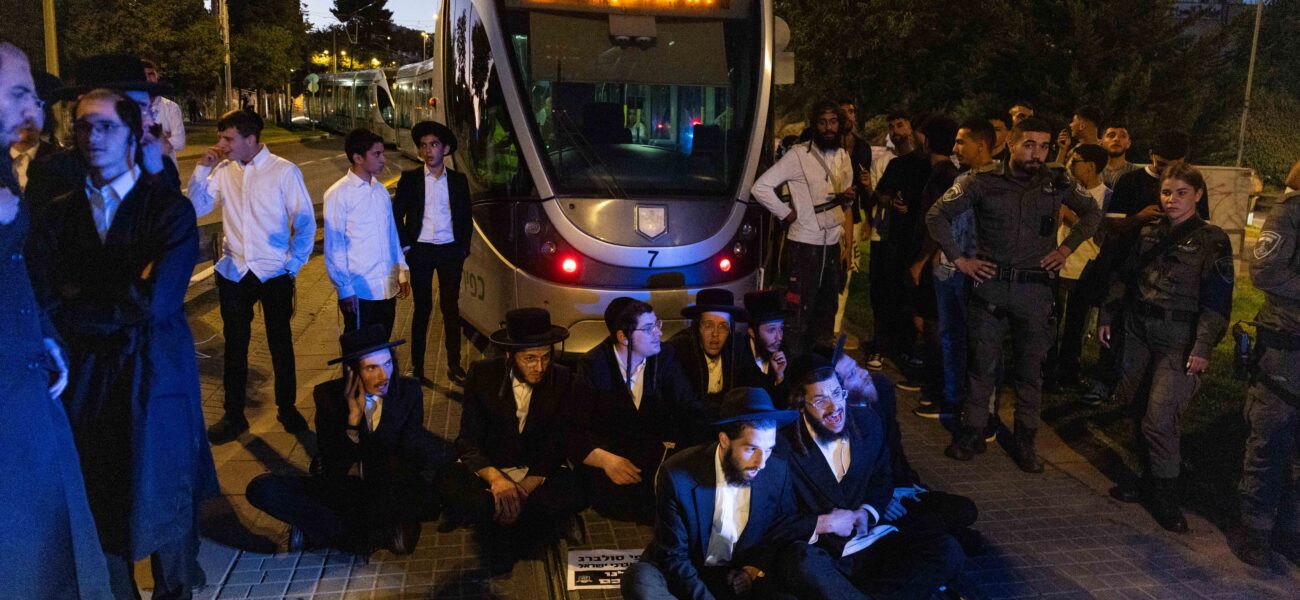
Haredi communities in neighborhoods like Bar Ilan Street have, once again, made their displeasure with the nascent Jerusalem Light Rail excruciatingly clear. They poured into the streets, a black-clad human barricade, effectively putting the brakes on construction, commuter schedules, and general sanity. It wasn’t merely a fleeting inconvenience, though. It’s a rather predictable symptom of a deep-seated ideological clash, bubbling just beneath the surface of this often-unruly city. These weren’t spontaneous eruptions of anger, they were—well, they were something else. They’ve happened before. They’ll happen again.
Because the light rail, to many in the ultra-Orthodox camp, represents a trojan horse for secular intrusion, a metal serpent slithering through their quiet enclaves. It’s not just about noise or aesthetics; it’s about cultural purity. “They’re not building a tram for us,” declared Rabbi Mendy Goldstein, a spokesperson for the Committee for the Purity of the Camp, in an exclusive chat with Policy Wire, his voice resonating with indignation. “They’re building a route for immodesty, for mixing, for a world that seeks to dismantle everything we hold sacred. We won’t stand by while our children’s spiritual future is paved over.” Heavy stuff, if you think about it.
But the city, naturally, has a different take. They’re just trying to get people around. “This project is designed to serve all of Jerusalem’s residents, to alleviate crippling traffic and connect communities,” explained Deputy Mayor Yossi Himmelfarb, visibly exasperated during a hastily called press briefing. “Blocking progress like this doesn’t help anyone; it only punishes the very people we’re trying to help, including many Haredi commuters who will undoubtedly benefit.” It’s an old argument, worn smooth like Jerusalem’s cobblestones, yet still generating friction.
The saga on Bar Ilan Street isn’t unique to this corner of the Middle East, either. You find similar friction points where traditional communities chafe against urban expansion in unexpected places. Think about, say, some of the mega-city development projects in Pakistan—Islamabad’s modern infrastructure clashing with entrenched local customs or environmental concerns in tribal regions. The resistance isn’t always overt street protests; sometimes it’s quieter, a slow erosion of trust, or a bureaucratic molasses that grinds projects to a halt. But the core dynamic—the ancient world pushing back against the encroaching new—it’s familiar.
Construction on Jerusalem’s extended light rail network, a massive undertaking aiming to cover over 70 kilometers with seven lines eventually, is already behind schedule and over budget in sections. Delays like those prompted by the recent Haredi interventions have cost the municipality an estimated hundreds of thousands of shekels a day in additional contractor fees and economic disruption, according to a recent report by the city comptroller’s office. It’s a pricey battle for the soul of the city, fought one overturned construction barrier at a time.
📄 POLICY WIRE WHITEPAPER PUBLISHED: PAKISTAN'S NATIONAL SECURITY POLICY PRIORITIES
👉 READ BY CLICKING HEREAnd you’ve got to wonder how much more of this endless push — and pull the city can take. It’s not merely a matter of light rail. It’s a symptom, folks, a big one. One link of the red line itself — Jerusalem’s primary tram artery — carries over 160,000 passengers daily, according to 2023 figures from the local transport authority, showing just how desperate the city is for functioning infrastructure. But for a certain segment of society, efficiency simply doesn’t trump divinity. Not by a long shot. They’d rather walk to eternity, it seems.
What This Means
The recurrent Haredi protests against Jerusalem’s light rail are more than just a public order issue; they represent a deep fault line in Israeli society and a particular challenge for its governance. Economically, these disruptions inflict significant costs—not just directly on the project budget through delays and security outlays, but also indirectly by hindering urban development and deterring investment in public transport solutions. It means commuters lose time, businesses lose money, — and the city’s overall efficiency suffers. Politically, the situation underscores the delicate balancing act Israeli governments, particularly right-wing coalitions reliant on Haredi parties, must perform. They’re caught between satisfying the demands of a powerful, cohesive voting bloc that values religious autonomy above all, and fulfilling their basic responsibility to develop modern infrastructure for the entire populace. It isn’t a problem with an easy answer, is it? Every mile of track, every new station, becomes a battleground. For policymakers, it forces a constant negotiation with deeply entrenched religious convictions that view secular public works as existential threats. This tension isn’t unique to Jerusalem’s Haredi population; it’s echoed in varying degrees by traditional communities globally resisting globalization and perceived cultural dilution, often complicating essential public welfare projects. It’s a reminder that even the most pragmatic plans can get tangled up in ideology.