


Grand Slam Stunner: Rybakina’s French Open Exit Signals Wider Shocks
POLICY WIRE — Paris, France — Chalk. It’s what most people bet on. The sure thing. The relentless march of the favored. But sometimes, just sometimes, the script goes wildly off-course. What we...

POLICY WIRE — Paris, France — Chalk. It’s what most people bet on. The sure thing. The relentless march of the favored. But sometimes, just sometimes, the script goes wildly off-course. What we witnessed this week on the hallowed red clay of Roland Garros wasn’t just a tennis upset; it felt more like a minor tremor beneath the finely manicured courts, shaking the foundations of predictable athletic dominance.
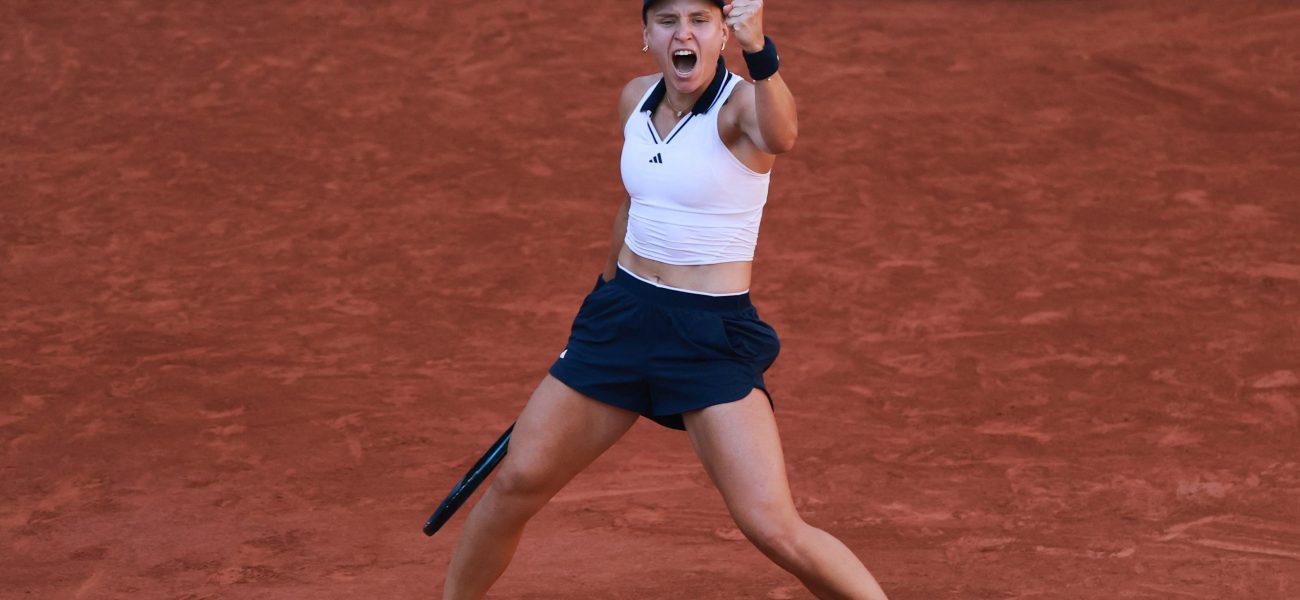
Elena Rybakina, the second seed—a name whispered with respect across every major tennis court—didn’t just lose in the French Open’s second round. She was dispatched. Her opponent, a Ukrainian qualifier, Yuliia Starodubtseva, carved out a narrative usually reserved for underdog movie clichés: a three-set, gritty triumph that took two hours and twenty-eight minutes of pure, unadulterated combat. The score, 3-6, 6-1, 7-6 (4), tells a clinical tale, but it doesn’t quite capture the raw, desperate effort behind it. And that’s where the real story lives, in the dust — and sweat.
Starodubtseva, just twenty-six, barely ranked amongst the global elite, reversed an initial set deficit with the kind of ferocity that comes when you’ve got nothing to lose and everything to gain. She broke twice in the decider, built a 3-0 lead, then watched Rybakina claw her way back to a 4-4 tie. Many would fold right there, seeing their improbable dream vanish. But she didn’t. Instead, she rallied, closing out the tie-break 7-4, etching her name into the tournament’s history books with an almost savage grace.
“Honestly hard to describe,” Starodubtseva confessed, the joy palpable in her voice post-match. “I’m super happy. Elena is one of the top players. She’s had an incredible year. I’m super proud of myself that I was able to do this today.” It’s that unvarnished pride, the pure satisfaction of defying expectations, that makes moments like these resonate far beyond the baseline. And because of moments like these, sports — and the political analogies they often spawn — continue to grip us.
Rybakina’s exit marks the first time since 2020 she’s departed the French Open so early. That’s a rarity for someone of her caliber. Historically, top-two seeds at Grand Slams progress to the third round with over a 90% success rate, a testament to their consistent supremacy according to compiled WTA data. This wasn’t a minor glitch; it was a system failure for the former Wimbledon champ.
📄 POLICY WIRE WHITEPAPER PUBLISHED: PAKISTAN'S NATIONAL SECURITY POLICY PRIORITIES
👉 READ BY CLICKING HEREHer sudden departure, of course, casts an even longer shadow for the tournament’s remaining hopefuls, none more so than Iga Swiatek. The top-seeded Pole, chasing a fifth French Open title in seven years, breezed past Sara Bejlek, 6-2, 6-3. Swiatek’s focused demeanor rarely cracks, even when acknowledging tricky opponents. “It was a tricky match in terms of the rhythm, because Sara plays differently than most of the players,” Swiatek noted, ever the pragmatist. “But I’m happy with the way I adjusted and how I was making decisions, because sometimes, yeah, it was not so obvious when to go and attack and stay back. But at the end I felt it pretty good.” For the established elite, every day is a battle to maintain their perch, a struggle against both external challengers and internal doubts.
This tournament is also providing a stark canvas for geopolitical narratives. With players from Ukraine performing strongly—like Elina Svitolina cruising past Kaitlin Quevedo 6-0, 6-4, and Marta Kostyuk fighting past Katie Volynets—there’s an almost poignant echo of national resilience on display. Their individual athletic fights often symbolize larger battles, whether personal or collective. In a region like South Asia, where sporting success can be a source of immense national pride and soft power, such stories of determination—even amidst immense external pressures—resonate deeply. Consider how cricket can electrify a nation from Karachi to Dhaka, acting as a cultural balm, or even a crucible for national identity. Sports, ultimately, are never just sports; they’re platforms for narratives of perseverance, surprise, and often, quiet defiance.
What This Means
The immediate consequence of Rybakina’s premature exit is a wide-open draw, particularly on her side of the bracket, potentially easing Swiatek’s path to another championship. That’s the most obvious take. But look deeper: it’s a vivid reminder that dominance, whether in sports or geopolitics, is a perpetually fleeting concept. No amount of past success, training, or raw talent inoculates one against a competitor on their best day—or a momentary lapse. Economically, upsets can reshape futures; for Starodubtseva, this performance won’t just improve her ranking but significantly increase her prize money and visibility, opening doors that were previously bolted shut. It’s a small victory for the perennial underdog narrative, reflecting a global trend where established powers are increasingly challenged by agile, hungry newcomers. These aren’t just games, you know. They’re miniature dramas reflecting far broader shifts, where a single match can represent a world turned upside down, if only for a fleeting, glorious moment.