


Ancient Tyre Faces Another Exodus: Israel’s Overtures Hint at Looming Regional Tempest
POLICY WIRE — Beirut, Lebanon — For the folks down in Tyre, history doesn’t just repeat itself; it tends to arrive with an insistent knock on the door, often followed by a siren. That’s...

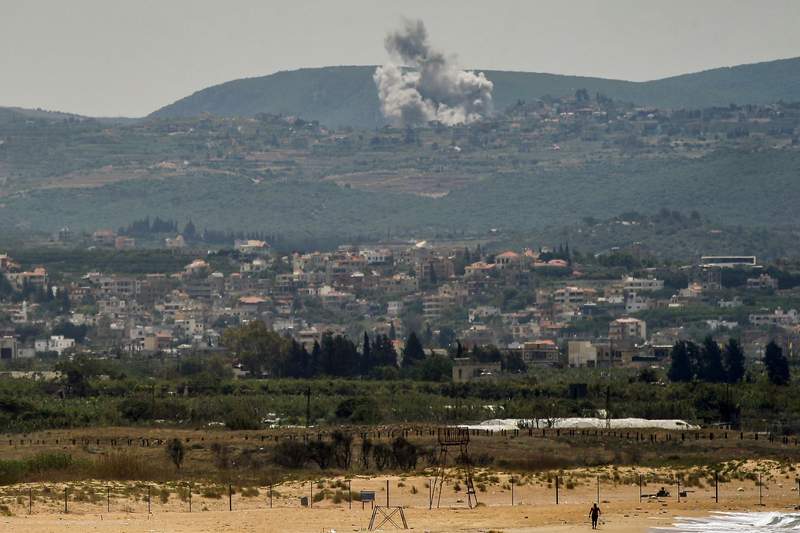
POLICY WIRE — Beirut, Lebanon — For the folks down in Tyre, history doesn’t just repeat itself; it tends to arrive with an insistent knock on the door, often followed by a siren. That’s the vibe clinging to this ancient coastal city as Israeli forces deliver blunt evacuation notices to its beleaguered inhabitants. It’s not just a polite suggestion; it’s the cold prelude to something uglier, something these folks know all too well.
It’s a peculiar brand of generosity, really, telling a population to get out before you drop bombs. They’ve seen it before. The past few months have been a slow burn of tit-for-tat exchanges across the Blue Line—the often-ignored border between Lebanon and Israel—with Hezbollah, and occasionally others, launching rockets, and Israel responding with airstrikes and artillery. This isn’t just about targeting Hezbollah’s reported installations; it’s about signaling a potentially broader offensive that could remake the precarious regional map, sending shivers through chancelleries and bazaars across the wider Muslim world, from Cairo to Karachi.
“We’re watching this very closely,” commented Major Eitan Cohen, an IDF spokesperson, in a remarkably terse briefing. “Our intention isn’t to harm civilians. But we won’t hesitate to operate wherever Hezbollah’s terrorist infrastructure resides, no matter how deeply embedded it’s.” A boilerplate assertion, perhaps, but one that carries the weight of past destruction for anyone living within Hezbollah’s sphere of influence. Because, for Israel, the operational realities demand pre-emption. They’ve made their intentions pretty plain, you see, that they won’t tolerate a repeat of what they faced from Gaza. And that makes Tyre, a historically vital port with strategic importance, a prime, heartbreaking target for what some are already calling the next stage.
“They tell us to leave, but where do we go? And who picks up the pieces when—not if—the bombs fall?” lamented Dr. Layla Khoury, Director of Lebanon’s National Disaster Management Agency. Her voice, weary but resigned, carried a profound frustration over the phone. “Our country’s economy is already on its knees, — and now our people are being told to abandon what little they’ve. It’s a cruel charade for an already battered populace.” It’s hard to argue with her. Lebanon, a nation in chronic economic freefall, simply doesn’t have the bandwidth for another mass displacement event or urban reconstruction project.
But the stakes extend far beyond Tyre’s Roman ruins. Across the Islamic world, especially in nations like Pakistan, these maneuvers are tracked with a potent blend of dismay and fury. Leaders and citizens alike often view Israeli actions in Lebanon through a lens of collective solidarity, sparking street protests and diplomatic denunciations. And this particular drama often ignites debates on regional stability and the West’s role—or perceived inaction—in conflicts affecting Muslim populations. It’s not just a border spat; it’s a flashpoint for deeply ingrained grievances — and allegiances.
This pre-emptive messaging from Israel signals a hardening posture, a potential expansion of hostilities that could draw in more regional players. Since October 7, 2023, border clashes have already forced an estimated 90,000 people from their homes in southern Lebanon, according to reports by the UN’s Office for the Coordination of Humanitarian Affairs (OCHA). That’s just a sliver of the disruption that could follow a full-scale operation in a city the size of Tyre.
📄 POLICY WIRE WHITEPAPER PUBLISHED: PAKISTAN'S NATIONAL SECURITY POLICY PRIORITIES
👉 READ BY CLICKING HEREThe situation isn’t unfolding in a vacuum. Regional powers are watching, weighing their options, some perhaps with an eye on destabilizing adversaries, others genuinely seeking to avert a wider catastrophe. The Gaza conflict is a brutal backdrop, one that lends a horrifying precedent to these explicit warnings. What starts as a limited skirmish can very quickly become something far less manageable, leaving nothing but dust and desperation in its wake, challenging what’s left of the international order and putting even more pressure on shaky foundations of regional stability.
What This Means
The Israeli warning to Tyre’s residents isn’t just a military communiqué; it’s a layered geopolitical gambit with significant implications. Politically, it signals a possible shift from reactive strikes to a proactive, large-scale operation aimed at pushing Hezbollah further north, away from the Israeli border. This move, if it materializes, carries the very real risk of igniting a full-blown war, a third Lebanon conflict that no one—save perhaps a few hardliners—genuinely wants. It’ll strain Lebanon’s central government to breaking point, already a ghost of its former self, and potentially empower more extreme factions within the country.
Economically, the prospects are bleak. Lebanon’s economy has been in freefall for years, its currency worthless, its institutions gutted. A major military escalation would mean further devastation to infrastructure, a refugee crisis on a scale not seen since 2006, and the complete obliteration of any hope for recovery. Imagine reconstruction costs for a nation with no budget, its currency practically confetti. This sort of conflict often creates shifting sands in regional investments, pushing capital away from anything vaguely unstable. The impact wouldn’t just be felt at the immediate border; regional trade routes could be disrupted, oil prices might spike, and donor fatigue from international bodies could morph into outright apathy as humanitarian needs outstrip all capacity. This isn’t just a localized dispute; it’s a lever that could push the entire Levant into yet another generation of protracted conflict and misery, the ripple effects felt far and wide, from Tehran to the negotiating rooms in Washington, D.C.