


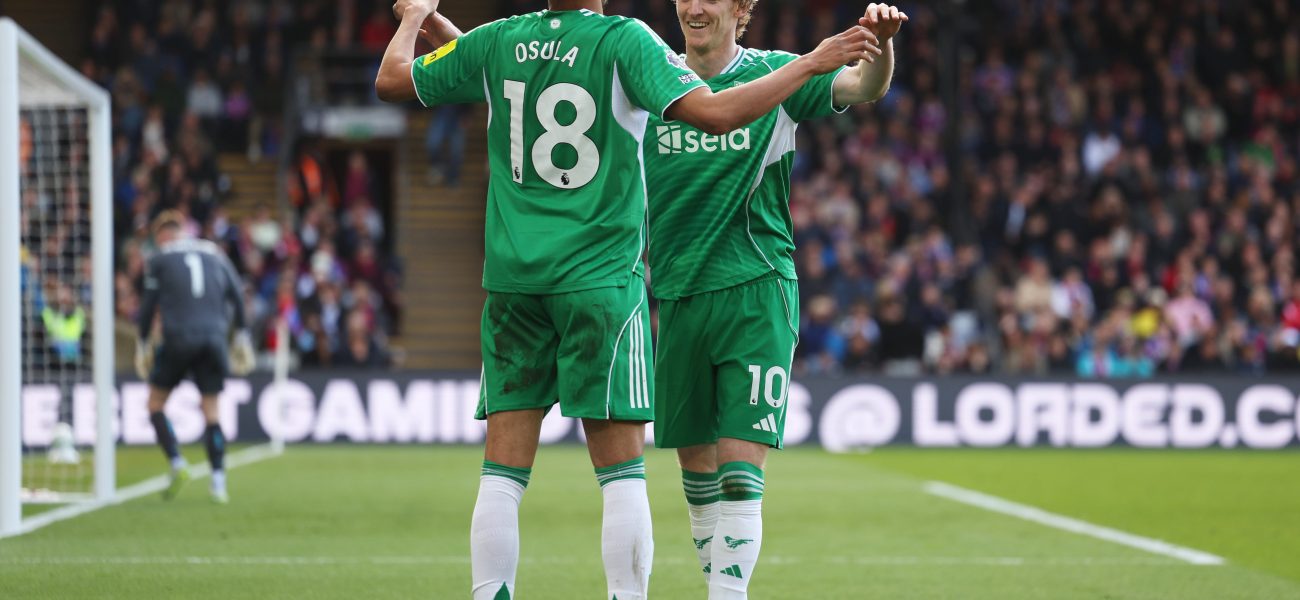
Barcelona’s Bold Gambit: A €70M Raid and the Shifting Sands of European Football Wealth
POLICY WIRE — Barcelona, Spain — Another summer, another circus tent pitched firmly on the manicured lawns of European football. And as ever, FC Barcelona finds itself, if not directly under the big...

POLICY WIRE — Barcelona, Spain — Another summer, another circus tent pitched firmly on the manicured lawns of European football. And as ever, FC Barcelona finds itself, if not directly under the big top, then certainly somewhere in the main attraction’s glaring spotlight. Not for their dazzling footwork, mind you—not yet, anyway. This time, it’s for an audacious play that threatens to upend the tightly strung balance sheets and even tighter-lipped negotiations of their English and German counterparts.
They say necessity is the mother of invention, but in football, it often feels more like it’s the father of creative accounting. Barcelona, a club forever chasing its own magnificent ghost of financial grandeur, is reportedly back at the roulette table. Their latest wager? A reported €70 million offer for Newcastle United’s Anthony Gordon, a player they’ve suddenly fixated on despite Newcastle’s steadfast €92 million valuation and ongoing talks with Bayern Munich. One can almost hear the collective gasp across executive boxes, followed by the clink of champagne glasses being refilled – either in celebration or pure disbelief.
It’s a curious dance, isn’t it? For months, even years, Barcelona has paraded its fiscal struggles, paraded them like a battle-worn banner. And yet, here they’re, attempting to strong-arm a Premier League outfit out of its prized asset. They’ve not just dipped their toes back into the shark-infested waters of the transfer market; they’ve executed a belly flop. Gordon, the 25-year-old forward, apparently impressed the Catalans during their Champions League clashes, and now, suddenly, he’s the answer to whatever perplexing puzzle resides in the Camp Nou — or whatever they’re calling their temporary digs these days.
But this isn’t just about Gordon or Barcelona. It’s a broader signal. “The market speaks its own language, often through numbers that make economists weep,” observed Javier Tebas, La Liga’s uncompromising president, a man who’s spent years sermonizing on fiscal prudence for Spanish clubs. “While clubs claim poverty, they chase gold. It’s a contradiction as old as the game itself, but it can’t be sustained forever without real consequences.” And he’s right, partly. But then again, football has rarely listened to the quiet counsel of accountants when the siren song of a superstar comes calling.
The murmurs from within Newcastle are understandably less sanguine. One insider, who declined to be named but is intimately familiar with the Magpies’ hierarchy, put it rather bluntly: “Our asking price isn’t a suggestion. It’s a statement of value. We’re not running a charity, nor are we a discount bin. Gordon is an investment that paid dividends — 17 goals, five assists last season, remember?” They’ve seen him morph from a promising winger into a central attacking threat, stepping up admirably in the absence of others. They won’t simply roll over. The Premier League’s total transfer spending, for instance, hit a staggering €2.8 billion last year, according to Deloitte. That sort of money makes even the most extravagant demands sound… normal.
📄 POLICY WIRE WHITEPAPER PUBLISHED: PAKISTAN'S NATIONAL SECURITY POLICY PRIORITIES
👉 READ BY CLICKING HEREThis is Barcelona’s characteristic modus operandi: agree personal terms with the player, then leverage that agreement to pressure the selling club. Fabrizio Romano — and other sources confirm Gordon’s personal terms are all buttoned up, reportedly. Which leaves Newcastle — and Bayern, who were seemingly well down the road in their own talks for the forward — scrambling, feeling the hot breath of a rival in a maneuver as old as football itself. They’ve been here before. Many times.
The speed at which these deals now materialize, often out of the blue, demonstrates not just technological efficiency but a near-maniacal zeal. Club scouts jet across continents, analytics teams pore over terabytes of data, and the final decision makers often pull triggers on bids worth tens of millions, sometimes billions. Because for clubs of Barcelona’s stature, signing a player isn’t just about skill on the pitch; it’s about brand extension, capturing hearts — and wallets — in burgeoning markets from Latin America to Southeast Asia. Think of how deeply rooted fan loyalty extends into regions like Pakistan, for instance, where Messi jerseys remain a top seller, eclipsing even local sporting icons. Every big-name acquisition fuels that global reach, justifying ever more dizzying price tags in an ever-inflating market.
What This Means
This saga, with its whispered deals and high-stakes financial poker, paints a vivid picture of contemporary European football’s economic landscape. It’s a high-wire act for many, especially historic behemoths like Barcelona still navigating their way out of past fiscal exuberance. The move for Gordon isn’t merely a play for a talented attacker; it’s a statement. It declares that even with their perceived financial chains, Barcelona still wields considerable persuasive power, both with players and in the wider transfer ecosystem. Economically, it signifies that even amid inflationary pressures and whispers of financial fair play, the top clubs, if cunning enough, can always find another lever to pull, another asset to liquidate, or another naming rights deal to ink. It also reveals the increasing difficulty for ‘selling clubs’—even Premier League outfits backed by serious money—to resist the allure and pressure from the traditional giants when a player’s head has been turned. The political implications are clear: European football’s elite will do almost anything to maintain their grip on power, often at the expense of fiscal predictability, perpetuating a cycle where only the boldest, or perhaps most reckless, thrive. It’s a delicate balance of ambition, legacy, — and sheer, unadulterated cash, and it’s always on the brink.