

Desert Winds and Euro Bargains: Modi’s Hedging Bet in a Volatile World
POLICY WIRE — New Delhi, India — The aroma of opportunity, mixed with the faint scent of regional volatility, seems to have been Narendra Modi’s preferred air freshener during his latest geopolitical...

POLICY WIRE — New Delhi, India — The aroma of opportunity, mixed with the faint scent of regional volatility, seems to have been Narendra Modi’s preferred air freshener during his latest geopolitical jaunt. While most folks fret over supermarket prices, India’s Prime Minister hit the road, embarking on what some are calling a grand tour, less about sightseeing and more about serious strategic maneuvering. It wasn’t your typical Friday stroll.
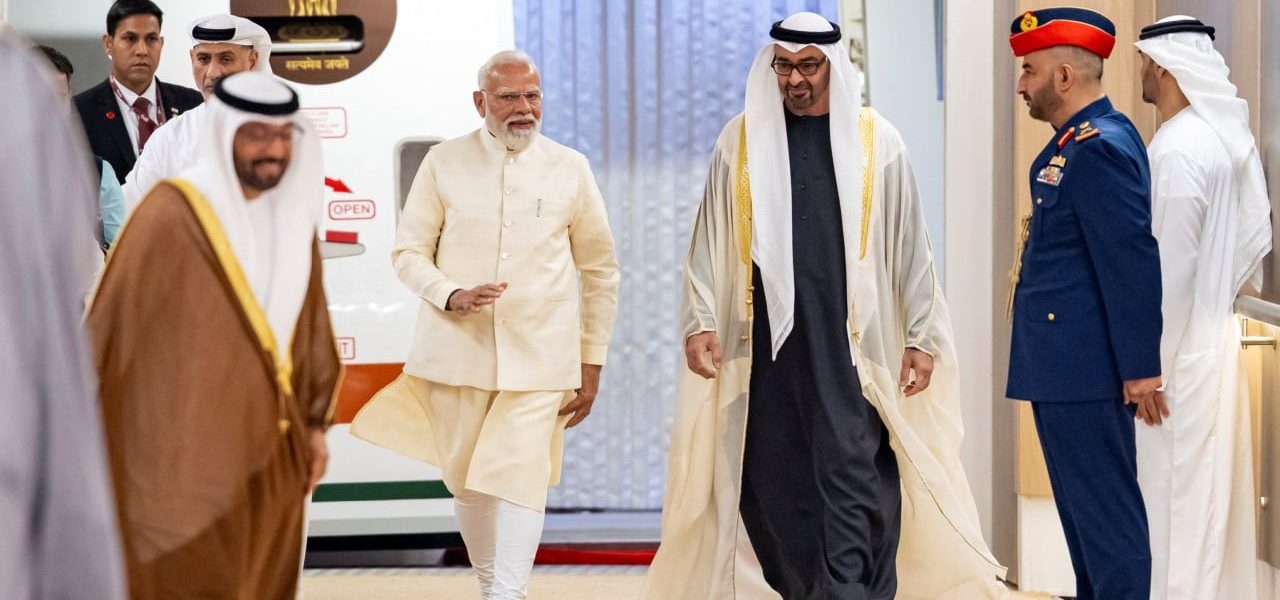
It began in the dazzling cityscape of the United Arab Emirates. This wasn’t just a goodwill stop, folks. It’s part of a bigger play, a long-game strategy in a world that’s getting jumpier by the minute. His initial stop in Abu Dhabi marks a clever opening move in a five-nation swing that’s slated to take him through the Netherlands, Sweden, Norway, and Italy. That’s quite the itinerary, you’ve got to admit, especially when a leader’s got an entire subcontinent back home, itching for attention. [QUOTE_PLACEHOLDER]
Because let’s face it, the timing here isn’t accidental. Analysts are characterizing Modi’s visit as hitting an exact moment of acute strategic opportunity. The Middle East, as it tends to do, is buzzing with a different kind of energy right now. It’s not just the oil that’s gushing—it’s the geopolitical currents, running strong and unpredictable. You’ve got to navigate that kind of choppiness with a steady hand, or you’re gonna get swamped.
Oil prices, as anyone with a car knows, have been spiralling amid the fallout from the US-Israel war on Iran. It’s a situation that sends jitters through every economy that isn’t pulling black gold directly from its own ground. And, oh boy, has the Middle East’s diplomatic landscape been shifting beneath everyone’s feet. It’s a tectonic kind of shift, one that has global implications, forcing nations like India to recalibrate their relationships faster than a stock market ticker.
So, Modi rolled into the UAE with more than just a firm handshake. He brought with him not just diplomatic pleasantries but, presumably, an armload of specific proposals—energy deals, perhaps, or investment pacts—designed to cushion India against future shocks. His visits to the European nations—known for their advanced tech and defense capabilities—would undoubtedly cement ties beyond traditional trade, looking to diversify alliances and supply chains.
Consider the energy security dilemma. India is the world’s third-largest crude oil importer. Data from the Ministry of Petroleum and Natural Gas shows India’s crude oil import dependency stood at 87.4% in 2022-23. That’s a staggering figure. You don’t build a robust, growing economy without secure access to energy. It’s just not how it works. And with those oil prices bouncing around like a super ball, it means every diplomatic pouch needs to carry something concrete. It’s a pragmatic play, not a sentimental one.
📄 POLICY WIRE WHITEPAPER PUBLISHED: PAKISTAN'S NATIONAL SECURITY POLICY PRIORITIES
👉 READ BY CLICKING HEREThis grand tour isn’t merely about shoring up India’s immediate interests. It’s also about signaling, plain — and simple, that New Delhi isn’t just a bystander in global affairs. India’s reaching out, asserting its growing influence in an increasingly multipolar world. You could say it’s a subtle flex, but it’s a flex all the same. Pakistan, sitting just next door, is surely watching with keen interest, gauging the regional power dynamics. India’s strategic maneuverings in the Gulf, in particular, could influence everything from trade routes to regional security architectures. Any strengthening of ties between India and major Muslim-majority nations in the Middle East has consequences for the broader South Asian geopolitical chessboard, potentially opening new economic avenues or even subtly reshaping existing alliances.
And those European stops? They’re just as telling. While the UAE offers petrodollars and regional stability (or the attempt at it), Europe provides high-end technology, defense partnerships, and alternative energy solutions. It’s like India’s trying to fill every strategic basket simultaneously. They’re not putting all their eggs in one rickety contraption. No, sir. This is about strategic diversification—hedging, if you will—against any single point of failure in a global system that feels less stable than it ever has.
The sheer breadth of this trip – five distinct nations, each with its own specific value proposition – speaks to a foreign policy that’s become decidedly more agile, less beholden to rigid ideological blocks. It’s a smart move in a chaotic world. India isn’t just riding the currents; it’s trying to steer its own ship, you might say, and occasionally, its neighbors’, too. It isn’t always smooth sailing for India’s external relations, but lately, they’re certainly giving it a shot.
What This Means
Modi’s elaborate excursion reflects India’s deepening commitment to multi-alignment as its foundational foreign policy tenet. Economically, this signifies an aggressive pursuit of energy security and technology transfer, crucial for sustaining India’s domestic growth ambitions, especially with inflationary pressures stemming from global energy markets. Politically, it’s a quiet but firm declaration of independence from traditional power blocs, showcasing India’s intent to forge alliances based purely on mutual interest rather than historical allegiances. The specific focus on the UAE signals a calculated strategy to maintain strong relations with key Muslim-majority trading partners and energy suppliers, particularly in a period where other South Asian nations grapple with domestic challenges. It’s a savvy form of de-risking, creating buffers against the economic turbulence churned up by conflicts like the US-Israel situation with Iran. For countries like Pakistan, India’s burgeoning strategic reach, particularly in the Gulf, could prompt reassessments of their own foreign policy priorities and regional engagements. This isn’t just diplomacy; it’s a high-stakes game of strategic chess, with India moving its pieces across multiple boards simultaneously to ensure it keeps its options open and its economy afloat.