


Paperwork Pandemic: New Mexico’s Livestock Labyrinth Ensnares Family Pets
POLICY WIRE — ALBUQUERQUE, N.M. — In the grand tradition of government machinery clanking relentlessly over individual lives, New Mexico’s livestock officials recently decided that paperwork—or the...

POLICY WIRE — ALBUQUERQUE, N.M. — In the grand tradition of government machinery clanking relentlessly over individual lives, New Mexico’s livestock officials recently decided that paperwork—or the conspicuous lack thereof—outranked an afflicted child’s solace. Imagine: you call the state to dot the i’s and cross the t’s for a simple interstate move, only to have agents confiscate the beloved, pint-sized cattle your disabled son leans on for comfort. That’s the tight spot Brittany Cox, or Lorraine, found herself in. It’s less a rural anecdote, more a sharp reminder of state power, exercised with clinical detachment.
Her family planned to leave for Texas. Pretty normal, right? But the move, like everything involving livestock, meant navigating state law. Cox, a New Mexico mother, contacted the Livestock Board for what she thought would be a straightforward inspection. She had purchased the two mini cows in 2023. “We had all the bill of sales. Like we had everything,” she recalled, confident in her ownership. But then the inspectors showed up, delivering a gut punch that resonated far beyond the corrals.
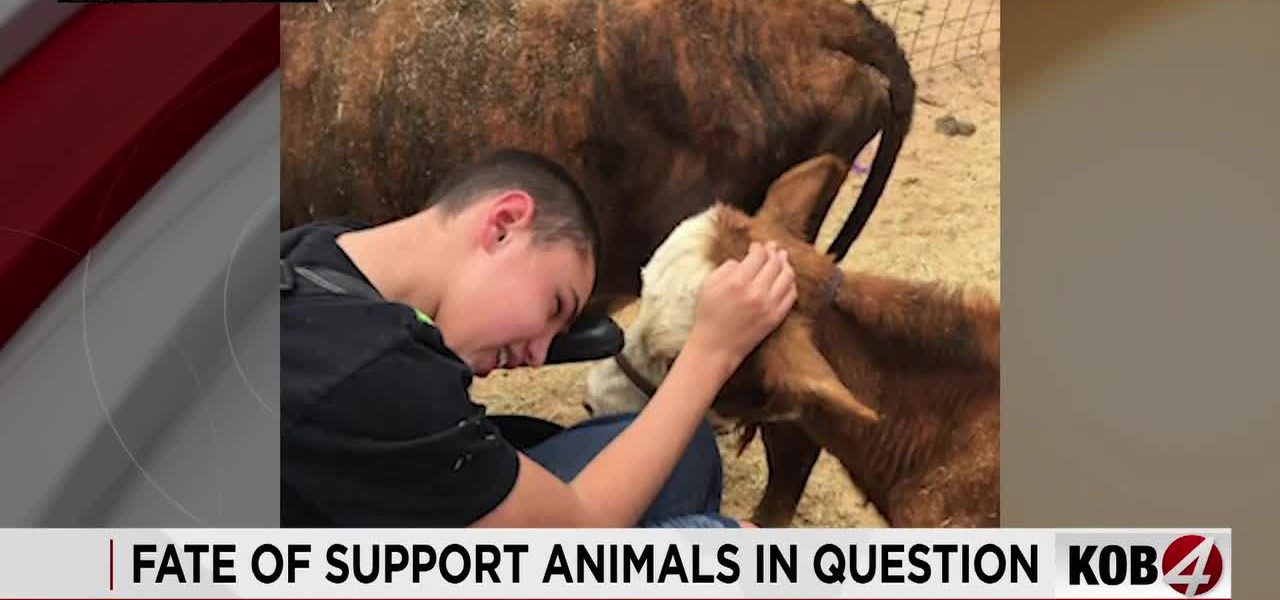
It wasn’t just a transaction gone awry. These weren’t commodities, but cherished family members. [QUOTE_PLACEHOLDER] Cox recounted. One moment, they were her son’s companions. He had learned to bottle feed one. Pictures show him “hugging his cow when we first got her,” — and another of “the baby cow laying in bed with him.” He adores these cows. They weren’t ranching stock. They weren’t business assets. They were therapy. They were joy.
Yet, the inspectors saw only a violation. Unbranded cattle. And just like that, the bureaucracy decided. They seized the animals the same day. For many, particularly those with less financial or informational muscle, such an event often marks the definitive end. They informed her the cattle would be auctioned, sold for meat—a cold, hard reality in the livestock business, but one that ignores the distinct reality of companion animals. “So they’re going to be sold for meat and they’re going to be slaughtered,” Cox agonized, her voice thick with dread. “And like these, yeah, I’ve been crying for days because I know where they go. If I don’t, if I’m not able to bid and win that bid, then they’re going to be sold for meat because they are half, they’re half dairy cows, half meat cows. And they’re, they’re pretty, I mean, I fed them very well.” It was an auction for pets; a death sentence hanging on a technicality. Imagine that — bureaucratic decree turning comfort into cuts of beef.
And because the wheels of officialdom turn, sometimes, but only sometimes, in the favor of justice, the narrative took a sudden, welcome turn. While KOB 4 was working on the story, Cox texted to deliver a remarkable update. The Livestock Board had finally confirmed her ownership. Her cows were coming home. What an odyssey—a quick descent into despair, followed by a remarkably rapid, almost jarring, reprieve. A classic administrative U-turn, proving that the human element, occasionally, manages to break through the impenetrable layers of regulation. Sometimes, the threat of public scrutiny helps; don’t it?
The state, which began by dismantling a family’s peace over a lack of identifying marks, ended up validating the mom’s claim. For once, common sense, aided by media attention, seemed to prevail over the rigid application of rulebooks. But think about all the other instances, unreported, unseen, where a similarly vulnerable family lacks the voice, the resources, or the sheer luck to get their pets back. That’s the unspoken cost of administrative overreach. It happens more than you’d like to admit. Because not everyone has a camera crew on speed dial.
What This Means
This incident, seemingly an isolated tale of New Mexico animal husbandry gone awry, speaks volumes about the pervasive power of the state bureaucracy and its often-unintended impacts on citizens. It’s a microcosm of a much larger struggle between strict statutory enforcement and the messy realities of human (and animal) lives. The fact that an individual’s personal attachments can be so summarily dismissed by regulation points to a system designed for large-scale commerce—industrial agriculture, for example—rather than individual pet ownership. While essential for preventing theft and managing disease in a cattle-producing state, branding laws applied indiscriminately can inflict considerable emotional and financial damage on those ill-equipped to navigate their intricacies.
Economically, this sort of rigid application impacts small holders, potentially pushing informal animal-keepers out of a system they don’t fully comprehend, or creating unintended liabilities. Compare this, for instance, to agricultural regions in South Asia, where livestock ownership can be an integral part of a household’s identity and a primary source of wealth and status. In places like rural Pakistan, ownership marks, while sometimes informal or traditional, are deeply understood within local communities. A system there might flex more for a family’s claim based on communal knowledge rather than purely on government-issued certificates. It raises the question: where is the balance between strict oversight and human considerations, especially when, as a 2021 Pew Research Center study indicated, an astounding 32% of US households owned at least one non-traditional pet (like livestock, birds, or reptiles)?
Politically, the quick reversal by the Livestock Board suggests a sensitivity to public opinion and media scrutiny, an unspoken acknowledgement that perhaps discretion, when applicable, is the better part of valor. This doesn’t inherently fix the systemic issues, but it provides a brief glimpse into the levers of power that can be pulled, albeit sometimes fortuitously, by the public and press. It underlines the continued—and sometimes unexpected—relevance of local media in tempering administrative overreach, a principle seen playing out even at the highest levels of government when transparency is on the line. It’s a reminder: the system’s often bureaucratic, sure, but it isn’t always unyielding. Sometimes it just needs a good shove.