


Digital Dynamite: Manipulated Clip Ignites Deadly Kashmir Protests
POLICY WIRE — Muzaffarabad, Azad Kashmir — They say a lie can travel halfway around the world before the truth gets its boots on. But in the age of fiber optics and smartphones, sometimes...

POLICY WIRE — Muzaffarabad, Azad Kashmir — They say a lie can travel halfway around the world before the truth gets its boots on. But in the age of fiber optics and smartphones, sometimes a strategically doctored few seconds is all it takes to detonate simmering grievances into a blaze, a flashpoint that consumes human lives. This past week, that fuse was lit in Pakistan-administered Kashmir, also known as Azad Jammu and Kashmir (AJK), where protests — allegedly fueled by a manipulated video — turned lethal, once again plunging the already fragile region into disarray.
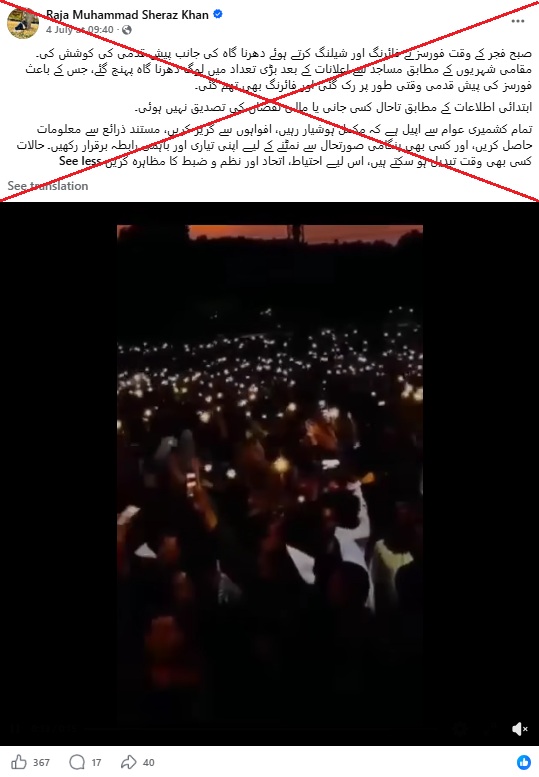
It wasn’t the usual parade of political slogans or economic demands that first seized international attention, but the digital ghost in the machine. A clip, initially dismissed as local agitprop, quickly morphed into a catalyst for full-blown chaos. People saw what they believed was proof, incontrovertible evidence of — [QUOTE_PLACEHOLDER] — and the streets erupted. For many, it felt like an unbearable betrayal, or perhaps the confirmation of long-held fears. And so, a narrative, expertly spun, spiraled out of control.
The unrest began innocently enough, rooted in familiar concerns: surging electricity prices and high taxation, twin burdens that weigh heavily on the region’s populace. Folks were already angry; you could practically taste it in the air. The Jammu Kashmir Joint Awami Action Committee (JAAC) had been leading a “long march” for days, a slow burn of discontent snaking through towns. They wanted relief. They wanted change. What they got instead was tragedy, reportedly several lives lost, including at least one law enforcement officer. It’s a stark reminder, isn’t it, of how quickly civilian grievances can clash violently with the state’s desire for order.
Reports trickled in — a familiar, dreadful cadence — of clashes in places like Mirpur — and Muzaffarabad. Roads were blocked, markets shuttered, schools closed. And then came the definitive silence, the kind that follows when internet — and mobile services get the axe. Authorities cut the digital cord, citing “security concerns” — a common tactic in moments of civil unrest, particularly in sensitive regions like this one. It’s a double-edged sword, though. While it can halt coordination among protesters, it also leaves a vacuum, a fertile ground for rumors and paranoia, exacerbating the very fear it aims to quell.
Pakistan’s Prime Minister, Shehbaz Sharif, swiftly weighed in, acknowledging the dire situation and [QUOTE_PLACEHOLDER]. The federal government scrambled to [QUOTE_PLACEHOLDER], dispatching the interior minister — and initiating negotiations. But this isn’t just about commodity prices or taxes; it’s about trust, or the profound lack thereof. The historical context of Kashmir, a flashpoint between nuclear-armed rivals Pakistan and India for decades, always elevates local disputes to international tremors. Every single spark, you see, holds the potential for broader regional destabilization.
The manipulated clip — its exact content still subject to debate among those able to pierce through the digital fog — perfectly illustrates the modern battleground for influence. In a region where narratives are fiercely contested and loyalties often fractured, the power to craft a compelling, albeit false, visual can swing public sentiment like a pendulum. We’ve seen this play out in various iterations across the globe, from election interference to inciting sectarian violence. Pakistan, much like other nations in South Asia and the wider Muslim world, grapples with the pervasive challenge of discerning fact from fiction in a highly charged digital ecosystem.
Consider the broader landscape. A 2022 survey by Media Matters for Democracy found that only about 36% of internet users in Pakistan could identify fake news, indicating a significant vulnerability to disinformation campaigns. That’s a huge problem. You can’t just switch off the internet — and expect critical thinking to flourish. We’re talking about a nation whose digital infrastructure is rapidly expanding, yet media literacy lags, leaving the population susceptible to deliberate manipulation. It’s an insidious form of warfare, fought not with bullets, but with pixels, but the casualties are just as real.
This event, messy as it’s, speaks volumes about governance in a region perpetually caught between grand geopolitical ambitions and the daily struggles of its citizens. The grievances expressed by the JAAC, for example, have been festering for ages, amplified by economic hardship. And the fact that a single, dubious video could pour so much gasoline on an already raging fire is a chilling preview of how conflicts will increasingly ignite in our connected yet deeply fragmented world. We can’t just dismiss it as “online nonsense.” It becomes, very quickly, “offline devastation.”
What This Means
This episode in Azad Kashmir isn’t just another footnote in the tumultuous history of the subcontinent; it’s a stark signal, a bell tolling for policymakers. Politically, it confirms that socio-economic pressures in contested territories are becoming exponentially more volatile when coupled with unchecked digital misinformation. The Pakistani government, already facing an economic crunch and a challenging political climate — remember the discussions surrounding battles for legacy, for example — now faces the double whammy of internal dissent and international scrutiny. Escalation in Kashmir always draws the watchful eye of Delhi, amplifying regional tensions and potentially derailing any nascent attempts at diplomatic de-escalation between the two rivals.
Economically, the impact is immediate — and brutal. Business shutdowns, internet blackouts, and disrupted trade routes mean direct losses for local entrepreneurs and laborers already teetering on the brink. Long-term, this instability further deters foreign investment, which is pretty scarce already, hindering development in a region that desperately needs it. It creates a self-reinforcing cycle of grievance: economic hardship leads to protest, digital manipulation fuels violence, violence leads to state control measures (like internet shutdowns), which in turn, stifle economic activity. But this also shows us how vulnerable nations across the global south are to internal instability catalyzed by external digital mischief, or simply by the amplification of local resentments.