


Beyond the Circus: India Quietly Reshapes Asia’s Economic Map While Trump Grabs Headlines
POLICY WIRE — Washington D.C., USA — It’s often the loudest noise, the most flamboyant show, that sucks up all the oxygen. You’d be forgiven for thinking that US President Donald Trump’s recent...

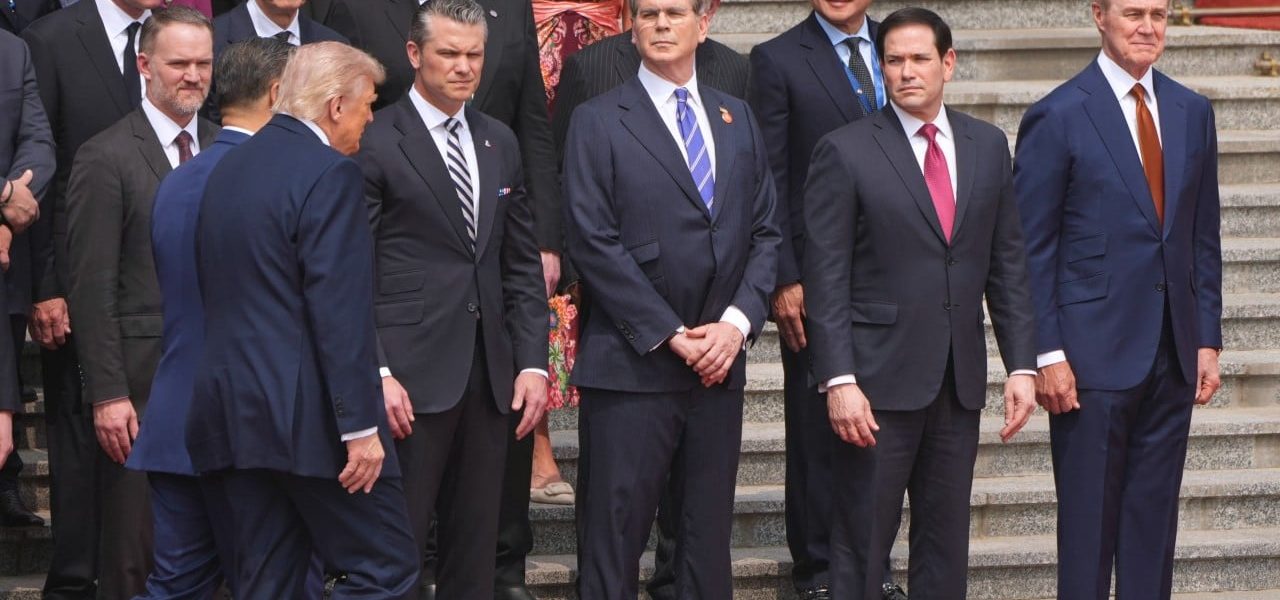
POLICY WIRE — Washington D.C., USA — It’s often the loudest noise, the most flamboyant show, that sucks up all the oxygen. You’d be forgiven for thinking that US President Donald Trump’s recent confab with Chinese President Xi Jinping—a spectacle really, packed with deal-making and presidential boasts—was the only game in town. Pundits and policymakers alike were fixed on Beijing, poring over every hand-shake, every carefully orchestrated press moment.
But that’s where the everyday, gritty reality of global statecraft veers sharply from cable news obsessions. Out there, across a continent teeming with a third of the world’s population, other, quieter—and arguably far more consequential—moves were afoot. While Trump, with his massive business entourage, was indeed not the only act in town this week, it wasn’t just about competing events; it was about vastly different approaches to influence. [QUOTE_PLACEHOLDER]
See, beyond the high-stakes photo opportunities of a Sino-American presidential tête-à-tête, realpolitik continued to grind. And in New Delhi, Indian Prime Minister Narendra Modi was busy hosting an assembly of players whose collective heft can’t be understated. He was hosting foreign ministers from the 10 Brics economies and a growing community. This isn’t just a gathering of diplomats; it’s a tangible assertion of an alternative economic and political axis forming, not with the fanfare of a bilateral superpower summit, but with the steady thrum of long-term strategic alignment. We’re talking nations like Brazil, Russia, China, South Africa, — and their expansionary ambition.
Why does this matter? Because while the headlines fixate on trade wars and tariff threats between the G-2, a significant chunk of the globe is busy constructing new avenues for commerce and cooperation—avenues that bypass the traditional Western-dominated institutions. It’s an explicit counter-narrative, a slow-burn challenge to the existing order that can feel less immediate than a presidential tweet but carries much heavier structural implications. India’s proactive role in this consortium isn’t accidental; it’s a calculated play for regional and global leadership, a clear statement that its ambitions extend well beyond its immediate neighborhood.
For nations like Pakistan, nestled uncomfortably between two major BRICS players—China and India—these shifts aren’t academic. They’re a reorientation of economic gravity right on its doorstep. As the BRICS block gains traction and perhaps integrates more deeply through initiatives like the New Development Bank, Pakistan’s historical ties and dependencies, particularly with Western institutions, get tested. It’s not about choosing sides; it’s about navigating a new multipolar reality where regional power brokers hold increasingly potent cards. Dhaka, too, is making calculated moves in this evolving environment, signaling a wider South Asian rethinking.
But let’s not pretend this BRICS cohesion is without its internal friction. India and China, for instance, are rarely simpatico on everything, yet they find common ground in the BRICS framework—an acknowledgement, perhaps, that economic multiprocessing is more productive than endless rivalry. Even the broader Asian energy matrix is shifting as players search for new alliances and pathways.
The scale of this developing alternate system is enormous. According to estimates by the International Monetary Fund (IMF), BRICS countries collectively accounted for over 32% of global GDP in 2023, surpassing the G7 nations. That’s not just a footnote; it’s a colossal piece of the world’s economy making its own way. The continued growth and deepening of these multilateral engagements represent a long-term recalibration, far from the instant gratification of high-level summits.
And let’s be honest: what makes for a splashy photo op rarely translates to sustained geopolitical influence. The real power plays—the ones that alter global supply chains, redefine development paradigms, and re-draw spheres of influence—often happen in these less glamorous, multi-national forums, away from the White House’s preferred spotlight. This quiet diplomacy, though less flashy, tends to have more durable outcomes.
What This Means
The concurrent high-level BRICS meetings in New Delhi—while Washington and Beijing staged their theatrical performance—represent a subtle yet potent geopolitical power play. Politically, India’s active championing of the BRICS platform reinforces its growing ambition to be a global rule-shaper, not just a rule-taker. It leverages a framework that allows it to project influence without directly challenging Western alliances in an antagonistic manner, instead offering an alternative vision of global governance that resonates with many developing nations. Economically, these meetings underscore a sustained push for de-dollarization and the creation of parallel financial architectures. As these economies—representing a significant chunk of global GDP—strengthen trade and investment links amongst themselves, the dependence on Western markets and institutions gradually diminishes. This creates new opportunities for member states but also introduces complexity for those, like Pakistan, who have traditionally leaned on the existing financial order. For Islamabad, it’s an urgent call to re-evaluate its economic alignments — and regional integration strategies. Neglecting these shifts means risking isolation from an increasingly significant economic bloc right in its immediate neighborhood, ultimately affecting its long-term development prospects and regional standing. It’s an inconvenient truth, perhaps, but one that no serious policymaker can afford to ignore.