

Beneath the Gaza Sand: Perpetual Ground War Reshapes Realities
POLICY WIRE — Tel Aviv, Israel — Another round, another labyrinth unravelled beneath the surface. It isn’t the missiles arcing overhead or the urban skirmishes drawing global attention that...

POLICY WIRE — Tel Aviv, Israel — Another round, another labyrinth unravelled beneath the surface. It isn’t the missiles arcing overhead or the urban skirmishes drawing global attention that consistently reframe the ongoing contention in Gaza. More often than not, it’s the unseen, subterranean battles that sculpt the grim landscape of the region’s long-standing conflict—a conflict, let’s not forget, that draws the anxious gaze of nations stretching from Istanbul to Islamabad.
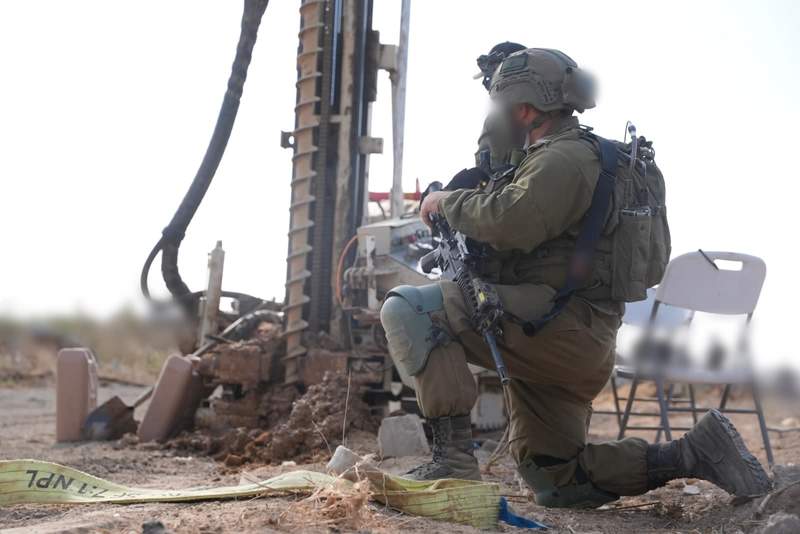
Just this past week, Israeli military brass announced a considerable demolition operation, stating they’d effectively obliterated some 11 kilometers of what they call ‘terror tunnels’ beneath Beit Hanun, an area hugging Gaza’s northern frontier. We’re talking about an entire underground network here—an arterial system of hidden passages, not just a couple of isolated holes in the ground. And make no mistake, it’s always portrayed as a massive undertaking, requiring substantial military resources and sophisticated engineering.
Beit Hanun, for context, isn’t just any plot of land; it’s a border town, constantly caught in the crossfire, its very ground perforated by years of conflict infrastructure. Hamas, the group controlling Gaza, views these tunnels as strategic assets—essential for movement, supply, and launching operations. The Israeli Defense Forces (IDF), predictably, see them as direct threats, insidious arteries designed to inflict damage. It’s a game of cat and mouse, only this particular feline hunts primarily in the dark, and its quarry moves through earth. It’s truly a testament to humanity’s grim inventiveness.
The IDF statement [QUOTE_PLACEHOLDER] described the tunnels as part of an expansive system, running beneath both civilian infrastructure and open terrain. Destroying such a network involves precise demolition work, typically using heavy machinery and considerable explosive charges, often triggering secondary explosions from caches found within. This recent operation underscores the enduring, deeply buried facet of the Gaza conflict—literally, quite deep—a component that shifts tactical advantages as quickly as they’re built or unearthed.
For nations watching, especially those in the Muslim world, such as Pakistan, which has historically shown solidarity with the Palestinian cause, these announcements aren’t just military reports. They’re layered narratives. They reinforce a pervasive sense of siege, a continuous struggle against overwhelming technological asymmetry. The official statements often spark renewed calls for international intervention and, in many capital cities, fuel public discontent and diplomatic challenges for governments trying to navigate the volatile geopolitics.
Consider the recent analysis published by the United Nations Office for the Coordination of Humanitarian Affairs (OCHA), which stated that between October 7, 2023, and June 14, 2024, approximately 38,700 structures were reported damaged or destroyed in the Gaza Strip. That’s a staggering figure, offering a stark quantitative measure of the physical destruction accompanying military operations like the tunnel clearance—and that number doesn’t even count the hidden world below. It’s a land transformed, — and largely obliterated.
📄 POLICY WIRE WHITEPAPER PUBLISHED: PAKISTAN'S NATIONAL SECURITY POLICY PRIORITIES
👉 READ BY CLICKING HEREBut the destruction of these underground pathways—however strategic they’re for one side—is never the final word. It’s a pause. Hamas will, attempt to rebuild or create new, perhaps even deeper — and more elaborate, networks. That’s just the nature of this particular beast, this underground arms race, that we’ve seen playing out for years now. We’re watching a cycle, an underground battle that never quite concludes, merely shifts its location or architectural design.
Because every action here, especially one impacting vital (if illicit) infrastructure, sends ripples. Regional actors, Iran — and Hezbollah among them, are always scrutinizing these developments. The technical expertise required to build and maintain these tunnels, as well as the counter-techniques to dismantle them, are lessons constantly absorbed and adapted across other contested geographies.
What This Means
The elimination of this specific tunnel section, whether it truly spanned 11 kilometers or a fraction less, fundamentally serves to degrade Hamas’s immediate operational capacity in Beit Hanun. This could hinder its ability to transport operatives, munitions, or even humanitarian aid seized for strategic purposes. And for the IDF, it’s another data point in their ongoing ledger against the group’s infrastructure.
Economically, for the beleaguered Gazan population, this ongoing subterranean conflict translates to sustained devastation. The resources poured into this hidden war—both by Hamas for construction and Israel for destruction—are resources not going into hospitals, schools, or civilian reconstruction. But more importantly, the strategic implications extend far beyond the immediate tactical wins. Nations across the Muslim world—from Cairo to Karachi—perceive such actions through a distinct lens of regional power dynamics and historical grievances. They view it as a continuing erosion of Palestinian agency, cementing a cycle of dependence and perpetual humanitarian crisis. The sheer scale of destruction, both visible and invisible, fuels further instability and entrenches positions, making any grander, enduring peace incredibly distant. It certainly doesn’t bring anyone closer to a two-state solution—not by a long shot. We’re talking tactical shifts, not paradigm ones.