

Gaza’s Underground Labyrinth: A Strategic Blow in Beit Hanoun’s Ruins
POLICY WIRE — Tel Aviv, Israel — Another segment of Gaza’s subterranean war machine is, ostensibly, gone. In the grand, and increasingly grim, theater of conflict in the Strip, reports trickle...

POLICY WIRE — Tel Aviv, Israel — Another segment of Gaza’s subterranean war machine is, ostensibly, gone. In the grand, and increasingly grim, theater of conflict in the Strip, reports trickle out—not always of triumphant breakthroughs, but often of relentless demolition. This past week saw one such methodical operation reach its crescendo, or perhaps just another waypoint, beneath Beit Hanoun in the northern reaches of the Palestinian territory. It’s a grinding contest, down in the dark, far from the TV cameras.
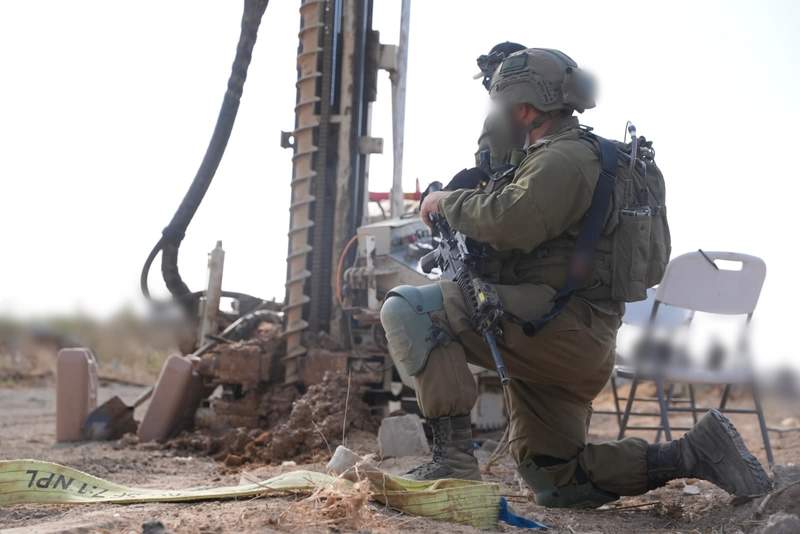
It wasn’t an airborne raid, nor a tank charge, but an engineering effort—a determined excavation of the very ground beneath Gaza’s feet. For months, perhaps years, these tunnels have been the sinews of an insurgency, a shadowed realm of transport, communication, and, it’s widely believed, weapon caches. And now, at least a significant portion, stands collapsed or flooded, rendered unusable, another testament to the persistent, suffocating effort to degrade military capabilities.
Specifically, the Israeli military asserts it eradicated 11km. of Hamas terror tunnels under Gaza’s Beit Hanun. A full 11 kilometers—that’s more than half the length of Manhattan Island, all burrowed deep beneath civilian infrastructure, now reduced to rubble and inaccessible conduits. Imagine the sheer engineering, both in its construction — and its destruction. It suggests a methodical, laborious process; hardly the stuff of instantaneous victory. Beit Hanoun itself, long a flashpoint and one of Gaza’s northern gateways, has endured more than its share of pulverizing, now finding its subsurface equally ravaged.
But what does this actually mean for the war? Is it a strategic blow, or just a costly clearing operation in a network far more extensive than one town’s underbelly? It’s complicated. For all the talk of precision and targeted destruction, the scale of devastation in Gaza—homes, schools, hospitals—paints a different, far bleaker picture for its two million inhabitants. The sheer physical space, compressed — and besieged, forces a grim calculus.
The military intelligence around such operations is always tightly guarded, naturally, for operational security. We aren’t told how long it took, what units were involved, or the precise methods, save for vague descriptions of engineering teams. And one wonders, too, about the sheer scale of the challenges, not just for the IDF, but for any future attempts at reconstructing this besieged enclave. The groundwork, literally, is being remade.
Casualties continue to mount, making every military communique feel heavy. The Palestinian Ministry of Health in Gaza, for instance, reports that over 37,000 Palestinians have been killed since October 7, 2023. These numbers, grim as they’re, offer a stark quantitative perspective on the conflict’s human cost, far beyond the length of tunnels destroyed.
For nations like Pakistan, watching from afar—or even the wider Muslim world—these operations resonate deeply, but often for very different reasons. There, the narrative frequently coalesces around the humanitarian crisis, the disproportionate suffering, and the perception of a relentless assault on Palestinian life. Official statements from Islamabad regularly condemn actions in Gaza, framing them as a humanitarian catastrophe and a violation of international law. This sustained destruction of infrastructure, above and below ground, fuels an already widespread anger and solidarity, intensifying regional pressures on governments to take more assertive diplomatic stances. It’s a sentiment that transcends national borders, echoing through prayer halls and public squares from Lahore to Jakarta, where every broken brick, every collapsed tunnel, represents another blow to collective dignity.
What This Means
The reported obliteration of these tunnels isn’t just about tactical gains; it carries significant political and economic weight. Politically, for Israel, it’s presented as demonstrable progress in dismantling a military threat, reinforcing a narrative of determined, necessary action. For Hamas, losing access to an [QUOTE_PLACEHOLDER] is undoubtedly a setback—it disrupts command structures, movement capabilities, and resupply lines that depend on these concealed routes. But can you ever truly clear them all? History tells us insurgencies are adaptable.
Economically, the impact is utterly devastating for Gaza’s future. Beit Hanoun, like so many other areas, isn’t just seeing its current infrastructure destroyed, but its underlying strata fundamentally altered. Reconstruction, when it eventually begins, will face monumental challenges. It’s not just rebuilding homes; it’s decontaminating vast areas, stabilizing ground, dealing with unexploded ordnance, and re-establishing basic services. This will require staggering international aid, a resource already stretched thin globally. Donor nations, facing their own economic headwinds, might find themselves allocating resources to repair a terrain that’s been deliberately and extensively disfigured. The financial and logistical hurdles to creating a viable, livable environment in Gaza are multiplying daily, rendering its long-term economic prospects dimmer by the operation. This isn’t just war above ground; it’s a war on the very foundation of an entire society.