

Breaching Peace: India, Pakistan, and the Politics of Water
In the charged climate of South Asian geopolitics, where war has often been fought with words, bullets, and sanctions, India has now chosen a new front- water. New Delhi’s unilateral move to block...

In the charged climate of South Asian geopolitics, where war has often been fought with words, bullets, and sanctions, India has now chosen a new front- water. New Delhi’s unilateral move to block Pakistan’s legal share of river waters, as stipulated under the 1960 Indus Waters Treaty (IWT), marks a disturbing and dangerous turn in the regional balance. This is not just a diplomatic issue, nor merely a bilateral disagreement over resources. It is an act of aggression, a form of economic and ecological warfare that places the lives of 240 million Pakistanis in direct jeopardy. In no uncertain terms, this is a declaration of hostility- one that violates international law, breaches regional peace frameworks, and pushes South Asia perilously close to a water war.
The Indus Waters Treaty, brokered by the World Bank and signed between India and Pakistan in 1960, has long stood as a rare example of sustained cooperation amidst conflict. Even during the wars of 1965, 1971, and the Kargil conflict of 1999, this treaty survived as a lifeline of diplomacy. India’s upper riparian status comes with legal and moral responsibility- it cannot legally disrupt water flows to Pakistan under the treaty’s terms. Yet, in the aftermath of the recent Pahalgam attack in Indian-occupied Kashmir- a tragedy that India quickly blamed on Pakistan without any evidence- New Delhi once again reached for its old playbook: distract, blame, escalate.
This time, however, the escalation is not limited to accusations or border skirmishes. India is attempting to weaponize water, halting the natural flow of rivers and targeting Pakistan’s lifeline- its agriculture, food supply, and economic stability. This act constitutes nothing less than environmental warfare. It is a clear violation of the United Nations Charter, the Geneva Conventions, and customary international humanitarian law, all of which prohibit the use of natural resources as a weapon against civilian populations.
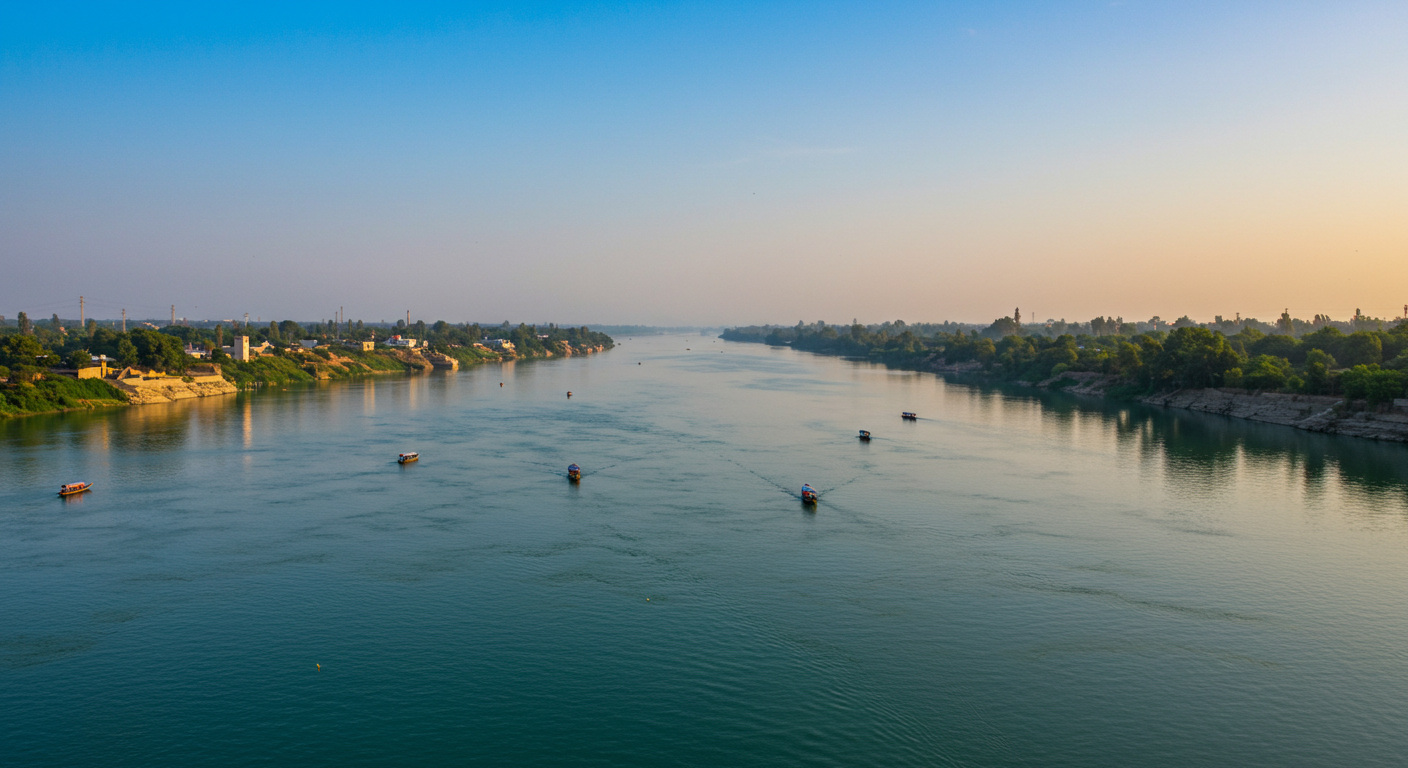
Water is not just a resource in Pakistan- it is survival. Over 90% of Pakistan’s agriculture is dependent on the Indus River system. Livelihoods, food security, and even drinking water in many regions hinge on the uninterrupted flow of this river network. By obstructing it, India is effectively launching a silent war- one without gunfire, but with consequences just as lethal. The ripple effects will be catastrophic: failed crops, food shortages, internal displacement, and rising poverty. This is war by other means- economic and ecological terrorism dressed in the language of sovereignty and security.
India’s claim that it is merely exercising its riparian rights is deceptive. Responsible riparian nations cooperate; they don’t use rivers as instruments of blackmail. What we are witnessing is the reckless behavior of a belligerent state that has abandoned diplomacy in favor of coercion. This is not the action of a responsible democracy- it is the behavior of a state acting with impunity, exploiting geography to impose its will on a neighboring nation.
Pakistan, for its part, cannot afford to remain passive in the face of such open hostility. Islamabad has rightly raised this issue at international forums, emphasizing that any disruption of its lawful water share is a hostile act- one that justifies a strong response. This includes diplomatic protest, legal recourse through the International Court of Justice, and mobilization of regional allies. But Pakistan must also be clear: if pushed further, all options remain on the table, including strategic countermeasures. Peace cannot be sustained if one side constantly violates it.
📄 POLICY WIRE WHITEPAPER PUBLISHED: PAKISTAN'S NATIONAL SECURITY POLICY PRIORITIES
👉 READ BY CLICKING HEREFurthermore, this blatant breach of the Indus Waters Treaty must be treated as a casus belli- a legitimate cause for Pakistan to escalate the matter beyond the confines of diplomatic complaint. Just as international law protects borders and sovereignty, it also protects shared resources. India’s actions undermine every principle of international cooperation, and if not challenged, will set a dangerous precedent for resource-based conflict globally.
The international community must no longer turn a blind eye. The United Nations, World Bank, Organization of Islamic Cooperation (OIC), and other relevant bodies must urgently intervene. The World Bank, as a guarantor of the IWT, has both the responsibility and the leverage to ensure compliance. Silence or inaction will not be neutrality- it will be complicity. With climate change already straining South Asia’s water resources, such provocations could ignite a full-scale humanitarian disaster.
India’s attempt to choke Pakistan’s rivers is not just about water- it is about power, control, and humiliation. It is an attempt to force Pakistan into submission through a new form of terrorism: hydrological blackmail. But Pakistan will not bow. Just as this nation was carved out of resistance to injustice, it will stand tall once more in defense of its rights, its people, and its rivers.
The world must now choose: stand with international law and the cause of peace, or remain silent as India turns rivers into weapons and diplomacy into dust. Pakistan will not be held hostage by water terrorism. We will resist, we will respond, and we will remind the world that peace is not the absence of war- it is the presence of justice.
Author