


The Algorithm’s Stew: Silicon Valley’s Quiet Conquest of the Kitchen
POLICY WIRE — WASHINGTON D.C. — They used to pass down recipes by hand. Smudged, handwritten cards tucked into well-worn cookbooks. The kind with cryptic instructions only grandma could...

POLICY WIRE — WASHINGTON D.C. — They used to pass down recipes by hand. Smudged, handwritten cards tucked into well-worn cookbooks. The kind with cryptic instructions only grandma could truly decipher—a pinch of this, a dash of that. Now? There’s an app for that. Of course, there’s. Because every corner of human endeavor, it seems, must eventually be flattened, optimized, and algorithmically processed for peak digital consumption.
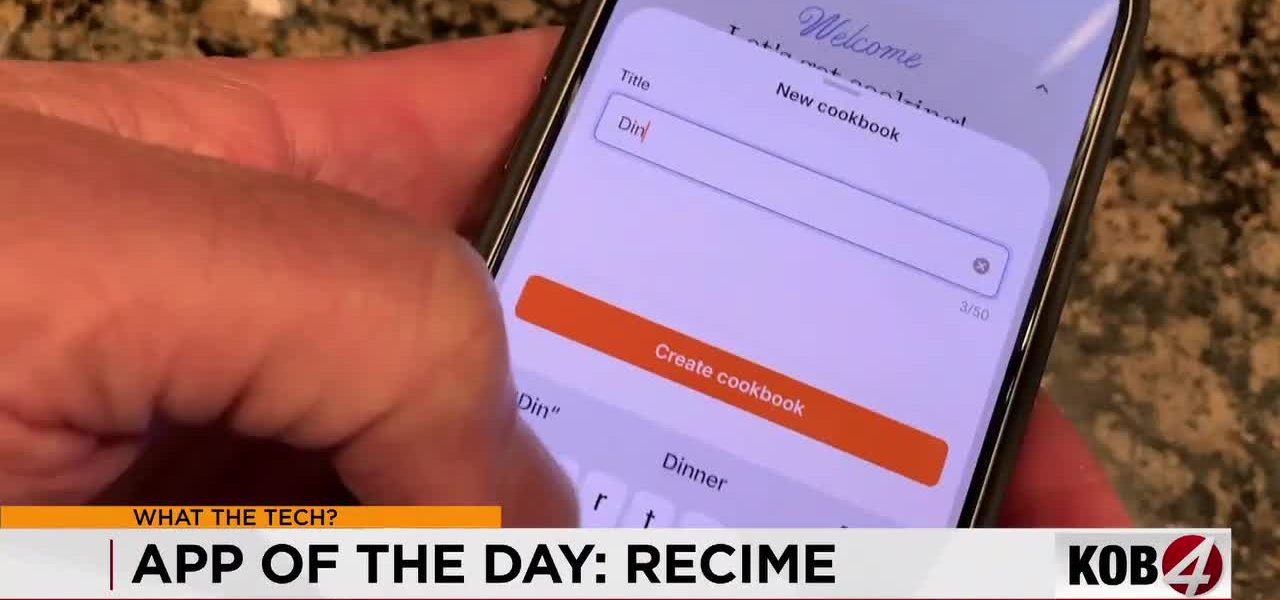
Enter ReciMe, a seemingly innocuous tool born out of Albuquerque, New Mexico. It promises salvation from the digital chaos of social media—where ephemeral video tutorials vanish into the ether, and lengthy comment sections bury the actual cooking instructions. It’s the quiet efficiency of Silicon Valley, packaged for your kitchen counter.
But what does it really do? It sniffs out recipes. You find a delectable-looking dish on Instagram, a quirky culinary trick on TikTok; hit share, and ReciMe’s AI gets to work. It pulls ingredients. It extracts steps. Even from audio tracks, apparently. Poof, there’s your meticulously organized digital cookbook. No more replaying videos five times just to catch the measurement of saffron. No more wading through endless digital applause. Just the bare, unromantic facts.
And that’s precisely the point, isn’t it? The app strips away the context. It digitizes the process, commodifying culinary knowledge into parseable data points. It’s free, naturally, with the usual array of “optional premium features and subscriptions” that monetize convenience. A familiar tale, really.
Dr. Arshad Khan, Director of Digital Policy at Islamabad’s Tech Think Tank, offered a pragmatic view. “We’re witnessing the logical extension of digital living,” Khan observed, his voice a dry murmur during a recent virtual panel. “On one hand, it democratizes access to diverse culinary knowledge. For instance, in Pakistan, with over 125 million smartphone users according to the Pakistan Telecommunication Authority’s latest reports, such apps could bridge gaps between traditional practices and digital accessibility, exposing people to global cuisines. But on the other, we must consider what’s lost in the translation from human-to-human to algorithm-to-human interaction. The unspoken lessons, the nuanced family traditions, they don’t fit neatly into an API.”
📄 POLICY WIRE WHITEPAPER PUBLISHED: PAKISTAN'S NATIONAL SECURITY POLICY PRIORITIES
👉 READ BY CLICKING HEREIndeed. This app isn’t just about recipes; it’s about how we consume — and transmit culture itself. Professor Layla Hassan, a sociologist specializing in cultural trends at Lahore University, elaborated on this shift. “Our culinary traditions are deeply embedded in narrative,” she explained over a video call, a stack of worn cookbooks visible behind her. “They’re about heritage, about gathering, about the wisdom passed from a grandmother’s hands. When an AI extracts a recipe, it disentangles it from that human context. It creates a highly efficient, yet utterly sterile, artifact. It’s less a communal act, more a transactional one, fitting for an era where even leisure is an optimized product.”
Her point is stark. Because while ReciMe might help Auntie Gulnaz organize her biryani recipes found on YouTube, or teach a tech-savvy youngster in Karachi to bake a perfect cheesecake, it also formalizes what was once organic. It standardizes, for better or worse, something intensely personal. The emotional residue, the shared experience of learning from a person—those are casualties of its ingenious efficiency. It’s another subtle move towards making everything instantly searchable, instantly consumable, devoid of the grit and messiness that often accompanies true understanding. Think of it as the ruthless arithmetic applied to leisure pursuits, exposing the true cost of convenience.
What This Means
The rise of applications like ReciMe, while seemingly trivial, hints at broader shifts in socio-economic landscapes, particularly within the digital economy. Economically, these tools facilitate a “creator economy” where micro-influencers and food bloggers can indirectly monetize their content more effectively through app integration, without needing elaborate personal platforms. This, in turn, drives engagement on social media platforms, bolstering their advertising revenues. It’s a closed-loop system, after all, neatly keeping users within digital ecosystems where their data can be quietly harvested.
Politically, the implications are more subtle. Digital literacy and access become increasingly determinative factors in everyday life. Those without smartphone access or consistent internet connectivity — still a significant portion of populations in many parts of the developing world — risk being excluded from what increasingly defines convenience and accessible information. It creates another tier of digital divide, affecting everything from access to essential services to cultural participation. And governments, grappling with data privacy regulations and the rapid pace of technological change, face a constant challenge in understanding and mitigating the unforeseen social impacts of such “lifestyle” applications. They’re not just about recipes; they’re about data, behavior, and the insidious, ongoing restructuring of daily existence. Our digital selves, always hungry, always scrolling, — and now, always organized.
📖 GET YOUR FREE COPY NOW OF POLICY WIRE DIGITAL MAGAZINE JULY 2026 EDITION
👉 READ & DOWNLOAD FREE MAGAZINE