

Coastline Crucible: Bournemouth’s Gritty Ascent Redefines Premier League Dreams
POLICY WIRE — London, UK — While the glittering leviathans of England’s top football league consistently feast at the European table, there’s a particular kind of quiet hum—a low,...

POLICY WIRE — London, UK — While the glittering leviathans of England’s top football league consistently feast at the European table, there’s a particular kind of quiet hum—a low, insistent thrum of genuine disruption—that echoes from the country’s less-glamorous locales. This season, that sound, perhaps more than any other, resonated from the sleepy south coast outpost of Bournemouth. No big-money splash, no continental oligarchs pouring in unfathomable sums—just an old-fashioned, head-down, don’t-give-up kind of success story that ultimately propelled them into continental competition.
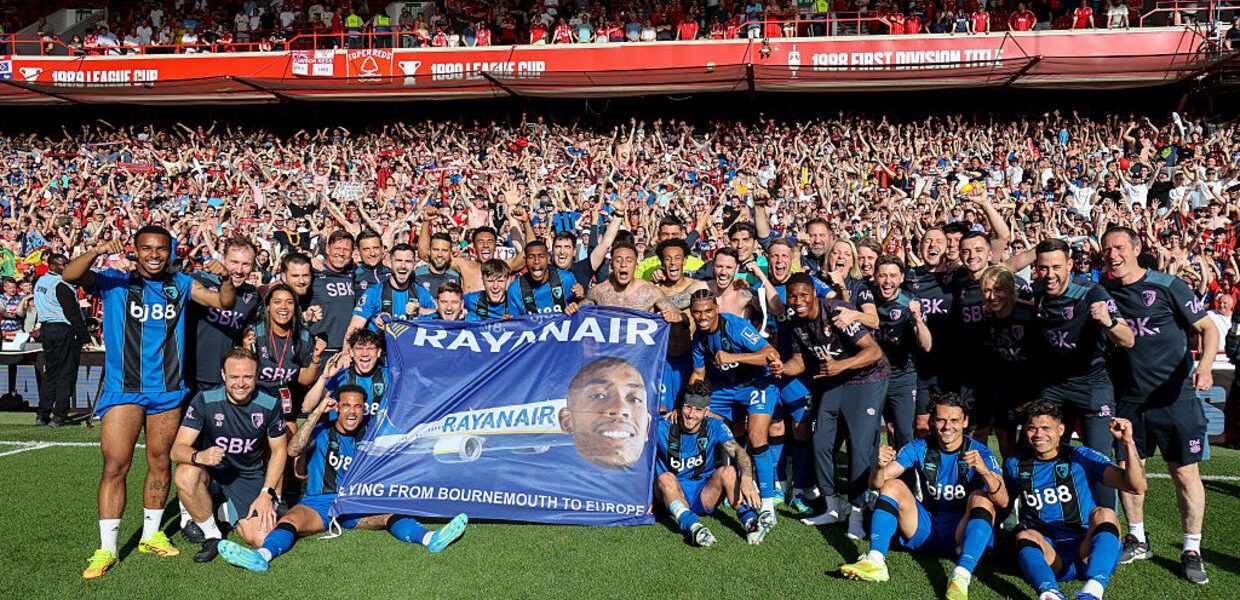
It wasn’t pretty sometimes, truth be told. It was more about sheer stubbornness than champagne football. A scrappy 1-1 draw at Nottingham Forest might’ve been the final whistle, the confirmation of European nights, but it was really just the exclamation mark on a season carved out of something far more substantial: systematic resilience under the departing Andoni Iraola. But don’t mistake that grit for dullness; it’s what makes the story, frankly, much more compelling than another predictable trophy grab.
The Spaniard, who’d already signaled his exit earlier in spring, built a team that embodied his own unassuming intensity. Three years, three seasons of gradual, almost incremental, uplift. Everyone talks about the dreamers, but few manage to consistently execute the blueprint. Iraola did, leaving a legacy of organized defiance, if you will, not just silverware. They even briefly — oh, that delicious, agonizing hope — sniffed at Champions League qualification. They didn’t make it, obviously. But sixth in the league? Securing Europa League? That’s the club’s best-ever finish, a monumental step forward.
Their consistency was quite frankly bewildering for a team that isn’t supposed to consistently challenge the financial elite. They lost just once in the 2026 calendar year, a narrow 3-2 defeat to the eventual league champions, Arsenal. They bounced back with a club-record eighteen-match unbeaten streak in the Premier League. Think about that: eighteen games without taking an L in the hardest league on Earth. That run included eight wins, sure, but a full ten draws too. Ten. Plus an FA Cup stalemate against Newcastle. They’ve made drawing an art form, really, and matched an old Premier League record for most draws in a season, previously held by Sheffield United and Manchester City from way back in the 1993/94 campaign, and Southampton a year later. And, because life isn’t easy, they started this very campaign with an eleven-game winless slump. Eleventh-game. It felt like they were sinking. They went from fifteenth in January to European qualifiers in May. That’s not luck, is it? That’s just an honest-to-goodness slog of progression.
Andoni Iraola, not known for dramatic soundbites, recently mused on his tenure: “Look, you don’t build a sustainable program on miracles. It’s structure. It’s belief. We didn’t always win pretty, but we refused to break. That, for me, is the real victory, you know? Not the table, but the spine we built.” His successor, Marco Rose, has some sizable shoes to fill, not in terms of celebrity, but in sheer systemic efficacy. A club spokesperson, addressing their rise and newfound global visibility, didn’t hold back: “This isn’t about throwing cash at problems. It’s about smart investment, growing our brand, — and fostering a winning culture. We’ve proven you can compete—even thrive—against Goliaths. It’s good for the league. And it’s even better for our balance sheet, let’s be honest.”
📄 POLICY WIRE WHITEPAPER PUBLISHED: PAKISTAN'S NATIONAL SECURITY POLICY PRIORITIES
👉 READ BY CLICKING HEREEven in Lahore’s teeming chai shops, the talk might now turn, however briefly, to a coastal English club punching above its weight. The Premier League, you see, is a genuinely global commodity, and these unexpected stories resonate across continents, often linking diverse communities through the sheer human drama of sport. According to recent financial reports from Football Money League analysts, the Cherries’ brand value alone jumped by nearly 40% this season, a stark contrast to some more established clubs seeing single-digit growth. That’s money that trickles down, boosts the regional economy, and, crucially, attracts attention. Not just for players, but for potential investors looking at solid, well-managed assets in a hyper-competitive market.
What This Means
Bournemouth’s season isn’t just a feel-good football story; it’s a telling case study in modern sports economics and policy. Securing European football isn’t just about playing glamorous midweek games; it’s a direct conduit to significant prize money, vastly improved broadcast revenues, and enhanced sponsorship deals. For a club outside the traditional ‘big six’, this represents a massive, transformative cash injection. We’re talking millions, money that can reshape infrastructure, youth academies, and ultimately, attract even higher-tier talent.
But beyond the immediate financial boost, this success serves as a powerful validation of a particular strategy: smart recruitment, shrewd tactical deployment, and long-term planning over short-term extravagance. It’s a message to potential owners, particularly those eyeing entry into the English football pyramid, that a well-run club, even without limitless resources, can genuinely challenge. For an investor, say from the Middle East or South Asia, looking to enter the soft-power arena that Premier League ownership offers, Bournemouth presents an intriguing model of return on calculated risk, rather than speculative spending. Their journey provides a refreshing counter-narrative in a league often criticized for its wealth disparity and its sometimes reckless pursuit of instant gratification, as discussed in pieces like “The Brutal Alchemy of Billions: IPL Failures Expose the Folly of Instant ‘Resets’.” It showcases that careful development—that almost scientific approach to extracting maximum performance from available resources—still has a place at the very top, offering a different blueprint for stability and long-term growth in the globalized sports market.
📖 GET YOUR FREE COPY NOW OF POLICY WIRE DIGITAL MAGAZINE JULY 2026 EDITION
👉 READ & DOWNLOAD FREE MAGAZINE